
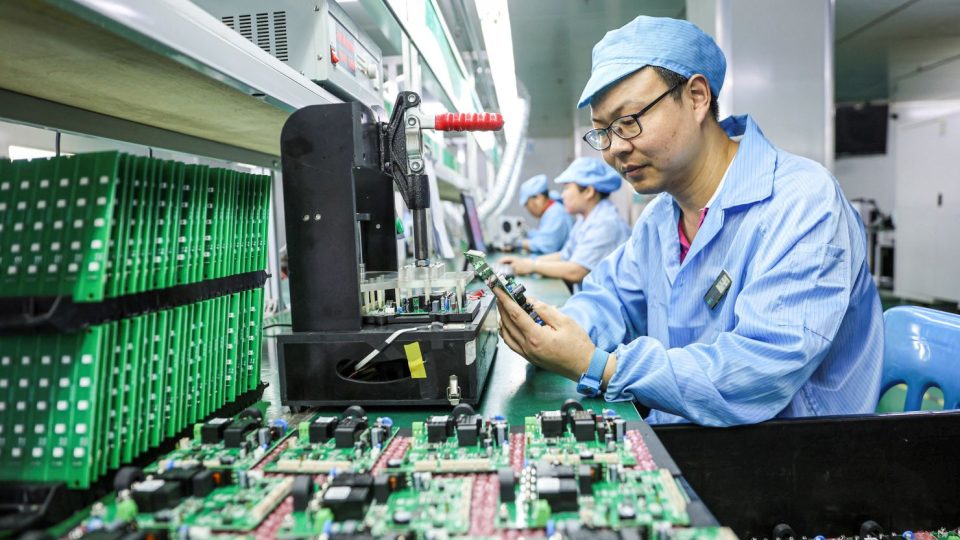
An aggressive new policy from Beijing is shaking up the electric vehicle landscape just as the battery-fueled transition to cleaner cars has started to look less like a niche ambition and more like a worldwide reality. China, known for its dominant stake in EV battery production, has tightened its grip by imposing fresh export restrictions on key technologies and processes vital to making next-generation electric vehicle batteries.
The changes, which were announced by China’s Ministry of Commerce, apply to a set of eight technologies spanning advanced battery cathodes and lithium processing. Now, any company or entity hoping to transfer these technologies outside of China must first obtain a government license. The move is framed as an effort to “safeguard national economic security and development interests,” but the wider meaning is hard to miss: China is putting its foot on the brake when it comes to sharing the know-how that has made it a force in the global EV sector.
The export controls target both sides of EV battery production. On one side, they cover the specialized methods needed to prepare high-performance cathode materials for batteries, focusing on lithium iron phosphate (LFP), lithium manganese iron phosphate, and other related chemical compositions. These materials are central to the battery’s energy density, safety, and lifespan, giving LFP batteries a cost and security advantage that has driven their popularity worldwide over the past five years.
On the other side, China has brought five core lithium extraction and refining technologies under licensing requirements. Because lithium is considered the linchpin mineral of the EV era, this single step gives Beijing more leverage over the global battery supply chain. The shift comes as most automakers around the globe still source at least part of their battery supply or know-how from Chinese battery giants.
China’s handshake with the rest of the EV world has always been a little one-sided. The country controls about 67 percent of the world’s EV battery market, and it supplies over 94 percent of LFP batteries globally, according to market research from SNE Research. This dominance is built on a foundation that stretches from raw mineral processing (where China processes 70 percent of global lithium output) all the way to advanced battery production and assembly.
The new restrictions mean that not only raw materials, but entire manufacturing processes are coming under stricter Chinese government oversight. The timeline is immediate, and exporters as diverse as battery juggernaut Contemporary Amperex Technology Co. Limited (CATL) and auto powerhouse BYD Company Limited (SSE:002594) are likely to see compliance procedures become more complicated for any deals involving the restricted technologies.
The big question is how much of an impact the latest rules will have, and how quickly. For some companies, there may not be an immediate effect. For example, CATL’s battery factories in Germany and Hungary do not include the upstream process technologies now covered by China’s rules, focusing instead on cell and module production. BYD, which primarily assembles battery packs abroad rather than manufacturing full cells, also seems less affected, at least for now.
Still, the restrictions are prompting auto and battery makers beyond China to speed up investments in domestic supply chains, research, and new battery chemistries. The U.S., European Union, and other economies are pressing to build more resilient alternatives to reduce reliance on Chinese technology not only for batteries but for critical material refining and component manufacturing as well.
Automakers in Japan and Europe are already feeling pressure to adjust production plans in light of supply chain challenges tied to recent Chinese trade moves, including similar export limits on rare earth elements and other specialized metals that are vital for both EVs and a range of high-tech goods. These shifts may drive a wave of innovation and competition, though the cost and timeline for building rival supply chains are anything but certain.
China’s move is a signal that the era of free technology exchange in the EV world is ending. With the global transition to electric vehicles still in full swing, the latest controls add another layer of complexity to the race for cleaner transportation.
For companies and governments eyeing the future, the message is clear: maintaining energy transition momentum will require more than policy statements and consumer incentives. In a world where the most valuable knowledge is itself a tradeable commodity, the centers of gravity in supply chains may well shift, but the race for battery supremacy will continue, perhaps with even higher stakes.
