
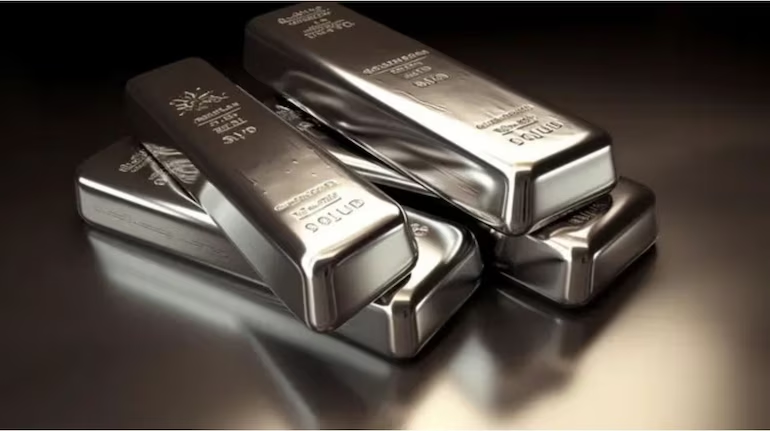
China pulled in more than 790 tons of silver during the first two months of 2026. That figure includes nearly 470 tons in February, which marks the highest amount for any February on record. Official customs data released today confirms these numbers. Demand inside China runs so strong that local prices now sit well above global benchmarks. Exchange stockpiles had already thinned out, so importers reached overseas to secure more metal.
To understand this, look back a bit at how silver fits into everyday industry. Silver conducts electricity better than almost anything else. Factories use it in thin layers for connections in electronics. Solar panels rely on it too. Each panel needs about 20 grams to carry current efficiently from sunlight to wires. China installs more solar capacity than anywhere else. It added 216 gigawatts just last year, enough to power millions of homes. That scale requires tons of silver every month.
Electric vehicles add to the pull. Their control systems, batteries, and sensors use 25 to 50 grams per car. China produces over half the worlds EVs. Combine that with growth in AI data centers, which need silver in power grids and cooling tech. All these sectors create steady hunger for the metal. Global supply struggles to keep up. Mines produce less than demand year after year.
Prices tell the story clearly. In Shanghai, silver trades at premiums up to $14 per ounce over London fixes. That gap reflects urgency. Buyers pay extra to lock in supply before others do. Stockpiles on local exchanges dropped to critically low levels earlier this year. February’s imports helped rebuild them, but factories keep consuming fast.
Policy steps reinforce the trend. China started new export licensing rules on January 1, 2026. Only approved firms can ship silver abroad now. Officials list it as a strategic resource, similar to rare earth elements. The rules aim to prioritize domestic needs over exports. Just 44 companies made the cut for 2026 and 2027. This keeps more silver home for solar factories and EV lines.
Geopolitics enters the picture as well. The U.S. named silver a critical mineral in 2025. That list guides investments and trade policies. Russia has boosted its silver reserves too, seeing the same risks in supply chains. China watches these moves closely. Securing imports now builds a buffer against global tensions or shortages.
Break down the current data further. January saw solid inflows, but February exploded to that record 470 tons. Total for the two months tops levels from eight years ago. Importers tapped markets in London and elsewhere, where metal sat available. Strong industrial orders made it worthwhile, even at higher costs.
Industrial uses break down simply. Solar takes the biggest share, around 20% of all silver demand worldwide. EVs follow with steady growth. Electronics fill out the rest, from phones to servers. China dominates production in each area. Its factories turn raw silver into finished products that ship globally.
Price impacts ripple outward. Shanghai leads the climb. Higher costs squeeze manufacturers elsewhere, but Chinese firms pass them along in panel and battery prices. That affects everyone buying green tech.
Global effects show up in tight markets. Western solar makers scramble for allocations. London vaults empty faster as China buys. Traders report delays in deliveries. Sovereign funds step up purchases too, adding to pressure. Supply deficits could reach 250 million ounces this year.
These imports signal Chinas focus on leading the clean energy shift. Factories hum with orders. Reserves stabilize for now. The world adjusts to one nation’s heavy lift in silver use. Markets stay alert for what comes next in this key metal.
