
[stock_market_widget type=”card” template=”basic2″ assets=”NVO” realtime=”true” api=”yahoo-finance”]
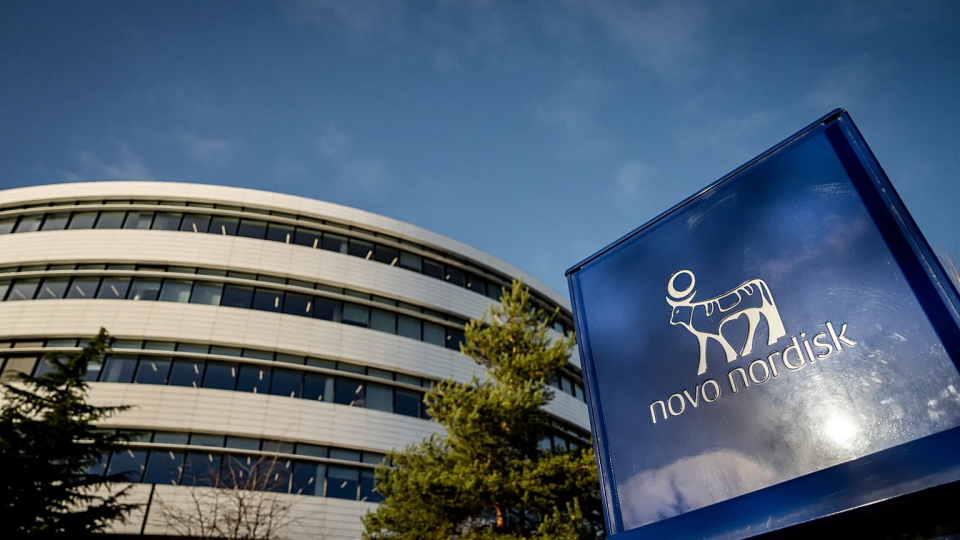
Novo Nordisk A/S (NYSE: NVO) surprised investors this week by warning that its sales may decline this year, marking the first projected drop since Ozempic became a global phenomenon. The company’s statement triggered a 5% slide in its share price as markets digested what could be a pivotal moment in the weight-loss drug market.
For years, Novo Nordisk was known largely as a diabetes treatment company, but the success of Ozempic and Wegovy transformed it into one of Europe’s most valuable corporations. These drugs belong to a category known as GLP-1 agonists, which help regulate blood sugar and appetite by mimicking a hormone in the body. Their popularity has been explosive, sparking a wave of consumer interest and investor enthusiasm that few pharmaceutical products have matched.
The company now faces a different kind of challenge: balancing immense demand with growing competition and pricing pressures. Rivals have moved in aggressively, led by Eli Lilly (NYSE: LLY), whose drug Mounjaro has captured a significant share of the same market. Pfizer Inc. (NYSE: PFE) and several other drugmakers are also testing new formulations that could further change the landscape. Analysts say this competition has already started to influence pricing across major markets.
Novo Nordisk’s forecast suggests that even the most successful biotech stories face limits once rival products gain ground and health systems push back on expensive therapies. In many markets, insurers and government programs are re-evaluating what they will cover. Lower reimbursement rates could restrict future sales growth, even if consumer demand stays high. This tension between medical innovation and affordability has become a defining theme in the global pharmaceutical industry.
At the same time, manufacturing constraints continue to weigh on supply. Companies producing GLP-1 drugs must meet extraordinary quality and capacity requirements, and any delay or shortage can immediately affect profit outlooks. Novo Nordisk has been expanding production facilities, but analysts question whether the new capacity will be enough to keep pace with demand. Even small shifts in manufacturing efficiency or pricing decisions can move the company’s stock price significantly in today’s climate.
Despite the near-term pressure, the story of GLP-1 drugs is far from over. Health researchers note that the potential applications go beyond weight management, with some trials exploring benefits related to cardiovascular health and diabetes prevention. This broader therapeutic promise could sustain long-term demand, even if the first wave of excitement cools. Investors, however, are now reminded that even breakthrough products eventually need to compete on cost, quality, and supply reliability.
For many observing this sector, Novo Nordisk’s announcement feels like a pause rather than an end to growth. The industry around GLP-1 drugs has entered a new phase defined by normalization. Early adopters, regulators, and manufacturers are all seeking balance between innovation and accessibility. As smaller biotech firms explore similar treatments and large pharmaceutical players continue investing heavily in research, the coming years may test which companies can adapt fastest to these shifting expectations.
The recent stock slide, while significant, may reflect investor recalibration more than loss of faith. Long-term interest in effective weight-management treatments remains high, and few expect the broader category to disappear. What changes is how investors view profitability as the market matures. Instead of one company dominating the space as Novo Nordisk once did, the competition now mirrors a classic cycle seen in many pharmaceutical booms: rapid ascent, inevitable rivalry, and eventual stabilization.
For shareholders and analysts alike, this shift offers perspective. The billion-dollar weight-loss industry is evolving into a multi-player field where innovation will still matter, but efficient scaling and pricing discipline will matter even more. Novo Nordisk’s latest warning may represent a new chapter rather than a downturn, forcing both the company and the market to rethink what sustainable success looks like in the Ozempic era.
