
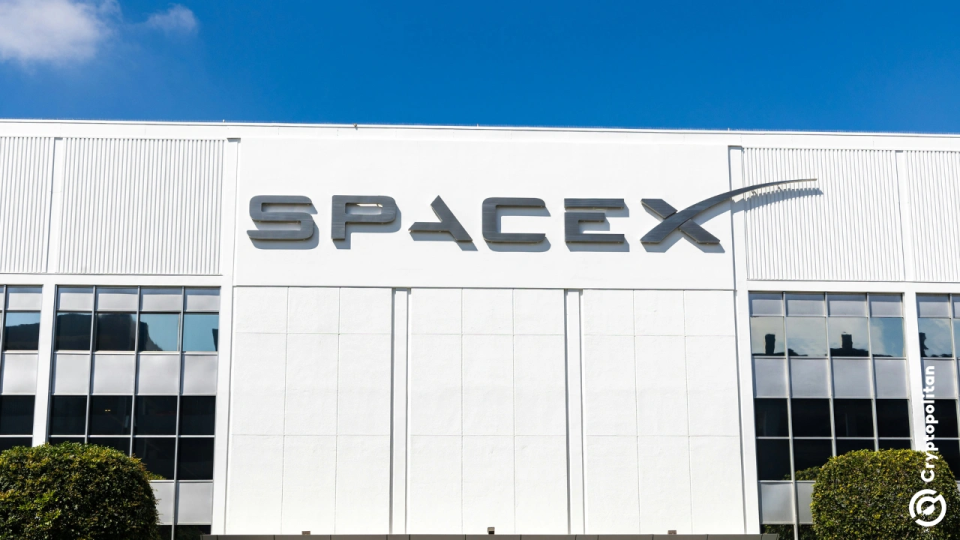
SpaceX has taken over xAI, Elon Musk’s artificial intelligence start-up known for developing the Grok chatbot. The move confirms Musk’s intention to bring several of his major ventures closer together, combining cutting-edge space technology with next-generation AI capabilities. While the companies did not disclose specific financial details, reports estimate SpaceX’s valuation at roughly $1 trillion and xAI at about $125 billion, creating the world’s most valuable private enterprise to date.
The merger comes at an interesting time for both firms. SpaceX dominates commercial spaceflight with its Falcon and Starship programs, as well as its global satellite network, Starlink. Meanwhile, xAI, founded in 2023, was launched to build “truth-seeking” artificial intelligence aimed at understanding the universe. By bringing the two under one corporate structure, Musk is not only combining resources but also uniting distinct technological missions that could mutually reinforce one another. SpaceX’s access to vast computing capacity through its Starlink infrastructure can help train complex AI systems, while xAI’s software could optimize everything from spacecraft design to communications scheduling.
In a memo published on SpaceX’s website, Musk described the merger as an “innovation engine,” suggesting a vision that stretches well beyond traditional industry boundaries. Integrating AI into space operations could create smarter autonomy for rockets and satellites, potentially making human oversight less necessary during flights. This merging of deep learning and physical engineering reflects a broader shift in Musk’s businesses, where automation, machine learning, and networked systems intersect to create self-improving technologies.
From a financial perspective, the implied combined valuation sets a new benchmark for privately held companies. To put that into context, at $1 trillion, SpaceX’s worth surpasses any other private corporate valuation in history, even outpacing earlier giants such as ByteDance and OpenAI in private markets. Adding xAI’s estimated $125 billion in value creates a corporate structure whose total enterprise figure dwarfs many public companies in the S&P 500. The question now is how long Musk will keep it private, and how investors might view a potential offering.
The merger adds momentum to speculation that an eventual initial public offering could follow. Market observers have suggested that either a partial listing of Starlink or a broader SpaceX-xAI entity could attract unprecedented interest. Investors frequently cite Musk’s track record of turning complex ventures into high-growth entities, though his leadership style and regulatory challenges often generate market volatility. If a SpaceX-xAI IPO were to occur, it could easily test or even surpass the record IPO valuations previously held by Alibaba and Saudi Aramco. Analysts note that the appetite for artificial intelligence exposure remains strong among institutional and retail investors alike and combining that theme with space infrastructure could yield extraordinary capital demand.
However, despite the excitement, several questions remain. Merging two companies of such scale and differing operational models is not simple. SpaceX has thousands of engineers and technicians focused on hardware development, while xAI’s team concentrates on large language models and computational frameworks. The alignment of management structures, intellectual property, and strategic priorities will test both organizations. Regulatory oversight may also become a factor, especially if the merger’s implications touch on satellite data use or AI ethics frameworks governing autonomous systems.
Still, the broader market sees this as Musk’s latest effort to weave his enterprises into a single ecosystem. Bringing together physical connectivity through SpaceX and cognitive intelligence through xAI could lead to a platform capable of developing and deploying technologies at an unmatched pace. That combination may redefine what a modern technology conglomerate looks like, blurring the traditional boundaries between industries such as aerospace, telecommunications, and software services.
For now, SpaceX’s acquisition of xAI stands as a milestone that captures both Musk’s ambition and the shifting center of gravity in global technology. Whether this unified company proceeds toward an IPO or remains a private powerhouse, its valuation and technological breadth suggest it will shape the fields of AI and spaceflight for years to come. The merger could mark the beginning of a new industrial chapter, one where orbital networks and artificial minds evolve under a single vision of expansion beyond Earth’s limits.
