
Travelers at major U.S. airports are facing hours-long waits at security checkpoints. These delays stem from a partial government shutdown that began on January 30th, leaving Transportation Security Administration (TSA) agents without paychecks. The first zero-dollar pay arrived on March 13, and now about 10% of the roughly 50,000 TSA officers are calling out sick each day, according to Department of Homeland Security data.
Airports with the longest lines change daily, but patterns have emerged over the past week. Hartsfield-Jackson Atlanta International Airport (ATL) reports waits up to three hours as staff shortages force lane closures. Houston’s William P. Hobby Airport (HOU) has seen queues stretching 3.5 hours, while George Bush Intercontinental (IAH) hits nearly two hours on peak days. New Orleans (MSY) and Fort Lauderdale (FLL) also face two-hour backups, with lines spilling outside terminals at Austin (AUS) and swelling at Charlotte (CLT). Larger hubs like Chicago O’Hare (ORD) average one hour, though some days push longer. JFK in New York spiked to 75 minutes on a recent Sunday morning, up from 17 to 30 minutes the day before, while Newark reached 44 minutes. These bottlenecks risk missed flights and frustrated passengers, especially since TSA often closes PreCheck lanes to cover standard screening.
The root issue lies with the Department of Homeland Security (DHS), which oversees TSA and remains unfunded amid congressional debates over immigration policy. TSA agents earn starting salaries around $40,000 a year, and working without guaranteed backpay has led to burnout. During the 2018-2019 shutdown, similar absences caused a ground stop at LaGuardia due to low air traffic control staffing, showing how pay delays ripple through aviation safety. Managers now consolidate checkpoints or send agents to the longest lines, but the strain grows as the shutdown enters its second month, coinciding with tensions from the U.S. conflict with Iran.
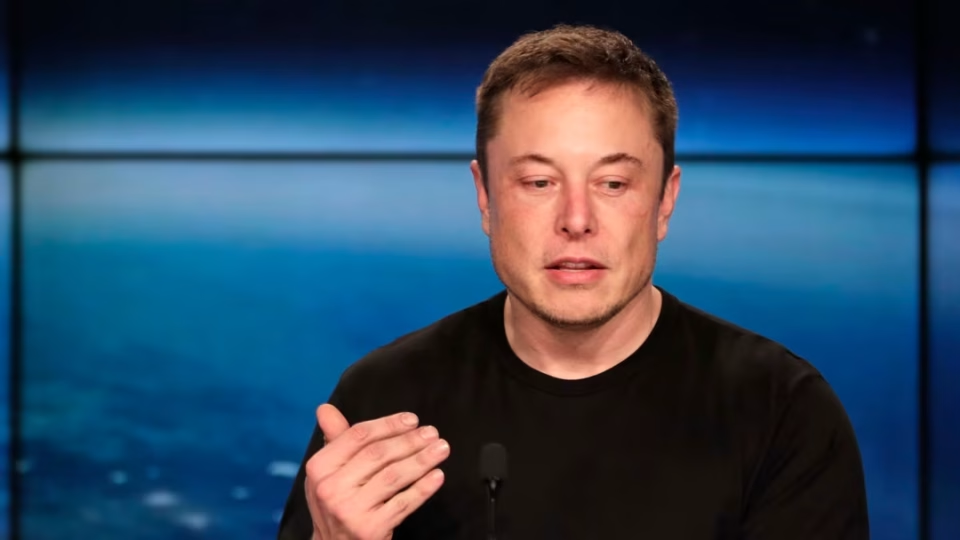
Into this mess stepped Elon Musk, the CEO of Tesla, Inc. (NASDAQ: TSLA) and SpaceX. On Friday Musk posted on X: “I would like to offer to pay the salaries of TSA personnel during this funding impasse that is negatively affecting the lives of so many Americans at airports throughout the country.” As the world’s richest individual, his gesture grabbed headlines, but it quickly ran into legal walls.
Federal law makes Musk’s direct offer impossible. Title 18 U.S.C. § 209 prohibits executive branch employees, including TSA agents, from accepting salary supplements from private sources. The Anti-Deficiency Act and 31 U.S.C. § 3302 further block agencies from using unappropriated private funds for payroll; all money must flow through Congress. Even indirect routes face hurdles. While a 2004 DHS Appropriations Act provision lets the Secretary accept gifts for specific uses, these cannot bypass congressional funding for salaries. TSA confirms no statutory power exists to take Musk’s money earmarked for pay. President Trump added fuel by threatening on Truth Social to swap TSA with ICE agents unless Congress acts soon.
Musk could fundraise for agents’ mortgages or groceries, as he has for other causes, but paying official salaries equates to supplanting government authority. Past shutdowns saw private aid like food pantries for furloughed workers, yet core payroll stayed off-limits. Legal experts note billionaires have donated to agencies for equipment or disaster relief, but never routine employee compensation.
Airport operators now deploy extra staff to manage queues, and some travelers switch to less crowded checkpoints or drive instead. Smaller hubs like Denver or Las Vegas report minimal delays so far. Pressure mounts on lawmakers, with business groups warning of economic fallout from snarled travel.
Congress holds the key to ending this. Agents deserve backpay once funds flow, but until then, passengers must build buffer time into itineraries. Musk’s idea, while earnest, underscores a broader truth: private wealth cannot rewrite federal rules. Travelers will keep waiting, and TSA will keep screening, as the shutdown tests the limits of both government function and individual goodwill.
