
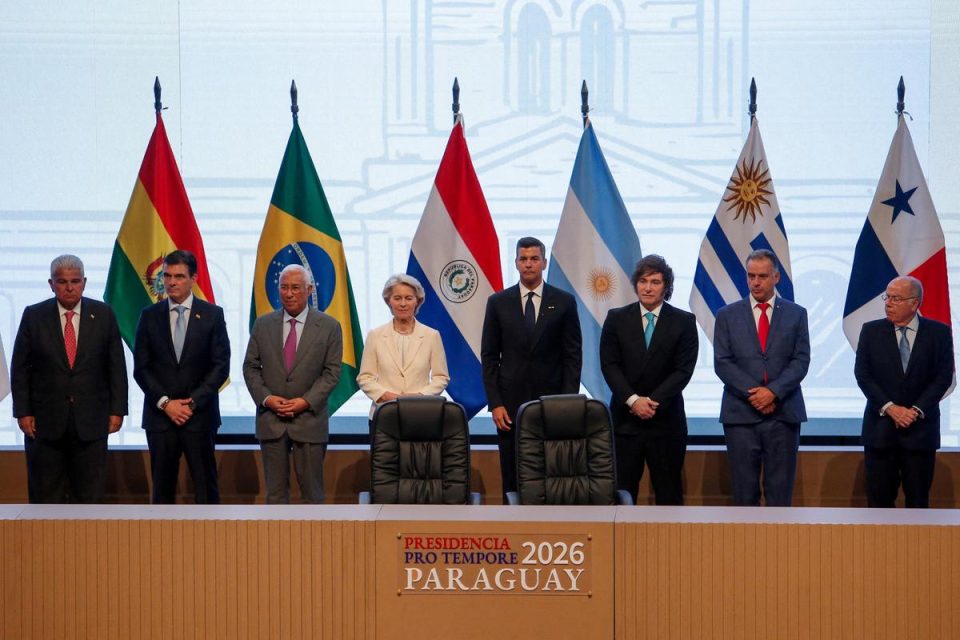
Trade deals between far-flung regions rarely happen overnight. The European Union and South America’s Mercosur bloc prove that point after spending 25 years in talks. Officials gathered in Asuncion, Paraguay, earlier in the week to sign an agreement that creates one of the world’s biggest free trade zones. This pact connects the EU’s 27 countries with Argentina, Brazil, Paraguay, and Uruguay, aiming to cut tariffs and let goods flow more freely between them.
Picture two bustling economies finally shaking hands after decades of haggling. The EU brings its industrial strength in cars, machinery, and chemicals, while Mercosur offers agricultural powerhouses like soybeans, beef, and sugar. Together, these partners represent 30% of global GDP and over 700 million people. The deal wipes out tariffs on more than 90% of their trade, which could save European firms over €4 billion yearly in duties alone. Ursula von der Leyen, head of the European Commission, called it a choice for fair trade and partnerships over isolation during the signing.
Every major agreement faces pushback, and this one is no exception. European farmers worry about cheaper South American imports flooding their markets, sparking protests in places like Ireland. Environmental groups point to risks of deforestation in the Amazon. To counter these, the pact includes strict quotas on beef and sugar, plus rules tying trade to the Paris climate accord and bans on goods from cleared forests. These measures aim to protect jobs and nature while opening doors.
The ink is dry, but the work continues. The European Parliament must vote on approval, where 150 of its 720 members already signal opposition. Each Mercosur country needs its lawmakers to ratify the deal too, though leaders there seem eager. If all clears, trade changes could start by late 2026, with some tariffs phasing out over 10 to 15 years. Public procurement opens up, letting European firms bid on South American contracts under equal terms.
Mercosur also eases export taxes on key minerals like lithium and copper, vital for Europe’s shift to green energy. Argentina, Uruguay, and Paraguay drop restrictions entirely, while Brazil halves any taxes for EU shipments. This secures supplies for batteries and tech without overreliance on other sources. Such details show how the agreement balances immediate gains with long-term strategy.
U.S. tariff threats make this timing critical. President Trump recently pledged duties on European allies over Greenland disputes, including a 10% hit on eight nations. These moves, announced around the signing, underscore risks to traditional trade paths. Europe, facing slower growth and supply chain strains, turns to Mercosur for diversification. The bloc’s 260 million consumers and resource wealth offer outlets for wine, cheese, and cars that North America might restrict.
Diversification means less vulnerability. Brazilian soybeans can feed EU livestock, while European machinery builds South American infrastructure. Biofuels from ethanol align with green goals, and minerals fuel electric vehicles. Estimates suggest bilateral trade could jump 30% over time, boosting economies on both sides.
This shift counters broader global tensions. China eyes the same resources, and protectionism rises everywhere. By locking in Mercosur, Europe gains a stable partner in the Global South. Small exporters in Spain or Germany might ship more olives or parts to Brazil, while Argentine beef reaches French tables under quotas. Jobs follow, from farms to factories.
Enforcement will prove key. New oversight bodies track sustainability and labor standards, ensuring animal welfare and worker rights hold up. Von der Leyen stressed unity as the best path to prosperity, joined by leaders like Paraguay’s Santiago Pena. Their presence in Asuncion bridged gaps, sending a message of multilateralism amid isolationist noise.
France still opposes, but Italy backed it after subsidy promises for farmers. Politics could delay or tweak the deal, yet the geopolitical win stands out. South America stays open to multiple ties, resisting single-power dominance.
Europe now holds a direct line to vibrant markets in Argentina and Brazil, buffering against U.S. risks. This pact fosters steady growth through shared strengths, proving patient talks yield real results. As ratification advances, it sets an example for others navigating trade’s choppy waters.
