
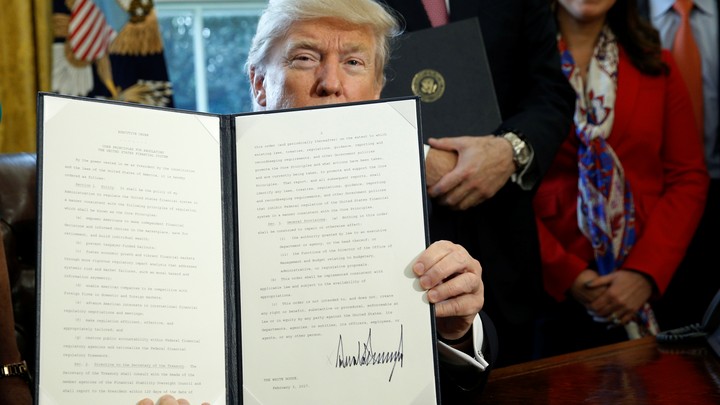
President Trump signed an executive order yesterday targeting what he and his supporters describe as politically or religiously motivated “debanking” by banks. This move is aimed at curbing instances where individuals or businesses are allegedly cut off from banking services due to their political views, religious beliefs, or lawful business practices. The order instructs federal banking regulators to remove “reputation risk” language from their guidance to banks, language that critics claim has enabled financial institutions to exclude certain customers, including conservatives and members of the cryptocurrency industry.
The term “debanking” broadly refers to banks refusing service to customers or closing accounts. While banks often cite regulatory compliance and risk management as reasons for such decisions, Trump and conservative groups argue that some denials are politically or ideologically motivated. Trump’s order directs major regulatory agencies, including those overseeing banks, credit unions, and savings associations, to investigate allegations of debanking and to make efforts to reinstate affected customers. Furthermore, it calls for the Department of Justice to review these investigations for potential civil or criminal actions.
A core component of the order is the removal of the “reputation risk” standard from regulatory oversight. This concept, used by federal agencies like the Federal Reserve, the Office of the Comptroller of the Currency (OCC), and the Federal Deposit Insurance Corporation (FDIC), allowed regulators to evaluate potential damage to a bank’s public image when deciding whether to maintain relationships with certain clients. Critics have long argued this vague criterion could be misused to justify excluding politically or otherwise controversial customers. The Federal Reserve and OCC have already started eliminating references to reputation risk from their bank examination procedures earlier this year, and the FDIC is expected to follow suit.
The crypto sector welcomed the executive order, viewing it as a necessary protection against what they see as unfair treatment by mainstream banks wary of digital asset businesses. Crypto companies and investors have claimed that prior regulatory signals during the Biden administration heightened banks’ caution, limiting access to traditional financial services.
Trump’s executive order also highlights his personal grievances with major banks. In interviews earlier in the week, he accused JPMorgan Chase and Bank of America of refusing to accept deposits from him and his family businesses, allegations both banks have denied. The Trump Organization is also involved in litigation against Capital One for similar accusations related to account closures following the January 6, 2021, Capitol attack.
While banks maintain that they do not discriminate based on politics or religion and that account closures are driven by compliance with existing laws and prudent risk management, this executive order sets the stage for a stricter regulatory stance against politically influenced debanking. It mandates that the Small Business Administration require financial institutions involved in its lending programs try to reinstate previously denied clients due to what the order defines as unlawful debanking. The Treasury Department has been tasked with developing a broader strategy to combat politically motivated account closures, including considering new regulatory or legislative measures.
This initiative follows years of complaints from conservatives and some industries, such as firearm manufacturers and cryptocurrency firms, who say they have been unfairly targeted by banks, accusations that often cite actions dating back to the Obama administration’s “Operation Choke Point,” which scrutinized banking relationships with what were deemed “high-risk” industries.
The executive order also reflects broader political tensions around banking access, free market rights, and regulatory authority. It brings a renewed federal focus to claims of bias in banking that have stirred significant controversy and litigation in recent years. By formalizing protections against debanking, the order challenges financial institutions to justify their decisions with clear, risk-based explanations rather than reputation concerns that critics say mask political discrimination.
