
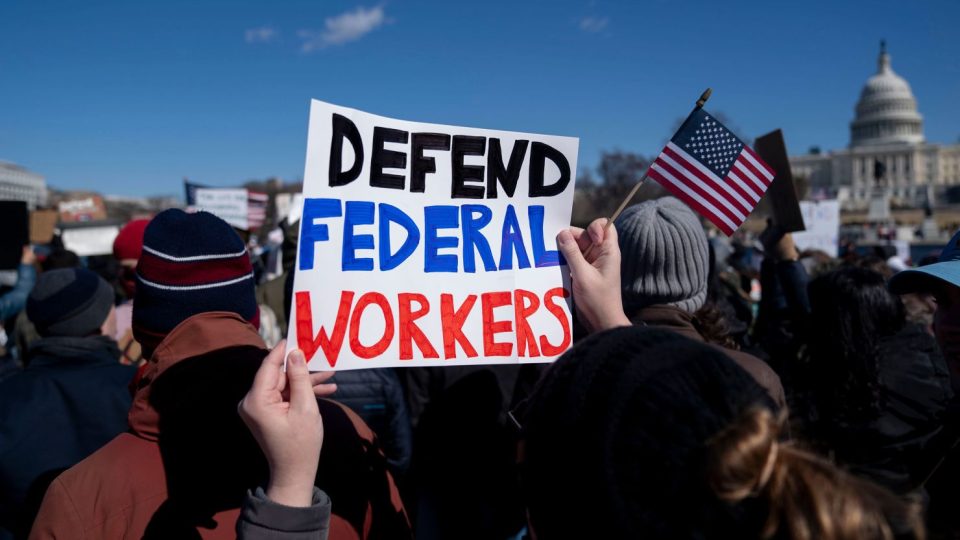
As the government shutdown creeps towards its third week, there’s still no sign of progress in Washington. Lawmakers remain stuck in a funding standoff that has left federal workers, service members, and government operations hanging in the balance. The Senate isn’t set to take any votes until Tuesday, and House leaders continue to dig in, offering little hope of a bipartisan solution anytime soon. What started as a political dispute has now become a growing crisis for thousands of Americans who depend on the federal government for their paychecks and job stability.
So far, more than 4,000 federal employees have received layoff notices since the shutdown began. That figure alone paints a grim picture of how deep this deadlock is cutting into the government’s core operations. Some agencies that handle critical health and safety functions are being hit particularly hard. The U.S. Centers for Disease Control and Prevention, for example, initially had to send hundreds of its workers home last week. But with pressing health concerns and ongoing operations at risk, those same employees were called back soon after. The back-and-forth nature of these decisions highlights just how disruptive a shutdown can be for departments that can’t simply stop what they do.
President Trump has added to the tension with remarks suggesting that the layoffs “should be Democrat-oriented,” a statement that’s only inflamed the partisan divide rather than eased it. While such political sparring may play well for supporters on each side, the human cost of the shutdown continues to grow. Behind the headlines are real people, like scientists, clerks, inspectors, and military personnel, are waiting anxiously to find out if their next paycheck will arrive on time or not at all.
For those in uniform, the uncertainty has been especially unsettling. Rumors circulated last week that members of the military might not receive their expected pay this Wednesday, sparking widespread concern in the defense community. Many service members live paycheck to paycheck, and a missed payment, even for a short period, can have serious consequences for their families. Over the weekend, however, the President announced that measures had been taken to ensure that troops will, in fact, be paid on schedule next week. That news brought a wave of relief, even as questions remain about what will happen if the stalemate drags on.
Still, that reassurance only goes so far. The shutdown’s ripple effects are already visible across multiple sectors of government. Many nonessential programs have come to a standstill, contractors face delays in payments, and basic administrative services, from processing loans to maintaining national parks, remain slowed or suspended. For workers in those areas, the stressful waiting game continues with no clear end in sight.
The situation reveals how complicated and far-reaching a government shutdown really is. It’s not just a Washington story, it’s a national one. When lawmakers can’t agree on a funding plan, entire agencies are forced to operate with skeleton staffs or shut down completely. Everyday Americans feel the impact, whether it’s a delayed tax refund, a halted research project, or uncertainty about safety inspections. And the longer the political impasse goes on, the more costly it becomes for both employees and the public.
With no legislative action expected before Tuesday, there’s little optimism that a breakthrough is imminent. The continued finger-pointing between political leaders suggests that both sides are digging in for a long fight. For federal workers, that means more sleepless nights and growing financial anxiety. For service members, it means watching and waiting, hoping that promises about paychecks hold true. For the country as a whole, it’s another reminder that when politics comes to a standstill, people, not just policies, bear the brunt of it.
Whether Congress can break through this gridlock in the coming days remains to be seen. But what’s clear right now is that the shutdown’s effects go far beyond the Capitol. They’re playing out in homes across the country, where families are counting down the days until something gives. Until then, the uncertainty continues to define life for thousands of public servants caught in the middle of a political standoff with no clear end in sight.
