
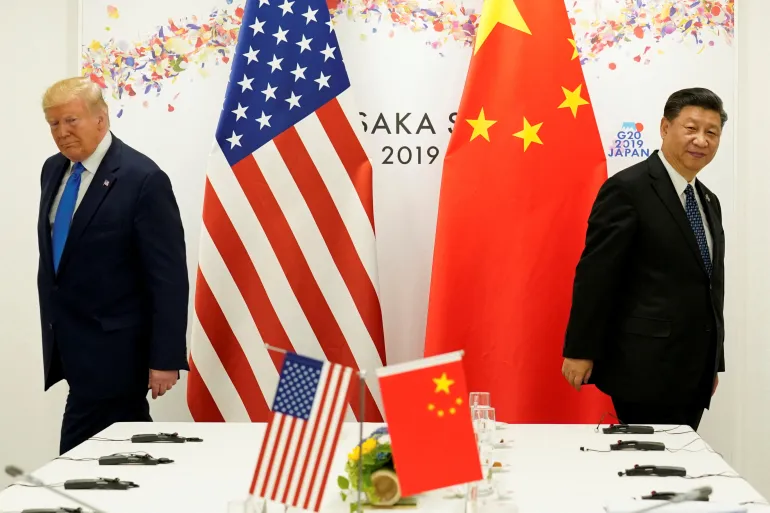
When senior U.S. and Chinese officials shook hands in Stockholm yesterday, there was no hand-over of a historic trade agreement. Instead, negotiators parted ways after two days with an outcome that’s become familiar to anyone watching these two superpowers: a continuation of the unresolved, and a cautious sense of progress, though no one can quite say what’s next.
For now, there’s no fresh deal to stop tariffs from reverting to stratospheric levels by the looming August 12 deadline. Both countries had previously dialed back the trade barriers during a fragile truce but are now contemplating a future where tariffs could again threaten to act as a blockade, potentially sending shockwaves through global trade. Yet if you listened to President Trump’s advisers and their counterparts from Beijing, things sound more constructive than combative.
Both sides have come to see these meetings, the third since May, as routine maintenance for a trade partnership that can never be taken for granted. The talks, led by U.S. Treasury Secretary Scott Bessent and China’s Vice Premier He Lifeng, covered ground that was familiar but still urgent: U.S. demands for increased Chinese purchases of American farm goods and energy, China’s rare earth exports, ongoing U.S. export controls, and broader efforts to find equilibrium in trade flows.
There was also a dose of geopolitics baked in. As Bessent explained, issues ranging from China’s purchases of Iranian oil to the supply of dual-use technologies to Russia, hot-button topics in Washington were on the table. He’s been forthright about what the U.S. wants to see: a shift away from sanction-busting exports and a tilt towards trade practices Washington finds more palatable.
The real sticking point, however, is the tariffs themselves. The US currently collects a 30% surcharge on Chinese imports, a figure that could more than double if a new deal isn’t reached in the coming weeks. China reciprocates with a 10% tariff on U.S. goods, lower than what it could impose but significant enough to get the attention of American exporters.
After this round, the next move falls to Donald Trump, who, fresh off travel to Scotland, declared he’d been briefed on the talks and would soon announce whether the pause on tariff escalation will hold or break. As Treasury Secretary Bessent framed it, nothing is final until the president decides. That alone keeps the business world in suspense.
In the meantime, Chinese officials have been equally careful, describing the conversations as “candid and constructive.” Beijing wants a more stable and sustainable economic relationship, stressing that continued progress will come only if both sides find room for compromise and reciprocation. For Chinese companies, especially those that depend on American technology or sell to the vast US market, that stability can’t come soon enough.
Interestingly, both sides also dropped hints about possible leader-level diplomacy. Trump mentioned he might travel to China, though he added the trip would happen only if he receives and accepts an invitation from Xi Jinping. With neither side keen to appear desperate for a summit, the prospect of a top-tier political meeting hangs in the air, but as yet, remains undefined.
In the background, businesses around the world are watching and planning for every scenario. If the U.S. and China allow the truce to collapse, tariffs approaching or even exceeding the earlier triple-digit highs could return in just weeks. That would make it much harder, and more expensive, for companies who have in recent years adapted to the unpredictability of US–China trade to keep the wheels of commerce turning.
Still, there’s no sense that either side is eager to reignite an all-out trade war. The fact that talks have become routine, rather than the headline-grabbing showdowns of years past, may signal a deeper, if incomplete, acceptance that friction is now the norm rather than the exception. As one former US negotiator put it, finding agreement on tariffs “should be the easy part,” but the more consequential choices about industrial policy, technology, and global influence have only gotten thornier over time.
So this wasn’t a turning point, but perhaps it was an honest day’s work. Both the U.S. and China leave Sweden with more talking to do, no deadlines solved, and a world waiting for verdicts that could reshape supply chains and boardroom strategies the world over.
