
Ford Motor Company (NYSE: F) startled the market yesterday when it announced plans to record about $19.5 billion in special items, much of it during the fourth quarter. The automaker said the charges stem from a recalibration of its business priorities and a retreat from its most aggressive all-electric pursuits. This is not a financial meltdown, but rather an acknowledgment that the electric vehicle rush is proving more complicated and capital-intensive than even major players anticipated.
Over the past few years, carmakers have spoken about the dawn of an all-electric era with a confidence that bordered on inevitability. For Ford, this transformation came with ambitious spending on battery plants, new models, and software platforms meant to rival the likes of Tesla, Inc. (NASDAQ: TSLA). But reality has been messier than the PowerPoint projections. Demand for battery-powered vehicles has cooled, especially in North America, where buyers remain cautious about price, range, and charging access.
Ford’s management appears to be reading the room. The $19.5 billion charge represents hard costs from scaling back certain EV programs, reorganizing its manufacturing footprint, and refocusing efforts on vehicles and technologies with steadier returns. It is the financial expression of a broader truth facing the entire industry: the market for fully electric vehicles is not growing at the pace most automakers forecast.
Tesla is still selling cars, of course, but even it has faced pressure to maintain margins amid price cuts and persistent competition from emerging Chinese automakers such as BYD. General Motors Company (NYSE: GM) and Rivian Automotive, Inc. (NASDAQ: RIVN) have slowed investments and production plans in several electric projects. Toyota Motor Corporation (NYSE: TM) has quietly leaned on its hybrid strategy, emphasizing vehicles that reduce emissions without the full leap to battery-only technology.
The issue is not that drivers have turned their backs on electrification, but that many have reached the limits of what current infrastructure and incentives make practical. Consumers often cite the scarcity of reliable public chargers, the uneven rollout of tax credits, and higher initial costs as reasons for hesitation. Even where incentives exist, the math can get complicated once local utility rates and charging times come into play. A growing number of automakers now view hybrids as a crucial bridge between internal combustion and all-electric futures.
Ford’s decision suggests the company wants to adapt before the market forces the issue. Investors do not usually enjoy hearing about multi-billion-dollar charges, but restructuring costs can also signal a sober reassessment that sets a company on firmer ground. The automaker’s track record shows a willingness to pivot when industry dynamics shift, whether that means refining production goals or adjusting where and how electric vehicles fit into its long-term lineup.
There is also a supply-side dimension. Battery materials remain expensive and constrained, making large-scale EV production a complex puzzle. The U.S. government’s Inflation Reduction Act has injected funds into domestic manufacturing, but not fast enough to close the cost gap between electric and gasoline-powered models. According to S&P Global Mobility, EVs accounted for roughly 8% of U.S. vehicle sales in 2024, and growth is continuing, but at a more modest rate than once expected. Ford appears to be acknowledging that profitability has to catch up with ambition.
Industry analysts note that large one-time charges like this one often reflect both write-downs of previous investments and updated expectations for future returns. Ford may be absorbing short-term pain to clarify its next chapter: focusing on profitable segments, maintaining flexibility in its electric lineup, and preserving capital for when consumer infrastructure and costs improve. The broader takeaway is that the path to electrification is less a sprint than an endurance race, shaped by evolving economics more than hype cycles.
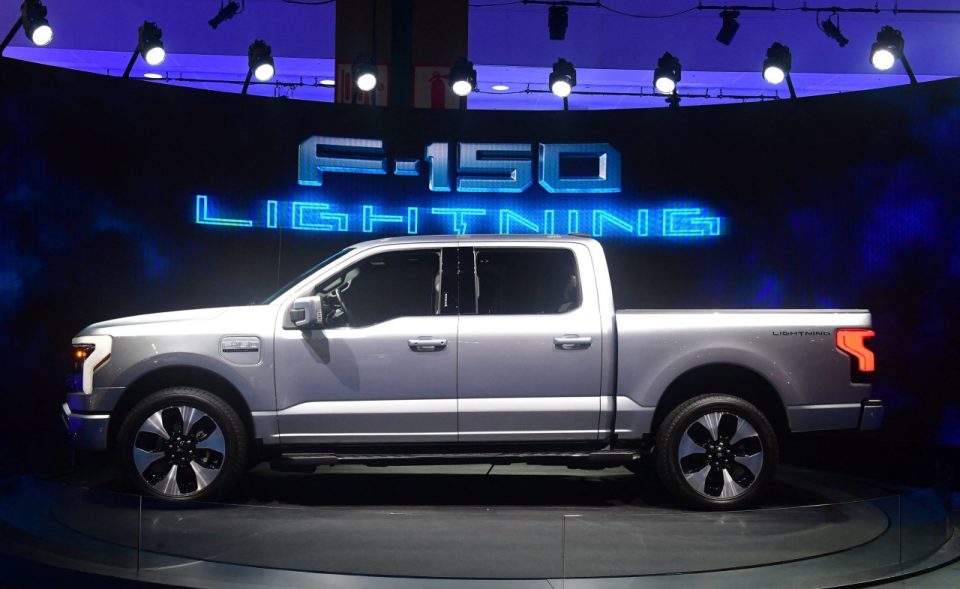
Ford’s recalibration does not spell retreat from EVs altogether. The company still plans to expand models like the Mustang Mach-E and F-150 Lightning, but with revised targets that reflect actual demand. For now, the message is restraint, not abandonment. The current environment favors companies that can balance vision with patience, and Ford’s latest move shows it is trying to strike that exact balance while coming to terms with an expensive, but necessary, lesson.
