
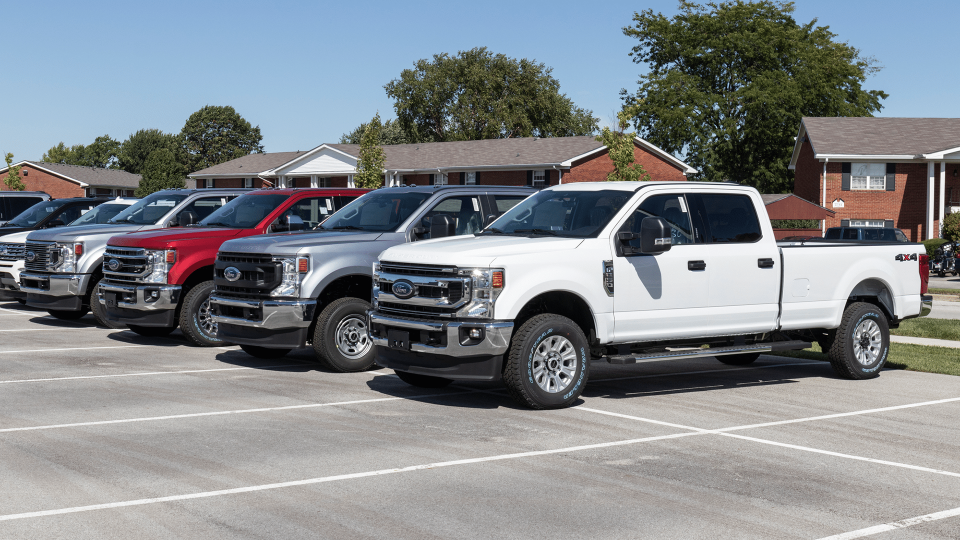
Ford Motor Company (NYSE: F) has quietly extended its positive momentum in the U.S. automotive market in 2025, buoyed primarily by strong demand for its pickup trucks. This steady growth comes in the face of shifting market preferences and challenges in the electric vehicle segment. What stands out is how traditional vehicles like pickups continue to provide a solid foundation for Ford amidst evolving consumer tastes and technological transitions.
Through the first three quarters of this year, Ford has consistently posted sales gains in the U.S., with a notable 8.2% increase in the third quarter. This streak reflects broader strength in its gas-powered and hybrid vehicle lineup, alongside its electrified options, which, while growing, face some softness compared to the rising truck sales.
Pickup trucks remain the centerpiece of Ford’s U.S. sales story. The iconic F-Series continues its dominance as America’s best-selling truck, with year-to-date sales exceeding 620,000 units as of the third quarter. This represents a 12.7% increase compared to last year and underscores the loyalty and demand for this segment. Meanwhile, Ford’s midsize Maverick pickup has gained traction as well, setting new records and attracting buyers new to the Ford brand. This model’s growth, up 10.9% year-to-date, shows that even in a market where electric vehicle interest is growing, the traditional pickup truck market remains robust.
Ford’s overall truck and van sales rose by 7.4% in the third quarter, making up the largest share of its vehicle sales domestically. Other SUV models like the Expedition and Bronco also contributed, with both posting their best quarterly numbers in years, highlighting Ford’s ability to balance expansion across vehicle types that appeal to American consumers’ enduring preferences.
Electric vehicle sales, while representing a smaller portion of Ford’s total U.S. sales, have also reached new milestones. The company recorded a 30.2% increase in electric vehicle unit sales during the third quarter, marking Ford’s best-ever quarter for EV sales. The Mustang Mach-E led the charge with a 50.7% jump in quarterly sales, showing strong consumer reception for Ford’s electric SUV. The F-150 Lightning, Ford’s all-electric pickup, also posted a record quarterly volume, growing nearly 40%. Despite these gains, electric vehicle sales still constitute only about 15.7% of Ford’s total mix, and seasonal or market shifts have partly softened its impact on overall sales growth this year.
In October 2025, Ford’s U.S. vehicle sales increased by a more modest 1.6%. This slower pace was nonetheless buoyed by a 4.9% increase in truck sales, reinforcing that pickups remain a critical pillar. This pattern illustrates a market balancing act: while EVs gain attention, traditional trucks continue to drive revenue and customer loyalty in the short term.
From a strategic perspective, Ford’s U.S. sales success hinges on diversification across vehicle types and powertrains. Its portfolio includes gas, hybrid, and electric vehicles, catering to a broad spectrum of buyers. Ford’s investment in digital services and paid software subscriptions, such as its Ford Pro platform, also reflects efforts to enhance customer value beyond the vehicle itself, with subscription numbers rising more than 30% year-over-year. These services include technology like hands-free highway driving and fleet management solutions, which add an increasingly important dimension to the company’s business.
Despite overall sales gains, Ford is navigating a complex environment. Rising costs, tariff impacts, and substantial investments in next-generation electrification challenge profit margins. While growing sales volume supports revenue, profitability pressures remain a balancing factor, underscoring the transitional nature of today’s automotive landscape.
Ford’s ability to lean on its pickup truck heritage while gradually building out its electric and hybrid offerings illustrates a pragmatic approach to change. The brand’s resilience in the U.S. market comes not from chasing one trend exclusively, but weaving multiple strengths together: trucks that meet longstanding demand, electric vehicles tapping future growth, and connected services adding value for customers. This layered strategy allows Ford to maintain momentum even when segments fluctuate.
