
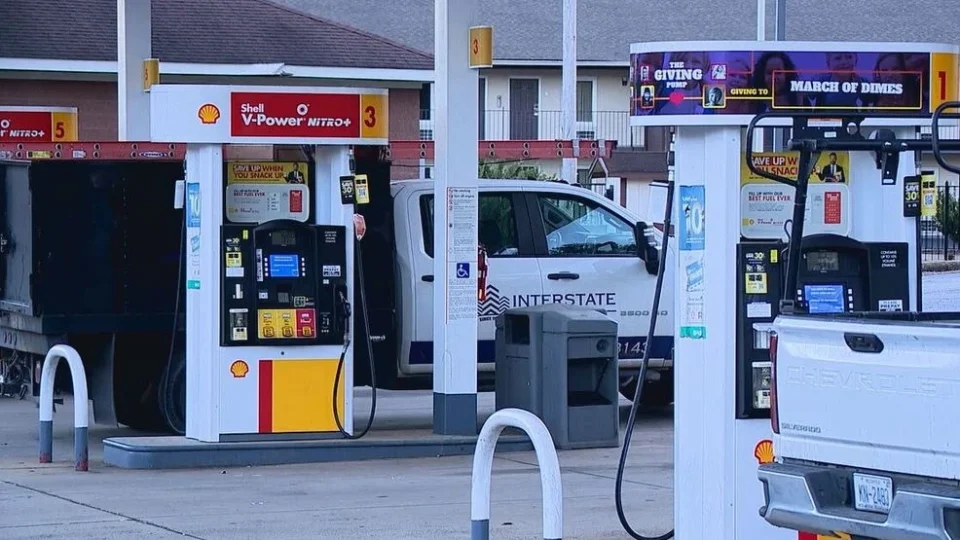
You fill up your car and notice the total creeping higher than last week. Regular gasoline in the United States now averages just under $3.72 a gallon, up $0.02 from recent days. That marks the highest level for regular gas since October 7, 2023, and it comes after a sharp climb of $0.74 a gallon since late February. For many drivers, this means real pressure on monthly budgets, especially as spring travel picks up.
Think about your weekly routine. A typical commuter might spend an extra $10 to $15 per fill-up compared to a month ago. Families planning road trips face even steeper bills, with the 26.9% monthly gain standing as the largest since Hurricane Katrina in 2005. Retailers stocking shelves also feel the pinch, as higher transport costs start to eat into thin margins. Grocery chains that rely on trucks for fresh produce could pass some of those expenses to shoppers soon.
Trucking firms bear a heavier load right now. Diesel fuel, key for their fleets, averages $4.99 a gallon, up $1.24 since the recent surge began. Many companies have added fuel surcharges to contracts, sometimes 20% or more on long hauls. Those extra costs often flow through to the prices of delivered goods, from factory parts to store shelves. Small haulers without big contracts suffer most, as they scramble to cover rising overhead without raising rates too aggressively.
Inflation worries grow alongside these numbers. Economists watch fuel as a bellwether for broader price pressures, since it touches nearly every sector. A sustained jump here can nudge up costs for manufacturing, shipping, and even farming inputs like fertilizer, which often travels the same routes. Households might see effects in higher tags on milk, vegetables, or packaged foods within weeks. Central banks already track this trend closely, as it risks slowing consumer spending.
Global energy markets explain much of the climb. Brent crude, a key international benchmark, traded at $103.50 a barrel on Monday, while West Texas Intermediate settled around $95-$98 after a slight daily dip. Both benchmarks hit multi-year highs last week amid supply worries from the Middle East. Roughly 20% of the world’s oil normally passes through a vital waterway there, and recent events have slowed tanker traffic to a trickle. That bottleneck keeps pressure on refineries and wholesalers, pushing costs toward pumps.
Countries coordinate to ease the strain. The International Energy Agency announced that member nations agreed last week to tap emergency reserves totaling 400 million barrels. Stocks from Asia and Oceania will hit markets right away, while supplies from the Americas and Europe follow by late March. This move aims to steady flows and calm futures trading, though experts note it buys time rather than fixes the root issue
In the United States, efforts ramp up to boost local output. Regulators greenlit a major Gulf of Mexico project over the weekend, the first significant deepwater push in years. Officials also ordered a restart of offshore rigs and pipelines along the California coast. These steps seek to add barrels to domestic supply, potentially softening the blow to drivers over time.
Business owners adapt in varied ways. Some retailers tweak delivery schedules to cut empty miles, while others explore hybrid fleets for shorter routes. Inflation data due soon will show if these fuel hikes spark wider ripples. For now, the focus stays on balancing books amid uncertainty. Drivers keep an eye on the pump, hoping for relief as reserves flow and production ramps.
