
India faces a growing challenge with overweight and obesity. This nation of over 1.4 billion people has the third largest overweight population worldwide, right after the U.S. and China. Urban lifestyles have shifted toward less movement and more high calorie food, fueling rises in diabetes and heart issues. Drugs like semaglutide, the key ingredient in Novo Nordisk (NYSE: NVO) Ozempic and Wegovy, offer help by curbing appetite and aiding weight loss. Until recently, these treatments stayed out of reach for most due to high costs. That changed with the semaglutide patent expiry on Friday last week, sparking a rush of local copies.
Local drugmakers moved fast. Natco Pharma Ltd. (NSE: NATCOPHARM) was one of the first to act and rolled out an injectable vial of generic semaglutide right after the patent ended. This starting dose costs 1,290 rupees ($14) per month. Their pen version followed soon, priced around 4,500 rupees ($48) monthly. Compare that to Novo Nordisk Wegovy pen, which runs about 10,480 rupees ($113) in India or $199 in the U.S. for self pay patients. Other firms plan similar low prices for entry level doses, roughly between 3,000 rupees ($32) and 5,000 rupees ($54) a month. This drop, often 70% to 90% below originals, stems from at least a dozen major Indian companies plus smaller players eyeing the market.
Why does this matter so much in India? The country battles high diabetes rates alongside rising obesity. Sedentary habits in cities compound the problem, making accessible treatments vital. Generics promise broader reach, especially as the weight loss drug market here sits at about $500 million today. Analysts at Jefferies see it doubling to $1 billion with smart pricing and wider use. Canada lost semaglutide patent protection earlier this year, but no generics gained approval there yet. India thus becomes the first big market to see this wave, setting a pattern others like China, Brazil, and Turkey may follow as their patents lapse.
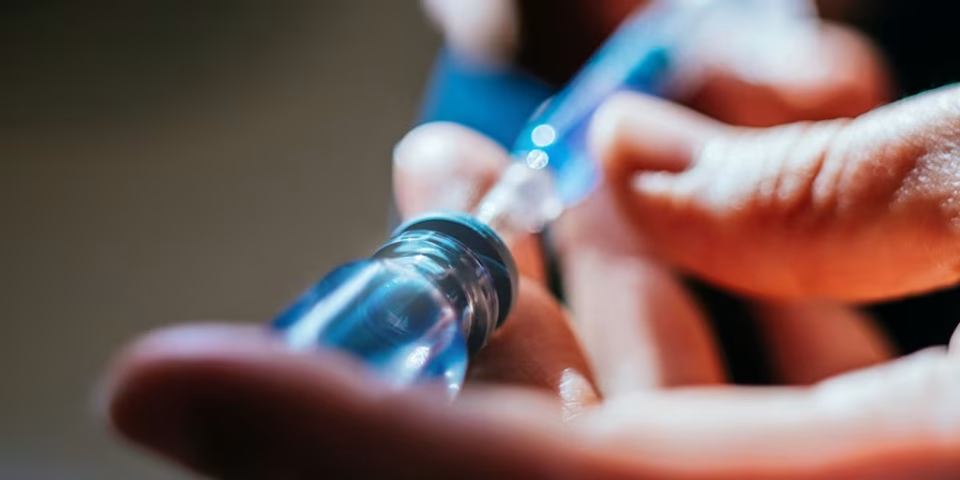
Indian firms bring creativity to delivery. Beyond standard prefilled pens with four doses, they offer single use syringes, vials, single shot pens, and reusable ones with adjustable amounts. These options cut costs further and suit varied needs. A patient might pick a simple vial for ease or a reusable pen for long term use. Such choices build habits, as people tend to stick with familiar devices even if the core drug matches. Reputation in this space and device quality now separate winners from the pack, since all versions use identical semaglutide.
Partnerships add another layer. For instance, one firm linked with two others for licensing and marketing, while another teamed with Natco Pharma for distribution. These deals speed launches and expand reach. Makers also target smaller cities, where global brands lack strong footing. Expect lively competition as over 40 companies push more than 50 brands this year, per market trackers. Noise in sales channels will rise as everyone grabs for share.
This shift carries weight beyond India. As the first major test of semaglutide generics, it shows how prices can crash post patent, boosting access in price sensitive places. Patients gain flexibility and savings, easing adoption for obesity and related conditions. Local innovation in formats meets real world demands, from budget vials to user friendly pens. Companies betting on this space must now prove reliability through quality and reach.
The changes highlight India’s role in global pharma. With diabetes and obesity pressing hard, affordable options fill a key gap. Expect more eyes on this market as it grows and shapes how blockbuster drugs evolve elsewhere. Firms that nail delivery and trust will lead the pack, while others watch from behind.
