
[stock_market_widget type=”card” template=”basic2″ assets=”RIVN” realtime=”true” api=”yahoo-finance”]
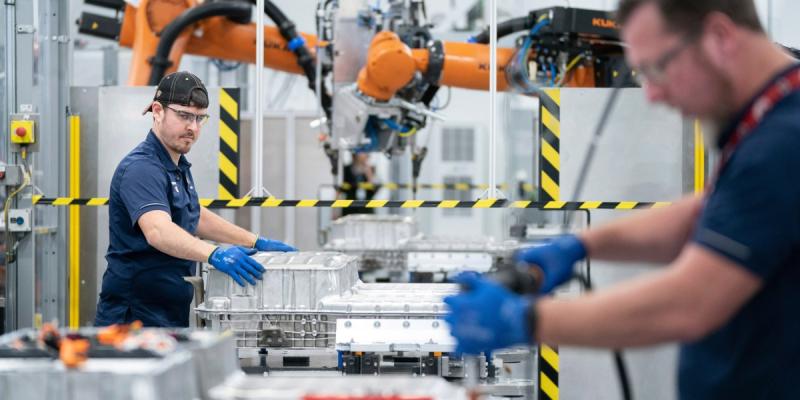
Rivian Automotive (NASDAQ: RIVN) recently teamed up with Redwood Materials to put old batteries from its electric vehicles back to work. These are batteries that have reached the end of their life in Rivian’s trucks and SUVs, but they still hold plenty of charge for other jobs. The partnership installs more than 100 recycled packs at Rivian’s factory in Normal, Illinois. This setup starts with 10 megawatt-hours of energy storage, enough to help power the plant’s operations reliably.
Batteries in electric vehicles typically last for about 8 to 10 years or 100,000 to 200,000 miles before their capacity drops below 70% to 80% of original levels. At that point, they no longer suit daily driving demands, but they retain 70% or more capacity for stationary uses like storing energy. Companies remove these packs from vehicles, test them, and repurpose them into systems that smooth out power from solar or wind sources or back up factories during peak times. This approach cuts waste and lowers costs compared to buying new batteries for storage.
Redwood Materials handles the refurbishing. The startup, founded by Tesla’s former battery chief JB Straubel, sorts used packs, replaces faulty cells, and rebuilds them into storage units. At Rivian’s plant, these second-life batteries will store excess energy and release it when needed, reducing reliance on the grid. The project shows how automakers can loop their own products back into operations, creating a closed cycle that saves money and resources over time.
Other companies follow similar paths. Element Energy completed what it called the world’s largest second-life battery storage project in Texas. This 53-megawatt-hour system uses retired electric vehicle packs connected to the grid. It helps balance electricity supply during high demand, proving large-scale reuse works for utilities.
Nissan has repurposed batteries from its LEAF cars, the early electric hatchback, into storage projects around the world. One example pairs with Enel in Italy for a system that supports renewable energy at a community site. Another powers an airport facility, storing solar power to charge ground equipment and lights. These setups highlight how Japanese automakers extend battery life beyond roads.
Mercedes-Benz works with Moment Energy to supply used batteries from EQ models for stationary storage. Their agreement feeds packs into grid projects and factories, much like Rivian’s effort. These examples build a pattern: carmakers partner with specialists to turn vehicle batteries into factory or grid assets, often starting small and scaling up.
The benefits go beyond one factory or site. Second-life batteries cost 40% to 60% less than new ones for energy storage, based on industry estimates. They keep valuable materials like lithium and cobalt out of landfills longer. As electric vehicle sales climb, with millions retiring yearly by 2030, supply for these projects grows. Refurbishers match packs by health, ensuring reliable performance over 10 more years.
Challenges remain, though. Standards for battery health vary, so testing takes time. Safety rules demand fireproof enclosures and monitoring. Supply chains depend on steady vehicle returns, which fluctuate with sales. Still, pilots like Rivian’s prove the model, encouraging more factories to adopt it.
Businesses gain predictable power without huge upfront spends. Utilities get flexible storage to handle renewables’ ups and downs. The shift turns a disposal cost into revenue, as companies sell or lease packs. Rivian’s move in Illinois sets an example others can copy, blending vehicle production with smarter energy use.
Projects multiply as technology improves. Better sorting tools and software predict pack life accurately. Governments offer incentives for reuse, seeing it as a green win. Automakers from startups to giants now view batteries as multi-stage assets, first mobile, then fixed.
This cycle closes the loop on electric mobility. Factories power up with their own past output. Grids stabilize with proven packs. The practice spreads, making batteries a longer-term investment for everyone involved.
