
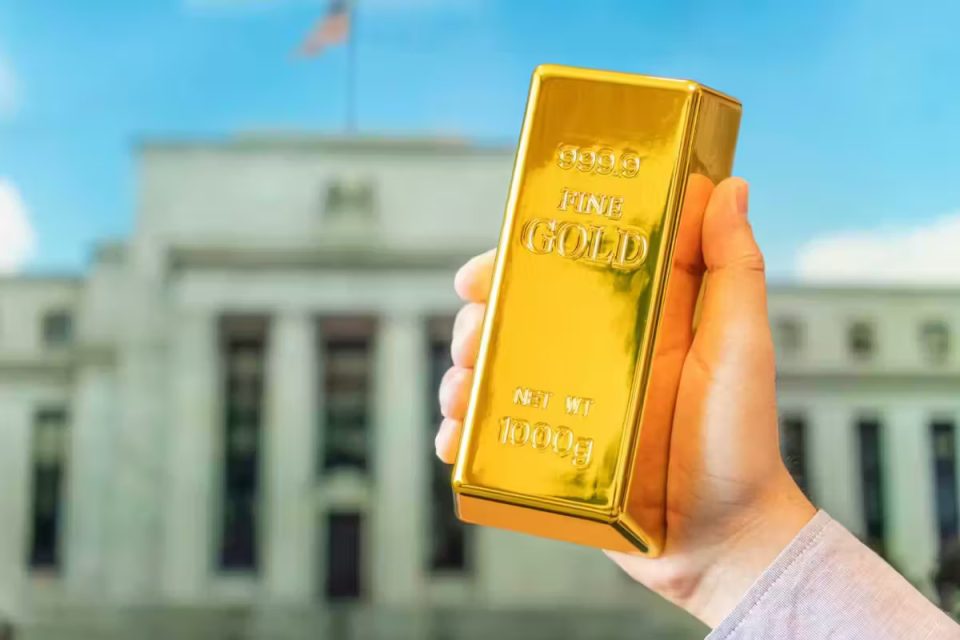
Gold has traded above $3,900 per ounce for three consecutive days, inching closer to closing above this historic threshold for the first time ever. This milestone reflects a significant rally in 2025, with gold prices rising nearly 48% year-to-date. The current surge is driven by a combination of heightened political uncertainty, economic concerns, and shifting investor behavior amid the ongoing U.S. government shutdown and expectations of Federal Reserve rate cuts.
Since October 1, 2025, when the U.S. federal government entered a shutdown for the first time in almost seven years, gold has experienced renewed demand as investors seek refuge in tangible assets. This fiscal impasse is estimated to be costing the U.S. economy about $7 billion per week and has intensified worries over the country’s economic growth trajectory. With political gridlock delaying key economic data releases and raising doubts over government stability, investors are moving capital away from traditional fiat assets and into gold.
This strong appetite for gold is compounded by escalating trade tensions and tariffs between major economies, contributing to global economic uncertainty. The imposition of new tariffs on a range of goods, including steel and heavy trucks, by both the U.S. and the European Union is disrupting supply chains and inflating costs. These developments reinforce gold’s appeal as a hedge against inflation and market instability.
Another crucial factor underpinning gold’s rally is the expectation that the Federal Reserve will continue cutting interest rates this year. Market tools show a 97% likelihood of a 25-basis-point cut in October and an 88% chance of another before year-end. Lower interest rates reduce the opportunity cost of holding non-yielding assets like gold, making it more attractive compared to cash or bonds. Gold futures have responded to these signals by remaining robust near the $3,900 level despite recent market volatility.
Central banks in Asia, particularly China and India, continue to accumulate gold reserves, providing structural support to prices. This steady institutional demand, combined with short-term flight-to-safety motives, creates a strong foundation from which gold prices can sustain their gains. Analysts note that this year’s rally has already more than doubled the pace of the previous decade’s bull run in terms of annual returns.
Looking ahead, leading analysts project that gold could push above the $4,000 per ounce mark before the end of 2025. UBS strategist Giovanni Staunovo and others see the combination of dovish Federal Reserve policies, persistent geopolitical risks, and ongoing central bank buying driving prices higher. One forecast from a prominent investment bank suggests a 6% rise from current levels by mid-2026, reinforcing bullish expectations without dismissing near-term volatility.
Yet, despite this momentum, some caution is warranted. Technical analysis points to gold being overbought, meaning a pullback or consolidation could occur if support levels around $3,825 to $3,850 fail to hold. In such a case, gold could temporarily retreat to the $3,700 to $3,735 range before resuming its upward trend, assuming Federal Reserve rate cut bets remain intact.
For now, gold’s streak above $3,900 reflects a deep-seated unease with the economic and political landscape, amplified by tangible data disruptions and policy uncertainties in the U.S. As investors closely monitor upcoming employment reports and Federal Reserve decisions, gold stands out as a focal point for market participants seeking balance between risk and safety.
