
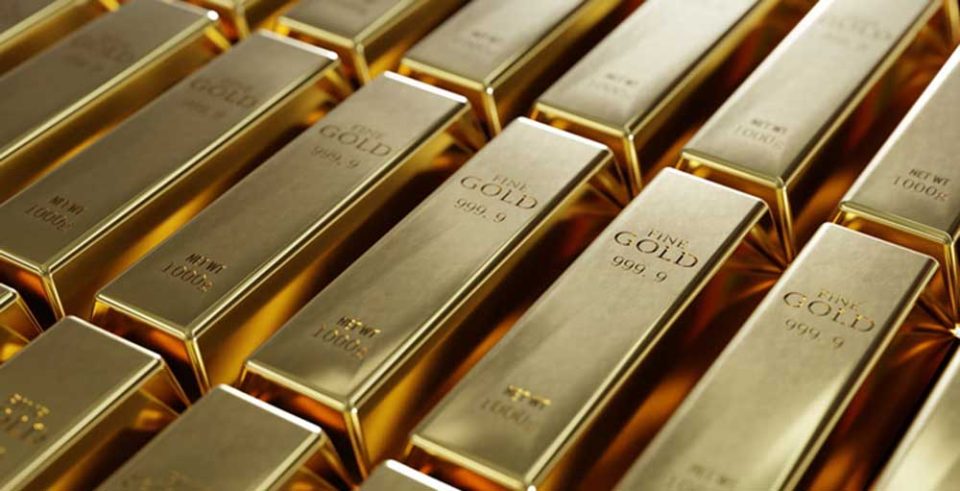
Today, the price of gold climbed to an intraday high of $3,715.20 before retreating, marking a notable moment in this year’s rally for the precious metal. Analysts now increasingly speak of gold reaching $4,000 per ounce, reflecting a shift in sentiment driven by a blend of economic and geopolitical factors. This movement is more than just a fleeting spike; it points to deeper market dynamics that many investors are watching closely.
Gold has already made significant gains in 2025, strong enough to outpace many other assets in terms of price appreciation. From well under $3,000 just last year, it has surged by more than 30% at points this year. Its role as a haven for investors becomes more apparent amid prevailing uncertainties, including concerns about inflation, trade tensions, and an unpredictable monetary policy environment. Historically, gold tends to hold value when other markets stagger, and that pattern seems set to continue as conditions remain unsettled.
Looking ahead, several influential voices in finance are supporting the view that gold could hit $4,000 per ounce by mid-2026. J.P. Morgan, for example, projects an average price of $3,675 by the end of 2025 with an increase to $4,000 sometime around the middle of next year. These forecasts are based on ongoing risks such as geopolitical instability and potential shifts in central bank policies, including interest rates and quantitative easing measures. The uncertainty in global markets strengthens gold’s appeal as a nonyielding asset, especially when confidence in fiat currencies, such as the U.S. dollar, shows signs of wavering.
Goldman Sachs analysts share a similarly bullish outlook, envisioning a baseline price of $3,700 per ounce by the end of this year and $4,000 by mid-2026. They even suggest more aggressive scenarios where gold might reach as high as $5,000 an ounce if there are significant disturbances to U.S. Federal Reserve independence. Such a scenario would likely cause a flight from bonds and stocks, funneling capital into precious metals as a safer alternative.
The technical side of gold also supports this optimism. After a period of consolidation, the break above previous resistance levels points to renewed buying momentum. Historically, swift breakouts following extended periods of sideways trading in gold often result in sustained price surges. Institutional investors have been steadily increasing their holdings, reinforcing the underlying trend and boosting market confidence.
Economic data underpins much of this cautious enthusiasm. Recent reports showed labor market weakness, with job growth in August falling short of expectations and downward revisions to prior months. These signs of economic fragility raise expectations that central banks may ease monetary policy sooner rather than later, which is typically beneficial for gold prices.
Yet, despite the optimism, some expect short-term corrections or profit-taking before gold can fully realize these price targets. Market participants often take gains after rallying moves, which means volatility will likely continue. However, the broad backdrop favors continued strength, supported by ongoing trade uncertainties, inflation concerns, and geopolitical risks, all of which benefit gold’s safe-haven status.
Another factor to consider is how central bank purchases influence the market. While buying may slow if prices rise beyond $3,300, a pullback closer to $3,000 could renew demand from official reserves, adding another layer of support. Physical demand in major markets such as India and China might fluctuate depending on price moves, particularly in jewelry and smaller bar investments, but institutional interest continues to grow.
Today’s peak price of $3,715.20 represents a milestone in the current rally but should be viewed in the context of a broader trend rather than an isolated event. Analysts agree that a gold price of $4,000 is within reach and that the metal could become a defining asset in portfolios navigating the challenges of the coming years.
Gold’s rise to new highs reflects more than market enthusiasm; it signals shifting economic realities and growing demand for stability amid uncertainty.
