
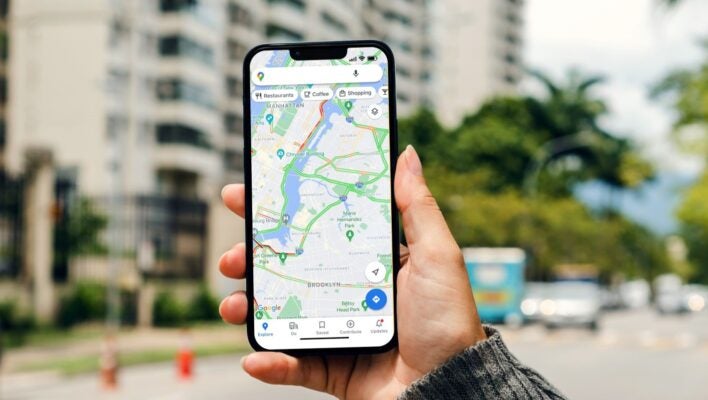
Google Maps has long been the go-to app for finding your way around, with over 2 billion people using it each month. Alphabet Inc. (NASDAQ: GOOGL, NASDAQ: GOOG), the company behind Google, recently rolled out what it calls the biggest set of changes to the app in more than ten years. These updates build on a product that has been around for years by weaving in artificial intelligence from its Gemini models. The goal is simple: make getting from point A to point B feel more like chatting with a knowledgeable friend than following robotic instructions.
Take Ask Maps, one of the headline additions. This feature lets you talk to Google Maps in plain English, asking complex questions while you drive. You might say something like, “Find me a quiet coffee shop with outdoor seats near my route that is not too crowded right now.” The AI pulls from a massive database of over 250 million places, cross-checks real-time data from Street View images, and even factors in user reviews from half a billion contributors. It handles multi-step requests too, such as planning a road trip with stops for lunch, gas, and a quick hike. What makes this a smart upgrade for a mature app is how it layers AI reasoning on top of years of accumulated mapping data. Instead of sifting through menus or typing one-word searches, users get tailored suggestions that evolve with follow-up questions. This turns a static tool into something responsive, much like how we naturally ask for directions from someone who knows the area well.
Immersive Navigation takes things further by rethinking how you visualize your path. Picture this: as you drive, the app switches to a three-dimensional view that highlights real-world landmarks like that tall red-brick building on your left or the median strip ahead. Gemini generates these views on the fly, using detailed environmental data to avoid errors like inventing fake landmarks, a common AI pitfall called hallucination. It also weighs pros and cons of route options, such as time savings versus toll costs, and suggests parking spots based on current availability. For drivers in unfamiliar cities, this means less stress and fewer wrong turns. Businesses in logistics or delivery can see efficiency gains here, as fleets optimize routes with clearer, context-rich guidance. Alphabet built this by training Gemini on decades of Google Maps data, proving how AI can breathe new life into established software without starting from scratch.
These changes show a clear pattern in how companies like Alphabet use AI to enhance long-standing products. Google Maps launched over 20 years ago as a basic digital map. Over time, it added traffic updates, satellite views, and indoor floor plans. Now, Gemini acts as the brain, processing natural language and visual data together. This multimodal approach lets the app understand voice commands alongside camera inputs, like pointing your phone at a storefront for instant details on hours or menus via Gemini Lens. It is rolling out first in the U.S. on Android and iOS, with CarPlay and Android Auto support, and plans to expand. The result is an app that anticipates needs, such as proactive alerts for traffic jams on your usual commute. For everyday users, it reduces decision fatigue. For enterprises, it opens doors to better fleet tracking and customer service integrations.
Competition sharpens the picture. Apple Maps has improved with its own AI-driven look around feature and detailed city flyovers, but it trails in global coverage and real-time crowd-sourced data. Waze, which Google owns, excels at user-reported hazards like police ahead, yet lacks the polished 3D immersion. Ask Maps and Immersive Navigation position Google Maps ahead by combining conversational depth with visual clarity, drawing from a wider data pool. Rivals must match this blend of legacy accuracy and AI intuition to keep up. Businesses watching ad placements or ride-sharing integrations will note how these tools could boost engagement, as users spend more time in-app exploring options.
Developers get tools too, like AI agents that generate code for custom Maps projects, hinting at broader enterprise uses. Think delivery apps that chat with drivers about optimal stops or retailers overlaying promotions on immersive routes. Alphabet’s move reflects a broader industry shift: take proven platforms, infuse them with advanced AI, and watch user loyalty grow. Google Maps proves that even giants can evolve meaningfully.
Privacy remains a watch point, as more data fuels these features. Google emphasizes safeguards, grounding responses in verified sources to build trust. Early users report the conversational flow feels natural, cutting navigation time noticeably. As rollout continues, expect refinements based on feedback. This update does not reinvent the wheel. It makes it turn smoother.
