
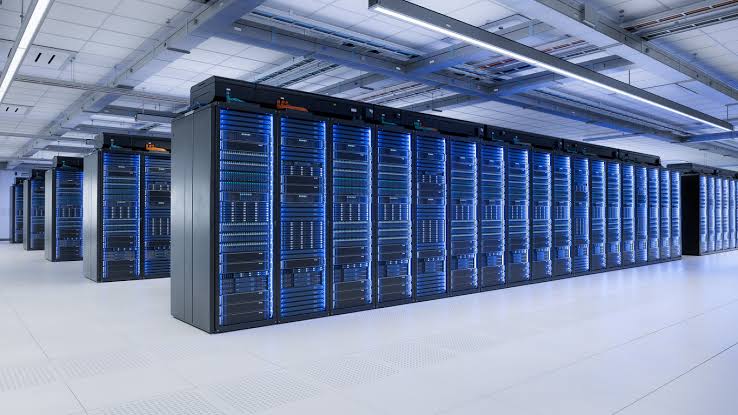
Across parts of the United States, wind and solar farms sometimes make more electricity than the local grid can absorb. When that happens, operators are often forced to dial back production, and the extra power simply goes to waste. A small group of companies has built a business around that problem by placing energy-hungry computers right next to the power plants themselves. These are the facilities now commonly called green data centers, and they sit at the intersection of renewable energy and heavy computing.
A green data center is, at its simplest, a computing site powered mainly by renewable energy such as wind, solar, or hydroelectric generation. Many are built next to the power source so they can draw on electricity that might otherwise be curtailed, the industry term for output that gets cut when supply outpaces demand. Because computing loads can be switched up or down quickly, they make a flexible customer for power that would otherwise be lost. The appeal has grown as demand for both Bitcoin mining and artificial intelligence pushes electricity use higher, drawing new attention to the smaller companies working in this space.
Soluna Holdings, Inc. (NASDAQ: SLNH), a developer of green data centers built alongside renewable-energy plants, announced that one of its subsidiaries had entered into an agreement with Dory Creek, LLC, a wholly owned subsidiary of Bitdeer Technologies Group (NASDAQ: BTDR), a company that builds infrastructure for Bitcoin mining and AI. Under the agreement, Bitdeer will deploy roughly 28 MW of Bitcoin mining equipment at Soluna’s Project Kati 1 in South Texas.
The site itself helps explain why the arrangement matters. Project Kati 1 is an 83 MW wind-powered data center in Willacy County, in the Rio Grande Valley of South Texas, and it recorded its first gross profit in the second quarter of 2026. The equipment, which the company describes as representing about 1.93 exahashes per second of mining power, will go into a phase of the site known as K1BC. Deployment is set to begin in September 2026 and to arrive in batches rather than all at once.
What sets this apart from a standard hosting contract is how the two sides split the work and the reward. The agreement takes the form of a co-mining arrangement, a new structure for Soluna’s Bitcoin business. Soluna provides the site, the power, and the day-to-day operations, while Bitdeer provides and owns its Sealminer A2 Pro Air machines. Rather than charging rent for space and electricity, the two companies share in the mining proceeds that the equipment produces. No dollar value was attached to the agreement, and because the returns depend on Bitcoin output rather than a fixed fee, neither side has put a number on what it will earn.
John Belizaire, Soluna’s chief executive, framed the model as something that grows out of the company’s track record rather than a break from it. “Co-mining is a natural extension of that operating history,” he said, adding that the structure lets Soluna share more directly in what its infrastructure produces.
To put the 28 MW figure in context, it is one piece of a much larger footprint. Soluna reported 192 MW of data center capacity already running across Project Sophie in Kentucky and its Dorothy 1, Dorothy 2, and Kati 1 projects in Texas, with another 14 MW under construction at Kati 1. The company also points to a development pipeline totaling 6.3 GW. Bitdeer, for its part, is headquartered in Singapore and operates data centers in the United States, Norway, and Bhutan.
The wider point is about direction rather than a single site. Agreements like this one turn renewable power that might have been wasted into contracted computing capacity, and they tie these smaller operators to two of the hungriest sources of electricity demand around, Bitcoin and AI. Whether co-mining becomes a common template or stays a niche experiment will depend on how the shared-proceeds math works out over time. For now, it is a concrete example of how clean energy and heavy computing are learning to lean on each other.
