
Helium might sound like just the stuff for party balloons, but it powers some of the most advanced parts of modern life, especially in technology. Right now, the Iran war has shut down a major source of this gas, and that could create real problems for industries around the world. Let’s walk through what helium is, where it comes from, and why this matters so much for chip production.
Helium comes mainly as a byproduct when companies pull natural gas from the ground. They use a process called cryogenic distillation to separate it out during the cooling steps for liquefied natural gas, or LNG. The biggest helium comes from places with huge natural gas fields, like Qatar, the United States, Russia, and Algeria. Reserves sit mostly underground in those same spots, with about 70% of known supplies in just those four countries.
In 2025, production looked concentrated too. The chart below is a breakdown of the top helium producers and their share of world output that year, based on estimates before the war hit.
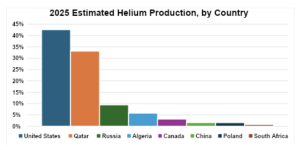
The United States led with 42.63%, followed by Qatar at 33.16%. Russia took 9.47%, Algeria 5.79%, Canada 3.16%, China 1.58%, Poland 1.58%, and others like South Africa made up the rest.
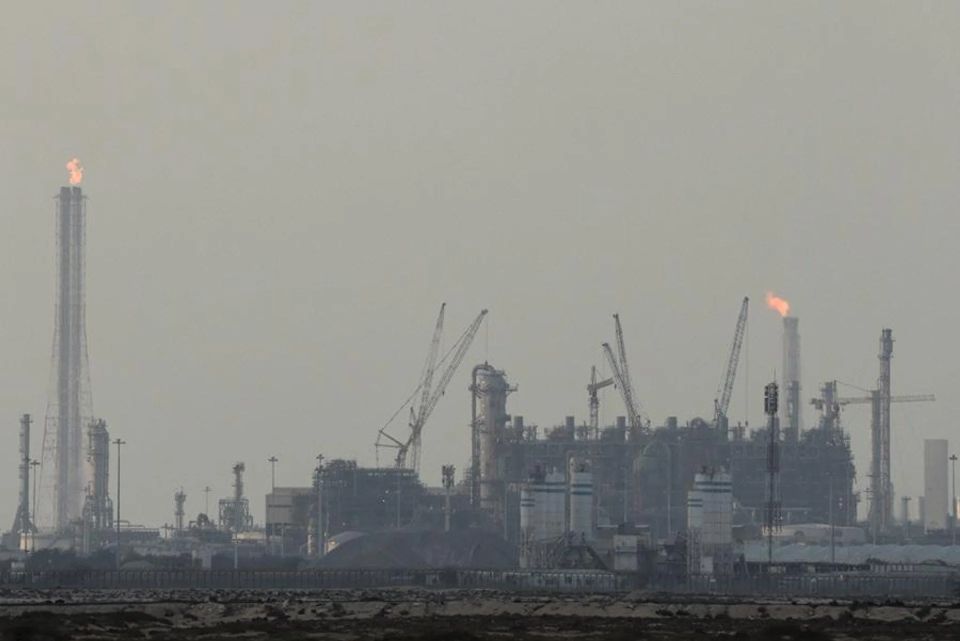
QatarEnergy’s plant in Ras Laffan Industrial City used to handle more than 30% of global helium before the Iran war started. That facility, the world’s largest LNG export site, got hit by an Iranian drone early in the conflict. Operations stopped on March 2, 2026, with QatarEnergy declaring force majeure soon after. That means they cannot meet contracts right now due to events beyond their control.
This closure pulls a huge chunk from the supply chain. Qatar shipped most of its helium to big markets in Asia and Europe, where tech firms and chipmakers cluster. Without that flow, the world loses over a third of its helium almost overnight. Reserves exist, and users have stockpiles, but those will not last forever if the plant stays dark.
Chipmakers need helium for several key steps that no other gas matches perfectly. They use it to purge air and contaminants from production chambers, keeping everything ultra clean since helium stays inert and does not react. In lithography, especially extreme ultraviolet machines, helium fills vacuums to let light patterns etch tiny circuits without interference.
It also cools tools and materials during high heat processes, like when lasers or plasmas shape wafers. Leak detection relies on helium too; its tiny molecules slip through flaws in equipment, helping factories spot issues fast. Without steady helium, yields drop, costs rise, and output slows for everything from smartphones to AI servers.
Once extracted, helium goes liquid at super cold temperatures, around minus 269 degrees Celsius, to ship it efficiently. From Qatar, tankers head through the Strait of Hormuz to Asia or Europe, a trip that takes weeks. Special containers hold it for 35 to 48 days before it starts boiling off and escaping valves.
Stockpiling helps in the short run. Companies built up helium after past shortages, and the transit lag means no instant pinch. But experts like helium consultant Lee Kornbluth note it could take several weeks before users in key markets feel shortages. If Ras Laffan remains offline for months, those buffers empty quick.
The real issue lies in how few places make helium. Just a handful of plants control most output, so one shutdown like this exposes everyone. U.S. producers might ramp up, but they face their own demand from chips and space tech. Asia, home to giants like Taiwan Semiconductor (Taiwan: 2330.TW), imports nearly all helium and has little room to switch sources fast.
A prolonged outage tests that thin margin. Prices spiked before, and recycling tech exists but covers only 10 to 20% of needs. Chip demand keeps climbing with AI and electric vehicles, so this Qatar halt could force factories to idle lines or hunt backups that do not exist in volume yet.
Businesses watch closely as the war drags on. Reserves buy time, but the math does not favor endless delays. Tech growth depends on this quiet gas, and Qatar’s stoppage reminds everyone how fragile that link really is.
