
China ranks as the world’s second largest oil consumer, right after the U.S., with India close behind, according to data from the Organization of the Petroleum Exporting Countries (OPEC). Over night oil prices have jumped past $100 a barrel for the first time in four years, sparked by tensions from the Iran war. This surge puts pressure on big importers everywhere, but China stands better prepared than many peers thanks to years of work on crude stockpiles and energy mix changes.
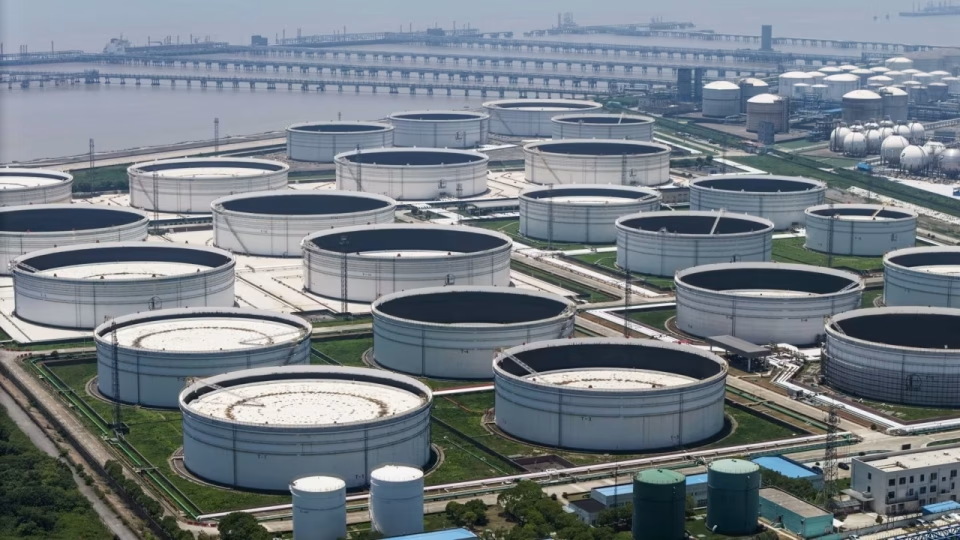
Oil reserves work like a nation’s emergency food pantry for fuel. China holds an estimated 1.2 billion barrels of onshore crude stockpiles as of early this year, enough to cover three to four months of normal use. Rush Doshi, director of the China Strategy Initiative at the Council on Foreign Relations, pointed this out on CNBC’s Squawk Box Asia, noting it buys time before price hikes bite the economy. Recent reports peg the strategic portion alone at around 900 million barrels, with plans to grow it further under the 2026 to 2030 five year plan.
These stockpiles matter because China imports most of its oil, making it vulnerable to shipping disruptions. In the past, a choke point like the Strait of Hormuz could spell trouble, as tankers carry much of the supply through there. Now, those reserves act as a delay mechanism. OCBC analysts recently said China feels less pain from a potential Hormuz closure than other Asian countries. The buffer lets factories and power plants keep running while leaders sort out longer fixes.
China spent two decades cutting reliance on sea routes for oil. Doshi explained that new overland pipelines from places like Russia now handle more flow. The Strait of Hormuz still supplies 40% to 50% of China’s seaborne imports, but that share has shrunk. Pipelines bypass chokepoints and speed delivery, dodging weather or conflict delays. This shift started as a security move after past supply scares and now pays off amid current Middle East issues.
Picture it this way: if oil ships face blockades, pipeline oil keeps coming. China built this network steadily, adding lines that link to Central Asia and Russia. It reduces the scramble for spot market buys at peak prices. Other importers lack this option at the same scale, so they scramble faster when seas turn risky.
China pushes non fossil fuels hard too. The country plans to lift their share in total energy use to 25% by 2030, up from 21.7% last year. Solar farms, wind turbines, and even coal to gas tech fill gaps when oil runs dear. This diversification means oil shocks ripple less through the whole economy. Electric vehicles cut oil demand in transport, another smart hedge.
Compare this to others. The U.S., top consumer, produces over 13 million barrels a day domestically, so it shrugs off import hiccups better in raw volume terms. But its economy still feels inflation from high fuel costs. India relies heavily on sea imports with slimmer reserves, maybe 10 days worth, leaving it exposed to quick price pain at refineries and pumps. Japan, another big buyer, stocks about 200 days via strict rules, but its island setup limits pipeline options and drives up costs. China’s mix of stockpiles, pipes, and green energy lands it in a middle sweet spot: not self sufficient like the U.S., but tougher than India or most Asian peers.
With oil over $100, China’s prep shows. Factories keep humming on reserve crude while renewables hold steady. The economy avoids instant slowdowns that hit import dependent rivals. Beijing’s five year plan doubles down, targeting steady domestic oil output at 200 million tons yearly and bigger gas reserves. Inland storage sites pop up too, away from coasts.
India might ration fuel or see inflation spike without similar buffers. Japan taps allies for swaps, but that costs premiums. The U.S. exports excess, softening blows. China delays the hurt, giving time to pivot. Rush Doshi called it a 20 year play that now cushions the blow.
Business leaders watch this closely. Supply chains for goods from China face less disruption, keeping global trade smoother. Energy costs stay predictable longer. As tensions simmer, China’s strategy proves preparation beats reaction. OPEC data shows consumption rising everywhere, so stockpiles and diversification set winners apart.
