
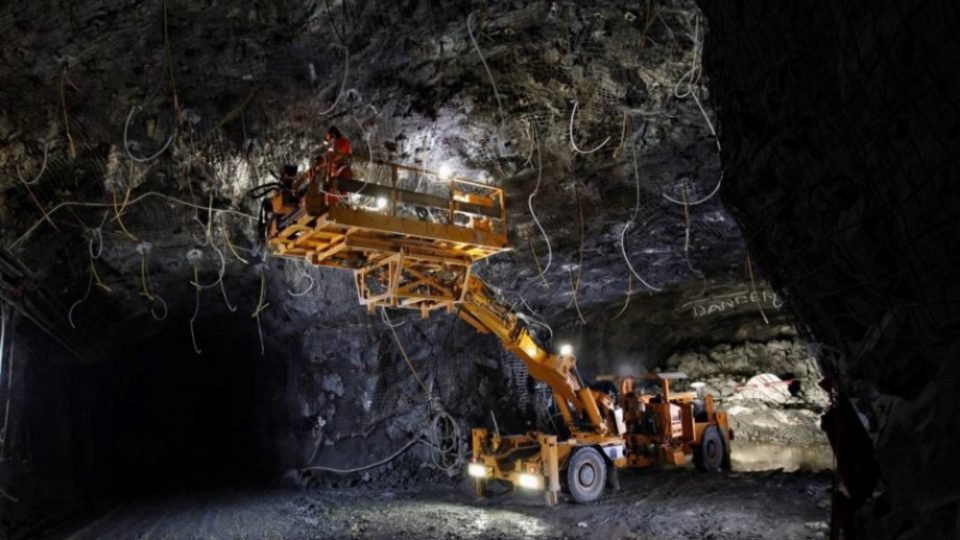
Nearly two billion years ago, a meteorite slammed into what is now northern Ontario. The molten rock it left behind settled into one of the richest metal deposits on the planet, the Sudbury Basin. Mining there has gone on for more than a century, and the region still produces most of Ontario’s copper, nickel and platinum group metals. Sudbury alone hosts six of the eight minerals on the province’s original critical minerals list, including nickel, copper, cobalt and platinum group elements.
The scale is significant. In 2025, Ontario mines produced 42,965 tonnes of nickel worth about $797 million (CAD $1.13 billion), or 33% of Canada’s nickel output by value. They also produced 88,959 tonnes of copper worth roughly $711 million (CAD $1.01 billion). Ontario turned out 485,103 troy ounces of platinum group elements, which made up 76% of the national total. All of the province’s minerals together were worth about $10 billion (CAD $14.2 billion).
These metals come out of the ground together. A single Sudbury ore body can hold copper, nickel, cobalt, platinum, palladium, gold and silver, so miners earn money from several markets at once. That mix matters right now. Copper demand keeps climbing because of power grids, electric vehicles and data centres, while nickel faces a more crowded market, with analysts expecting a global surplus through 2026 because of heavy supply from Indonesia.
The basin’s biggest operators are Vale S.A. (NYSE: VALE) and Glencore plc (LSE: GLEN), which own the mills and smelters that process much of the region’s ore. Even they are looking at old infrastructure to grow. Late last year, the two companies agreed to study a joint copper project that would deepen the shaft at Glencore’s idle Nickel Rim South Mine. The plan could produce about 880,000 metric tons of copper over 21 years, at a capital cost between $1.6 billion and $2 billion. Reusing existing shafts, roads and processing plants costs far less than building a mine from scratch, and that logic now drives much of the activity in the camp. Ontario’s government is pushing in the same direction and released an updated critical minerals strategy earlier this year.
One smaller company following that playbook is Magna Mining Inc. (OTCQX: MGMNF, TSX: NICU). Magna produces copper at its McCreedy West Mine, is restarting the neighbouring Levack Mine, and has approved construction at Crean Hill. Its pipeline also includes Podolsky, Kirkwood and Shakespeare. Levack closed in 2018 when metal prices slumped.
Today, Magna reported new drill results from Levack’s R2 Footwall Zone. Hole MLV-26-80 returned 7.9% copper equivalent (CuEq) over 3.9 metres, including 33.3% CuEq over 0.7 metres. CuEq rolls every metal in the rock into a single copper grade, and that short section alone carried 25.8% copper and 3.6% nickel. Hole MLV-26-81 returned 19.6% CuEq over 1.3 metres. The same MLV-26-80 hole also hit 16.6% CuEq over 2.2 metres in a separate footwall zone, about 260 metres before reaching R2. These are narrow veins, and the company notes that true widths can run between 30% and 80% of the drilled length.
The results land a month after Magna’s preliminary economic assessment (PEA) for Levack. The study estimated an after-tax net present value of about $160 million (CAD $227 million), initial capital of about $49 million (CAD $70.1 million), and commercial production from mid-2028. The R2 zone was left out of that study entirely. Magna is also merging Levack and McCreedy West, which are already connected underground, into a single Levack Mine Complex so the two can share technical and maintenance staff. Development work resumes in early December. The shaft guides have been replaced, and the hoist refurbishment remains on track for the first quarter of 2027, which should allow pre-commercial ore production during 2027.
Rich drill holes and a strong study do not guarantee a smooth restart. The PEA is preliminary and relies partly on inferred resources, and nickel prices remain soft. Over the coming year, investors will likely watch whether the hoist finishes on schedule and whether R2 grows large enough to earn a place in the mine plan.
