
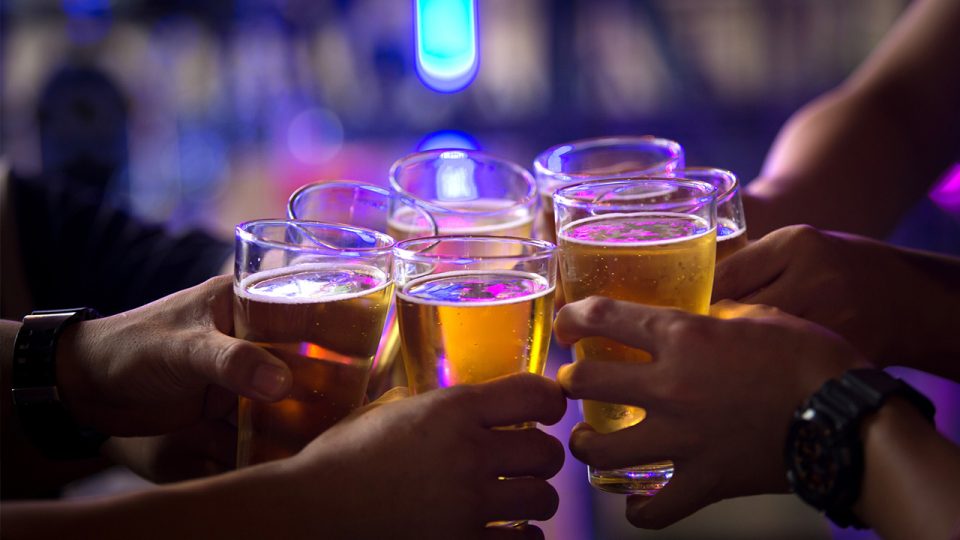
Americans’ relationship with alcohol is shifting, and the numbers show it. A recent Gallup report found that only 54% of U.S. adults now drink alcohol, one of the lowest shares in decades. For the beer industry, which once seemed impervious to lifestyle trends, this has triggered a noticeable chill. The latest Nielsen scanner data shows that U.S. beer volumes have been falling by a mid-single digit percentage year over year since June. These declines suggest that consumers are cutting back not only for health reasons but also because they now have alternatives that feel just as social and satisfying.
This cultural pivot has turned what was once a niche category into a mainstream business story. The non-alcoholic beverage market, according to data firm IWSR, is projected to reach about $5 billion by 2028. Once dominated by traditional soft drinks, the space is now teeming with new competitors selling everything from hop-infused seltzers to zero-proof spirits. For many people, drinking less no longer means giving up the ritual of having a drink in hand, and that shift has created opportunity across the supply chain.
Major brewing companies were quick to notice the trend. Anheuser-Busch InBev SA/NV (NYSE: BUD), Molson Coors Beverage Company (NYSE: TAP), and Heineken N.V. (AMS: HEIA) have all expanded their non-alcoholic lines in recent years. Heineken 0.0, for instance, launched globally as a way to reach consumers who enjoy beer’s taste but not its aftereffects. Budweiser Zero and Coors Edge followed similar thinking. The focus is less about replacing classic products and more about broadening the portfolio for a generation whose idea of moderation looks different from that of their parents.
At the same time, a growing number of independent brands are finding traction by embracing direct-to-consumer models. Companies like Athletic Brewing and Ritual Zero Proof have built large online audiences through storytelling rather than traditional advertising. They highlight performance, mindfulness, and lifestyle balance, values that align with the choices many younger adults are making. While these businesses often start online, their presence has spread into mainstream retail shelves, showing that digital-first beverage brands can successfully break into brick-and-mortar spaces.
Online retailers that specialize in alcohol are feeling the impact of these changes too. Platforms such as Drizly (owned by Uber Technologies NYSE: UBER) and ReserveBar have seen demand tilt toward spirits and ready-to-drink cocktails, while beer orders soften. Some smaller online shops have begun curating dedicated “sober-friendly” sections, featuring products like non-alcoholic wines and botanical blends. Others are rethinking their entire inventory strategy, aware that younger consumers often browse online not to stock up for a party, but to discover new experiences, alcoholic or otherwise.
For e-commerce platforms, the challenge goes beyond product selection. Alcohol remains heavily regulated at the state level, and the logistics of shipping it are complicated. By contrast, non-alcoholic beverages generally face far fewer restrictions, making them more attractive for online sales. For a retailer, that difference can mean faster delivery times, lower compliance costs, and access to a broader customer base.
The pattern emerging is not one of decline but of redefinition. Alcohol consumption is falling, yet the social ritual around drinking remains strong. Consumers are not giving up the idea of having a drink, they are simply changing what’s in the glass. That subtle distinction explains both the slump in some traditional categories and the remarkable rise in their non-alcoholic counterparts. The shift is economic, cultural, and behavioral all at once. Brands that understand it as such, whether they sell through bars, bottles, or browser tabs, stand to benefit from a changing definition of celebration itself.
