
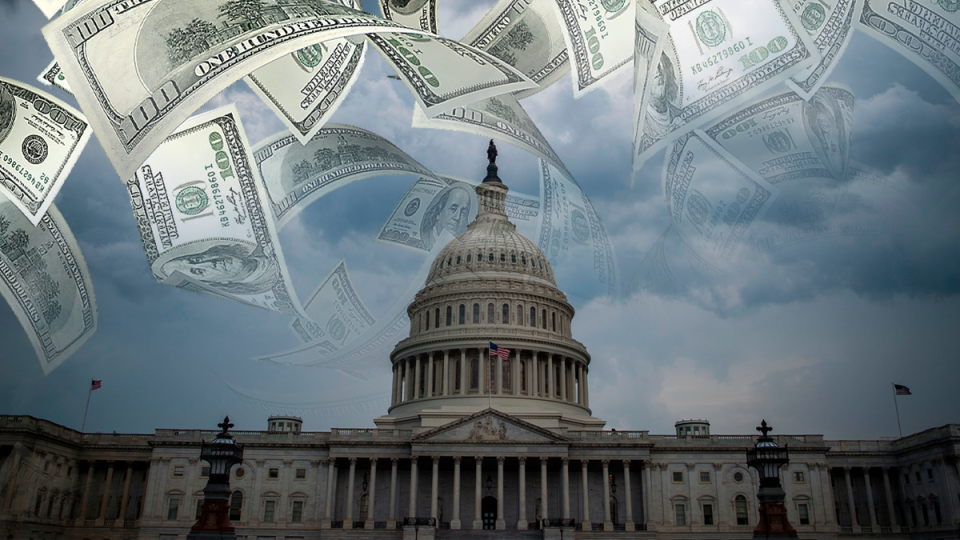
The United States government officially shut down at midnight local time Wednesday, marking a significant halt to many federal operations and triggering furloughs for hundreds of thousands of government employees. The shutdown stems from an unsuccessful attempt by the Senate to pass a temporary funding bill, leaving a large portion of federal workers without pay and suspending numerous government services.
Roughly 750,000 federal employees are expected to be furloughed each day during this shutdown, according to estimates from the Congressional Budget Office. This means they will be sent home without pay but are generally expected to receive back pay once the government reopens. Additionally, about 700,000 employees categorized as essential will continue working without immediate pay, including members of law enforcement, military personnel, and air traffic controllers. This wide-scale furlough encompasses many agencies, including the Environmental Protection Agency and the Department of Education, which face furlough rates of 89% and 87% respectively. The Department of Defense, with the largest federal workforce, is planning furloughs for about 45% of its 741,000 employees.
The shutdown began after a tense vote in the Senate failed to pass either a Democratic or Republican funding proposal. The Democratic plan, which sought to restore $1 trillion in Medicaid cuts and extend Affordable Care Act subsidies, was defeated on party lines. The Republican proposal, which offered a seven-week funding extension, secured a majority but fell short of the 60 votes needed to overcome a filibuster. Several senators broke from their parties, but the deadlock persisted.
Negotiations prior to the shutdown included a rare meeting between President Trump and Democratic leaders, but no agreement was reached. The White House canceled a previously scheduled meeting after deeming Democratic demands on healthcare subsidies “unserious.” Both parties traded blame following the vote, with President Trump and Democrats accusing each other of shutting down the government. Meanwhile, the White House Office of Management and Budget warned agencies to prepare for potentially permanent job cuts if the shutdown continues, indicating a harsh fiscal approach during the impasse.
While critical services such as Medicare, Medicaid, Social Security, and the Transportation Security Administration remain operational, many federal programs have been partially or fully suspended. This includes health-related agencies like the National Institutes of Health and the Centers for Disease Control and Prevention, which will see disruptions in their operations. The shutdown also impacts food inspections, education programs, environmental monitoring, and various administrative functions, creating uncertainty nationwide.
This is the first federal government shutdown since the 2018–2019 shutdown and the twenty-first in modern U.S. history. It highlights the deep partisan divide over budget priorities and healthcare policy, with Democrats focusing on protecting Medicaid funding and subsidies under the Affordable Care Act, and Republicans pushing for reduced federal spending. The political standoff underscores how even with a Republican majority in both chambers of Congress, a 60-vote threshold in the Senate remains a barrier to passing funding measures without bipartisan support. The duration and scope of this shutdown remain unknown, but its immediate effects are already being felt across federal agencies and among government employees.
The sheer number of furloughed employees and the disruption of government services underscore how legislative gridlock can quickly translate into practical challenges for citizens and workers alike. While back pay is guaranteed by law for furloughed employees, the financial strain during the shutdown period is a pressing concern for many households relying on federal salaries. The potential for permanent job losses also adds a layer of uncertainty, as some agencies prepare for deeper cuts if funding does not resume soon.
The Senate’s failure to pass funding legislation reflects broader political tensions and competing priorities, with both sides remaining entrenched in their positions. Unless the parties break the impasse, this government shutdown could stretch longer than previous short-term closures, exacerbating its economic and social impact. The coming days will be critical as lawmakers return to the negotiation table, but as of now, the federal government remains closed, and the wheels of government are grinding to a halt.
