
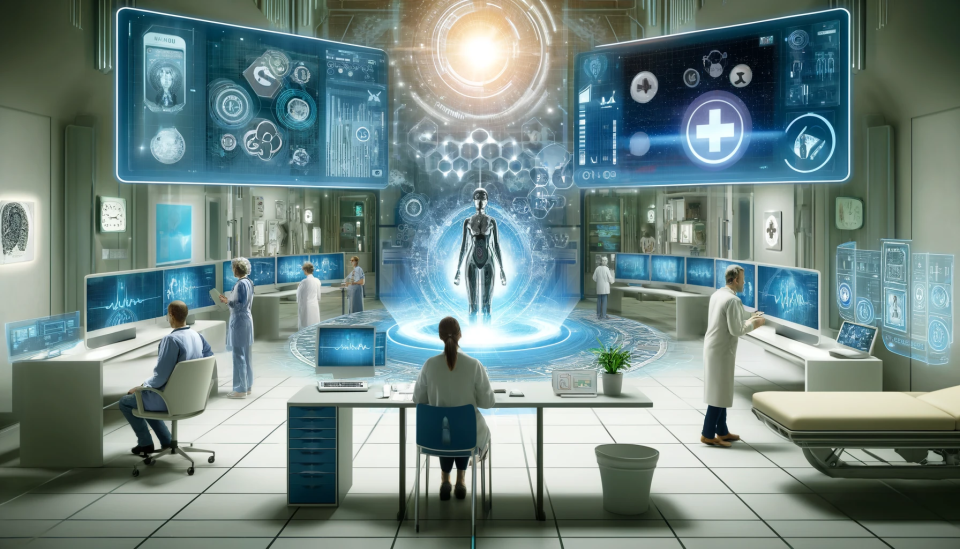
Hospitals are on the brink of a huge transformation thanks to artificial intelligence and robotics. Instead of just helping doctors and nurses, AI is set to take center stage, automating routine tasks, reducing errors, and helping solve chronic staffing challenges that many hospitals face today. This isn’t science fiction; it’s already happening, with innovative projects like Tsinghua University’s Agent Hospital leading the way.
Agent Hospital started as a fully virtual simulation created by researchers at Tsinghua University’s Institute for Artificial Intelligence Industry Research in China. Picture a digital hospital staffed entirely by AI, 14 virtual doctors and 4 AI nurses working across 21 specialties, handling everything from triage and symptom analysis to diagnosis, treatment planning, and follow-ups. In simulations, these AI agents have treated over 10,000 virtual patients in just a few days, work that would take human doctors about two years to complete.
What’s truly impressive is how these AI “doctor agents” were tested. Using rigorous medical exam datasets modeled after the U.S. Medical Licensing Examination, the AI doctors achieved a diagnostic accuracy of around 93%. This means their ability to diagnose diseases, including respiratory illnesses like COVID-19 and bronchial asthma, matches or even surpasses that of many top human specialists. All testing was done safely in a fully simulated environment with synthetic patient data, allowing rapid learning without risk to real patients.
At the heart of this system is MedAgent-Zero, a self-evolving AI framework that learns and improves by interacting with simulated patients. This means it can continuously enhance its clinical skills without needing real patient data, which makes it both safe and efficient. The virtual hospital covers nearly the entire patient journey digitally, easing pressure on real medical staff and improving care delivery.
The virtual hospital model also incorporates a robotic medication delivery system, designed to automate the process of dispensing and transporting drugs within medical facilities. In practice, this system uses intelligent robots or autonomous carts to pick up prescribed medications from the pharmacy, navigate hospital corridors, and deliver them efficiently to wards or even directly to patient bedsides. By integrating with hospital information systems and real-time location tracking, robotic drug delivery ensures timely and accurate medication administration while reducing the risk of human error. When deployed in the real world, these robots can operate 24/7, relieve pharmacists and nurses from routine delivery tasks, and allow clinical staff to devote more attention to patient care and complex procedures. This approach not only boosts operational efficiency but also supports infection control by minimizing unnecessary human contact during the medicine distribution process.
What’s exciting is that this virtual hospital model is already moving into the real world. In April this year Tsinghua’s AI Agent Hospital began pilot operations at Beijing Tsinghua Changgung Hospital. This hybrid approach blends AI’s speed and precision with human oversight, gradually transforming traditional hospital workflows. Imagine a future hospital where AI handles routine assessments, drug dispensing, and follow-up monitoring, like a simulated medicine delivery system that automates medication management, while human clinicians focus on complex decision-making and patient interaction. This setup could dramatically reduce wait times, minimize errors, and free medical staff to deliver more personalized care.
Globally, AI in healthcare is advancing fast. In the U.S., institutions like Mayo Clinic are investing billions to expand AI support beyond admin tasks into diagnostics, imaging, and even robotic surgery. Europe is using AI to enhance telemedicine and chronic disease management. But what sets China’s model apart is its ambition to automate entire clinical processes, building scalable and sustainable AI-driven hospitals.
In short, the future hospital may look very different. It will be an intelligent, AI-supported ecosystem where virtual and physical worlds merge, redefining patient care. With innovations like a simulated medicine delivery system integrated into real hospitals, healthcare could become faster, safer, and more accessible for everyone.
