
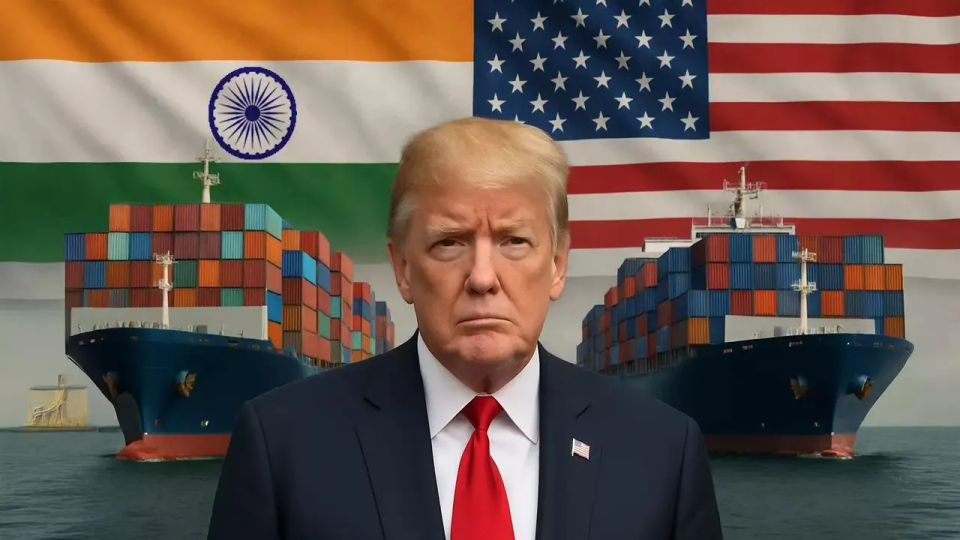
Effective today, the United States has implemented a 50% tariff on goods imported from India, marking a sharp escalation in trade tensions that risks damaging a relationship once considered vital for economic collaboration. This move, enacted under President Trump’s administration, comes as a consequence of India’s continued purchase of Russian oil, a source of deep controversy in Washington.
India regards the US as its largest export partner, with nearly 20% of its exports destined for American markets in the year ended March. The new tariff sharply raises costs for Indian exporters and poses a daunting challenge to their competitiveness in the U.S. market.
Previously, the U.S. had imposed a 25% tariff on Indian shipments early in August 2025. Now, this has been doubled, escalating the financial burden on India’s export sector. The increase to 50% tariffs places India among the countries facing the highest levies imposed by the US in recent years.
The value of goods imported from India by the US was estimated at $87.3 billion in 2024, highlighting the scale of trade between the two nations. Yet, these tariffs could slash Indian exports to the US by billions of dollars, forcing affected sectors and exporters to rethink strategies and seek alternative markets.
Among the hardest hit will likely be industries involved in textiles, gems, jewelry, apparel, footwear, furniture, and industrial chemicals. These sectors not only represent a significant share of India’s shipments to the U.S. but also provide employment to hundreds of thousands of people in India. Analysts suggest export declines of up to 70% in vulnerable sectors could occur by 2026, a devastating impact for many businesses and workers.
India’s ambitions to become a major manufacturing hub are undermined by this tariff hike, particularly in the context of global competition where China remains a low-tariff competitor for the same American consumers. The tariffs risk not only economic loss but also diplomatic friction, shaking the foundations of what was a growing US-India partnership.
The Trump administration has justified the tariffs as a punitive measure aimed at discouraging India from its oil purchases from Russia, which the U.S. seeks to isolate economically amid Russia’s ongoing conflict in Ukraine. This move has drawn criticism from India, which argues that it faces unfair treatment compared to other countries importing Russian oil, such as China, which currently faces lower tariffs.
The US-India trade relationship, totaling an estimated $212 billion last year, reflects a complex interaction that now finds itself at a crossroads. While U.S. exports to India increased modestly to around $41.5 billion in 2024, imports from India remain significantly higher, constituting a large share of the $128.9 billion total goods trade. The trade deficit for the US with India rose to $45.8 billion, which partly motivated Washington’s actions.
In response, Indian authorities have indicated plans to cushion the blow of these tariffs by supporting exporters through policy measures and seeking dialogue to resolve the dispute. However, the heightened tariffs are expected to prompt a realignment of trade routes, with Indian exporters possibly turning to markets in Latin America, the Middle East, and other regions less affected by US tariffs.
For American consumers and businesses, these tariffs may translate into higher prices and more limited options for certain goods previously sourced from India. The broader economic implications also suggest a potential cooling of bilateral cooperation that had recently been on an upswing.
The 50% tariff thus represents more than just a financial penalty; it symbolizes a shift in U.S. trade policy that could reverberate across global supply chains and geopolitical alliances. How India adapts and negotiates in the coming months will be critical in defining the future trajectory of this crucial economic relationship.
