
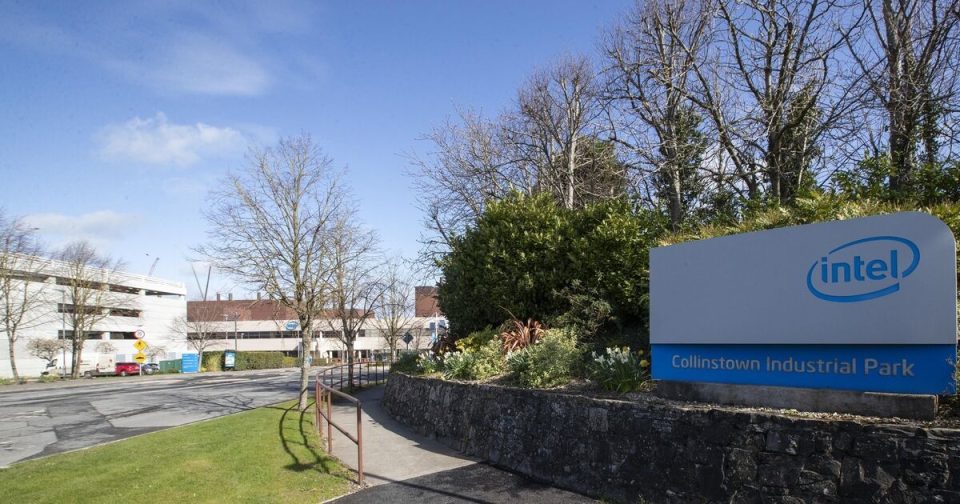
Let’s step back to understand one of Intel Corporation’s (NASDAQ: INTC) most important manufacturing sites. The company has operated in Leixlip, Ireland, since the 1980s, but Fab 34 stands out as a modern powerhouse. Construction on this facility began around 2019 as part of Intel’s push to advance its chip production technologies. By 2022, the first major equipment arrived, including specialized tools for creating tiny circuit patterns on silicon wafers. The plant reached a milestone in September 2023 when it started high-volume production using Intel’s Intel 4 process, which relies on extreme ultraviolet lithography, a technique that etches features smaller than before.
This Irish site produces chips with Intel 4 and Intel 3 technologies, powering products like Core Ultra processors for personal computers and Xeon 6 chips for data center servers. Intel has poured billions into it, with investments reaching about $18.4 billion by 2024. Fab 34 sits alongside older facilities like Fab 24 on the campus, but it represents Intel’s bet on staying competitive in semiconductor manufacturing. These processes help make the dense, efficient chips needed for demanding tasks, from everyday computing to heavy server workloads.
Fast forward to mid-2024. Intel faced financial pressures from massive expansion plans across Europe and the U.S., plus competition in the fast-growing artificial intelligence sector. To raise cash without slowing projects, Intel sold a 49% stake in a joint venture tied to Fab 34 to Apollo Global Management, Inc. (NYSE: APO). Apollo paid $11.2 billion for that share, giving Intel liquidity while keeping operational control and a 51% majority. This deal fit Intel’s “Smart Capital” approach, blending partnerships with internal funding to build capacity.
About two years later, circumstances changed. Intel announced today, that it would buy back that 49% stake for $14.2 billion, regaining 100% ownership. The company plans to fund it with existing cash and roughly $6.5 billion in new debt. Intel’s Chief Financial Officer, David Zinsner, noted the firm now enjoys a stronger balance sheet and sharper financial management. He credited the original Apollo partnership for providing flexibility at a tough time, allowing ramps in Intel 4, Intel 3, and even newer Intel 18A technology. Apollo’s partner Jamshid Ehsani echoed the mutual benefits, highlighting their role in Intel’s manufacturing roadmap.
Markets reacted swiftly to the news. Intel shares climbed 10% in early trading this morning, reflecting investor optimism about the company’s improved footing and commitment to core assets. This move comes as demand picks up for Intel’s central processing units in AI applications, particularly inference, where models like those behind chatbots process user inputs in real time. After missing much of the initial AI surge, Intel sees CPUs regaining relevance alongside specialized graphics chips.
The buyback should add to earnings per share starting in 2027 and bolster Intel’s credit standing, with plans to handle upcoming debt payments. Fab 34 remains vital to Intel’s global network, especially as the company eyes offering advanced processes like 18A to outside customers. Zinsner mentioned earlier this possibility, shifting from mostly internal use. Ongoing investments in Ireland aim to expand capacity for AI systems and beyond.
This full ownership marks a reversal for Intel, from cash-strapped seller to confident buyer. It underscores how strategic partnerships can evolve with business cycles. As chip demand grows, facilities like Fab 34 position Intel to deliver reliable supply for computing’s next phase. The Leixlip plant’s role in Europe grows ever more central.
