
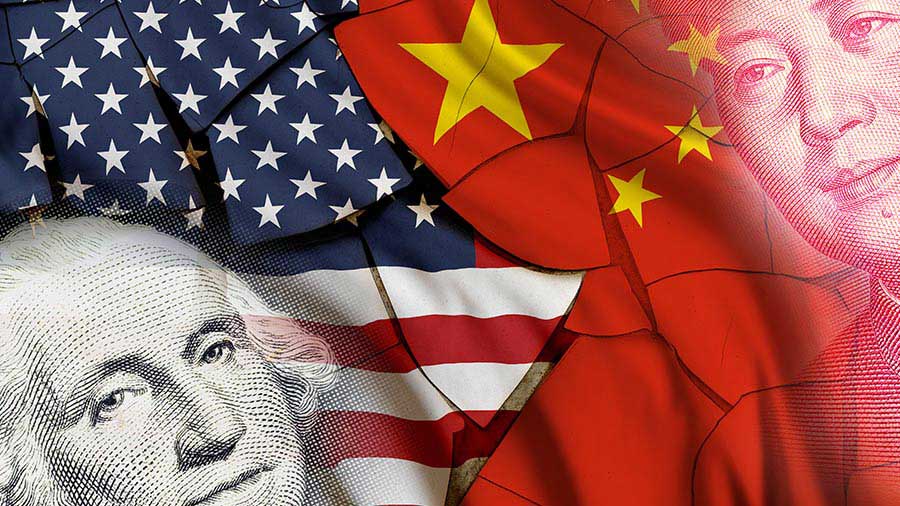
Markets responded with relief and slight optimism today after the White House confirmed President Donald Trump and Chinese President Xi Jinping will meet in Asia next week to restart trade talks amid heightened tariff tensions. This development marks a crucial moment in a long-running and complex trade battle between the U.S. and China that has significant global economic implications.
The weeks leading up to this scheduled meeting have witnessed a sharp increase in tensions between the world’s two largest economies. President Trump recently threatened to impose a new 100% tariff on Chinese goods as a response to Beijing’s tightened export controls on rare earth metals, a critical resource for numerous high-tech industries. In retaliation, China has introduced new port fees on U.S. vessels and launched investigations into U.S. companies like Qualcomm. Meanwhile, China’s decision to stop purchasing U.S. soybeans has deeply hurt American farmers, estimated losses reaching into billions of U.S. dollars this year. This cycle of tit-for-tat measures exemplifies the intense economic competition behind the scenes of ongoing diplomatic negotiations.
These developments have not only affected goods and commodity flows but also added layers of complexity to global supply chains, particularly in technology sectors where rare earth metals and semiconductor chips are essential. The U.S. expanded its trade blacklists to cover subsidiaries of Chinese companies, further constraining trade and adding uncertainty for global businesses. The disruption to manufacturing and technology supply chains extends far beyond bilateral trade, touching industrial manufacturing, consumer electronics, and strategic resources worldwide.
Against this backdrop of escalating tensions, the news of the Trump-Xi meeting has injected some calm into financial markets. The Dow Jones Industrial Average and the Nasdaq both saw gains as investors grew hopeful that renewed dialogue might ease trade policies that have rattled shares over recent months. Global equity funds also experienced significant inflows, signaling increased appetite for risk amid expectations of progress in trade talks. However, observers caution that while the meeting offers a chance for de-escalation, the challenges remain formidable given the breadth of issues, from tariffs and export controls to compliance and intellectual property protections, that the U.S. and China need to address.
The impact of these tensions and the forthcoming talks resonates worldwide. The U.S.-China trade relationship influences global economic growth, supply chains, and financial markets at a foundational level. With bilateral trade tallying approximately $750 billion in 2024, even minor disruptions cause ripple effects for exporters, consumers, and industries far beyond the borders of either country. Market participants are currently bracing for volatility as policy announcements continue to shape expectations, especially in sectors such as industrial manufacturing, agriculture, and technology.
It is worth noting that despite the tariff threat looming over November 1, the existing trade arrangements have included temporary pauses and ongoing negotiations throughout 2025. These pauses have allowed some momentum toward compromise, but the recent rapid escalation underscores the fragile state of the relationship. The upcoming Trump-Xi meeting is not just a scheduled diplomatic event; it is a critical test of whether the two leaders can stabilize relations and prevent further economic fallout.
While the precise outcomes of the meeting remain to be seen, investors and businesses around the world are watching closely. The market’s positive response signals hope that dialogue will prevail over further punitive measures, but it also reflects awareness of the complex and deeply rooted challenges that this trade conflict represents. For now, the global economy is poised at a delicate juncture where the path laid out next week could influence market conditions and international trade dynamics for months to come.
