
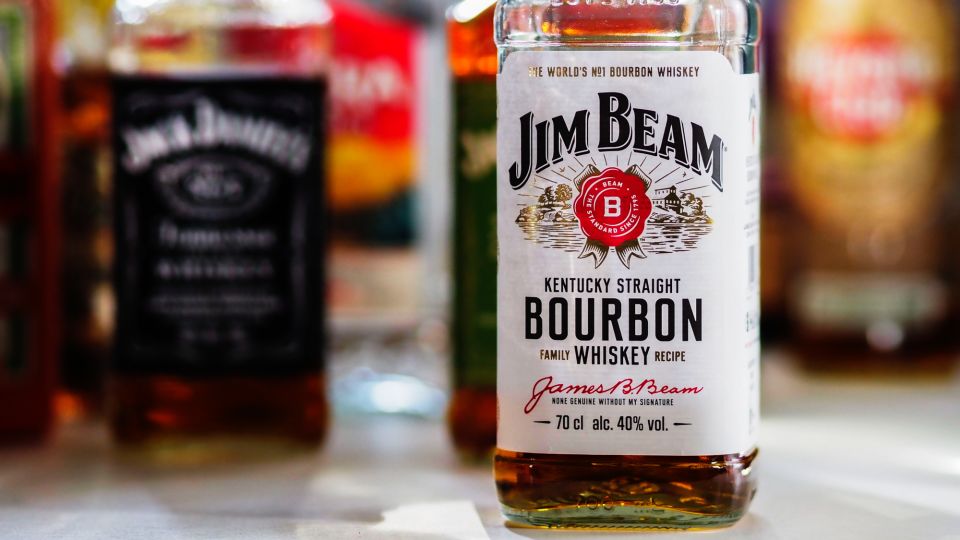
Kentucky’s bourbon belt has rarely stood still. Yet in 2026, the quiet around Clermont will be impossible to ignore. Jim Beam, the flagship distillery owned by Suntory Global Spirits, plans to shut down production at its main site for the entire year, citing record-high inventories and faltering demand. The temporary halt, officially framed as a pause for “site upgrades and efficiency improvements,” also reflects deeper economic pressures across America’s whiskey industry.
For an industry known for long aging cycles and steady growth, the optics of still warehouses are unusual. Jim Beam’s parent company acknowledges that domestic sales have slowed, while overseas shipments have struggled to recover from the ripple effects of Canada’s retaliatory tariffs. As The Bay Observer reported, those tariffs led to an 85% collapse in U.S. whiskey exports to Canada during the second quarter of 2025. That single market drop removed a key relief valve for distillers already struggling with swelling stockrooms.
Smaller distilleries haven’t weathered the moment as well. Kentucky Owl, a once-hyped label marketed as a luxury bourbon, was hit earlier when its parent company Stoli Group USA entered bankruptcy court in 2025. Newsweek noted that despite heavy investment and pricing that often reached hundreds of dollars a bottle, the brand succumbed to declining consumer interest and tight financing conditions. That failure signaled what many insiders now call a “correction phase,” with boutique operations closing or halting production quietly across the state.
Garrard County Distilling, a $250 million facility hailed as one of the largest new bourbon projects in Kentucky, shut its doors in April 2025 after failing to meet debt obligations. Former employees described the closure to Newsweek as sudden, with creditors moving fast once expansion loans went unpaid. The site’s collapse underscores how rising capital costs and softening retail prices have pinched operations that rely on long-term storage and cash-intensive aging.
Meanwhile, warehouses across the state are full to bursting. According to figures cited by The Bay Observer, American whiskey inventories have tripled since 2012. Barrels of bourbon that once symbolized prosperity now represent tied-up capital. Producers face the paradox of having more product than the market can absorb. Supply growth outpaced consumption so dramatically that analysts now compare it to the oil gluts of past decades, oversupply suppressing prices, forcing shutdowns, and pressuring even the most efficient producers to scale back.
At the same time, consumer behavior has shifted sharply. The Independent highlighted that younger drinkers in the U.S. are consuming significantly less alcohol than previous generations. While bourbon once rode a wave of nostalgia and craft enthusiasm, Gen Z adults show little interest in adopting it as a go-to spirit. More drinkers now choose non-alcoholic alternatives or premium tequila instead. That shift has quietly hollowed out one of Kentucky bourbon’s most dependable domestic bases.
The immediate impact of Jim Beam’s 2026 pause will ripple through logistics, cooperage, and tourism businesses that depend on continuous production. Suppliers producing glass bottles, oak barrels, and labeling materials will likely cut shifts or delay new contracts. Local economies that built themselves around bourbon’s “heritage boom” could feel a temporary chill. Yet some distillers and analysts see a possible long-term benefit hidden in the slowdown.
With output throttled, the oversupply might start to reverse by 2027, paving the way for price stabilization and a healthier market balance. As one Kentucky distributor told The Bay Observer, “the industry needed a reset before things really spilled over.” That adjustment could give small and medium producers breathing room, assuming interest rates ease and export markets normalize.
If history is any guide, bourbon’s cycles tend to self-correct. The question is how many brands can survive the dry spell between now and then. For now, with export barriers still lingering and consumers rethinking what they pour, Kentucky’s bourbon story looks less like a tale of endless growth and more like a reminder that even heritage industries can overfill their barrels.
