
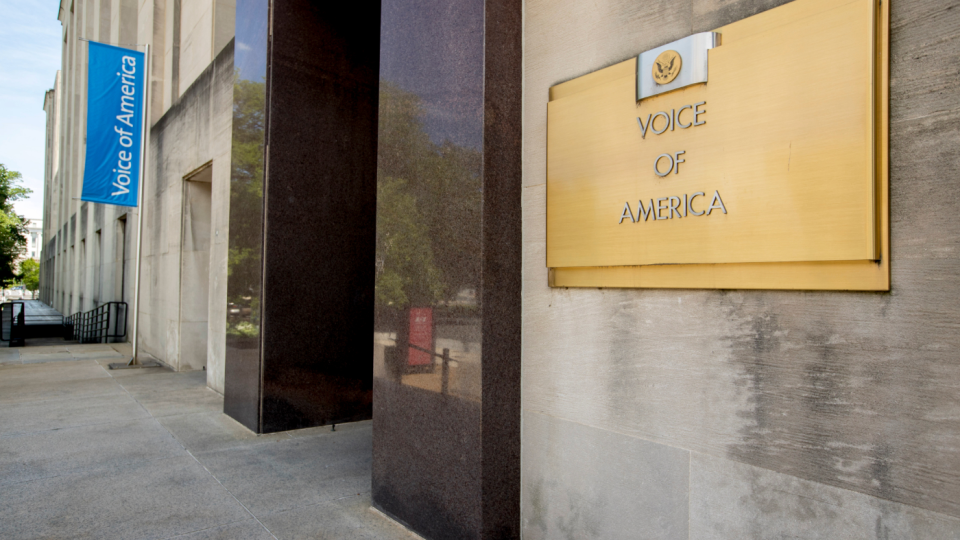
A federal judge has stepped in to pause the Trump administration’s recent effort to cut hundreds of jobs at the agency overseeing Voice of America (VOA), the historic government-funded broadcaster launched during World War II with a mission to counter Nazi propaganda. The decision highlights the ongoing tensions around the future of the broadcaster as legal challenges confront the administration’s push for drastic workforce reductions.
On Monday, U.S. District Judge Royce Lamberth in Washington, D.C., ordered the suspension of a planned elimination of 532 full-time jobs at the U.S. Agency for Global Media, which includes VOA. These positions make up the majority of the agency’s workforce. The cuts, scheduled to take effect this Tuesday, were announced in late August by Kari Lake, the acting CEO of the agency. Instead of moving forward, the judge’s ruling keeps the staffing level steady while he considers the legal motions against the reductions.
The unfolding dispute over VOA’s future is not new. Earlier this year, the judge already mandated the Trump administration to restore VOA’s programming to levels that fulfill its statutory role as a trusted and authoritative news provider. He also blocked attempts to remove Michael Abramowitz, the VOA director. With these, and now the workforce reduction plans, the court is signaling concerns over whether the agency is complying with its legal obligations or responding to partisan pressures.
Judge Lamberth’s ruling underscored what he described as a “concerning disrespect” shown by agency leadership toward the court’s directives. According to the judge, the agency under Kari Lake’s leadership failed to present a credible plan to meet its statutory duties while attempting to push layoffs that would inevitably diminish VOA’s capacity to serve audiences in countries where press freedom remains restricted.
These job cuts originated from an executive order signed by President Trump in March, which directed the agency to reduce its “statutory functions and associated personnel to the minimum presence and function required by law.” This order resulted in VOA ceasing its broadcasting for the first time since its founding in 1942, with most full-time employees placed on administrative leave. The move sparked wave of concerns from journalists, advocacy groups, and lawmakers who argued that shutting down VOA’s global broadcasts ceded a vital source of independent reporting to adversaries spreading disinformation.
Despite these controversies, Kari Lake defended the layoffs. She stated that the agency would continue fulfilling its core responsibilities and even suggested that trimming the workforce could help improve its effectiveness. Lake described VOA and the agency as “very broken” and expressed optimism about making the organization “leaner” and more focused on ensuring “America’s voice resonates internationally where it matters most”.
Plaintiffs challenging the cuts, on the other hand, argued that eliminating such a significant portion of the agency’s workforce would entrench the inadequate programming levels the judge had already condemned. They also voiced uncertainty about who within the agency was making key decisions about which positions to cut, questioning the transparency and governance behind the downsizing plan.
The conflict reflects broader debates over media influence and the role of government-funded news organizations. VOA was originally created in 1942 to present America’s narrative to the world during World War II and has since served as a tool of soft power during the Cold War and beyond. The Trump administration, however, has criticized VOA’s reporting, accusing it of conveying partisan viewpoints at odds with the president’s “America First” policies. This tension culminated this year in unprecedented moves to dismantle parts of the agency perceived as out of step with the current administration’s vision.
With the workforce reduction temporarily halted, VOA’s future and its ability to deliver global news remain uncertain. The judge’s intervention buys more time for legal arguments to unfold, but also sets the stage for a larger discussion on how America’s international broadcasting services should navigate modern political and media landscapes.
