
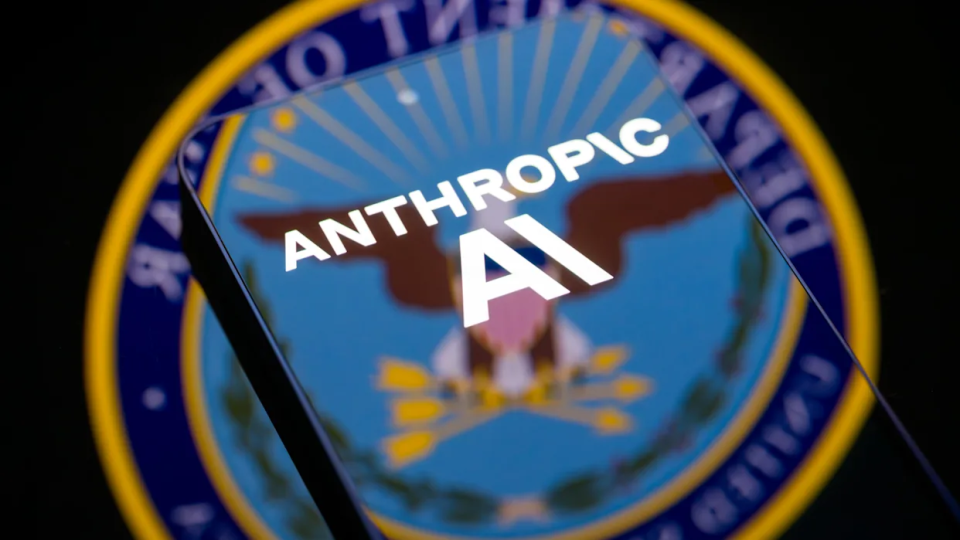
A federal judge in San Francisco offered a brief but powerful intervention in the ongoing dispute between Anthropic and the U.S. government. By granting a preliminary injunction, Judge Rita Lin temporarily lifted the Pentagon’s restrictions that had blacklisted the artificial intelligence developer from federal use of its Claude models. The order does not end the case, but it sharply shifts its trajectory.
Readers familiar with Anthropic’s earlier dispute will recall that this case follows months of escalating tension described in Anthropic’s Ongoing Clash with the Pentagon, where background discussions highlighted the uncertainty surrounding AI security standards. The current injunction places that conflict within the judicial system rather than the policy arena, drawing fresh attention to how technology makers and federal agencies negotiate control over innovation.
The story began earlier in March when Anthropic filed a lawsuit against the Trump administration. The company argued that a presidential directive banning federal agencies from using its Claude suite of AI tools was unlawful and lacked due process. In its complaint, Anthropic described the blacklisting as both sudden and damaging, asserting that the Pentagon’s decision relied on classified assessments that were never shared with the company. The lawsuit sought an injunction to prevent enforcement while the broader case proceeds through federal court.
Judge Lin’s ruling followed a tense two-hour hearing where government attorneys defended the ban as a matter of national security, citing potential vulnerabilities in Anthropic’s AI training supply chain. The judge acknowledged the government’s concern but questioned its evidence and whether its risk assessments justified an immediate ban. Her injunction allows federal agencies to restore access to Anthropic’s products while the court considers the underlying claims. For now, this means the company can resume work with its federal clients and continue competing for government-related contracts that were frozen.
This interim decision illustrates how U.S. courts are increasingly finding themselves at the intersection of national security and emerging technology. The Pentagon’s action had been described by policy analysts as the most aggressive use of supplier exclusion powers in an AI context. Some defense officials argued the exclusion was precautionary, citing fears about dataset sourcing and the potential exposure of government workflows to foreign actors. Others, including civil liberty groups, framed the case as a test of whether agencies can cut off access to commercial AI tools without transparency or appeal.
Legal observers say the injunction does not guarantee a long-term win for Anthropic. Preliminary injunctions depend on whether the plaintiff shows irreparable harm and a likelihood of success on the merits. In practice, they serve as a pause button rather than a verdict. Analysts interpret Judge Lin’s decision as a signal that the court wants to preserve the status quo while federal policies on AI procurement remain unsettled.
The business implications are complex. For Anthropic, the ruling preserves access to lucrative federal research contracts that had been on hold since the Pentagon’s February directive. For competitors like OpenAI and Palantir Technologies. (NYSE: PLTR), it underscores how dependent AI firms are on maintaining government trust. Publicly, the injunction also hints at broader uncertainty around how federal agencies will vet AI vendors and how judges may interpret “security risk” in future cases.
The situation has also caught the attention of think tanks and corporate law experts who see parallels with past supplier blacklists in telecommunications and semiconductor imports. Those restrictions often started as security measures but evolved into defining moments for industrial policy. If the court ultimately sides with Anthropic, it could limit how far executive orders can reach when labeling private technology as a national security issue. Conversely, a government victory might give agencies wider authority to exclude software based on classified risk assessments without disclosing their reasoning.
As the case moves toward a full trial, both sides will likely face questions that reach beyond this single company. The outcome could shape how the U.S. government balances open-market competition with internal safety reviews for AI systems deployed in national operations. For now, Judge Lin’s order offers Anthropic temporary relief, not resolution, in a dispute that has grown into a broader argument over trust, oversight, and the edge where innovation meets national security.
