
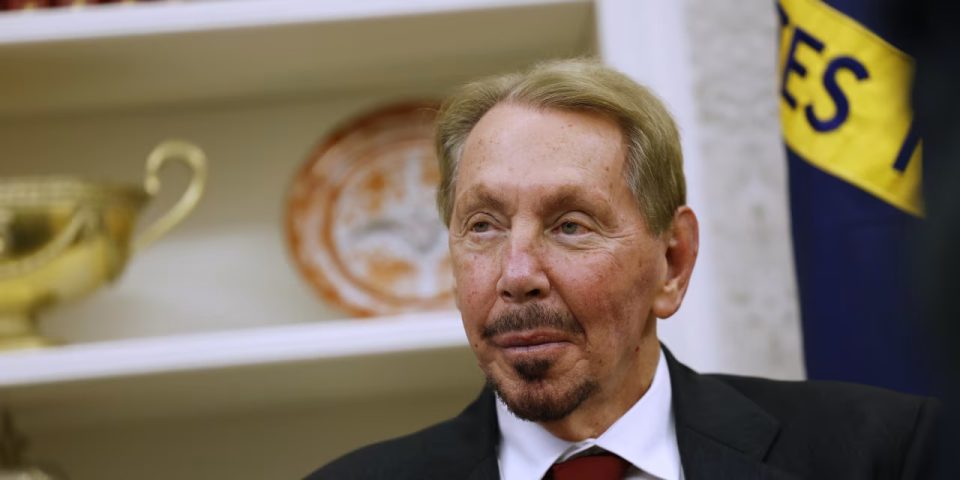
When Paramount Skydance (NASDAQ: PSKY) revealed that billionaire Larry Ellison had formally backed its bid for Warner Bros. Discovery, Inc. (NASDAQ: WBD), the tone around the contested offer shifted almost immediately. For months, analysts and board members had questioned whether Paramount could sustain a combined entertainment empire of that scale. Ellison’s involvement changed that conversation, not because of celebrity wealth, but because of what it signals, serious capital and seasoned strategic thinking anchored by decades of experience building global enterprises.
Paramount’s offer for Warner Bros. Discovery, still regarded as hostile by WBD’s board, had met resistance partly due to doubts about financing depth. WBD chairman Samuel Di Piazza made that concern public earlier this month, stating that the board was “not confident Ellison would be as involved as stated.” That sentiment reflected an open question on Wall Street: Was this a paper alliance or genuine financial backing? Ellison’s formal confirmation last week effectively answered that, placing his resources and influence behind the proposal in a way that redefines its credibility in corporate circles.
Ellison’s track record in technology and media carries particular weight in a streaming industry searching for sustainable growth. As the founder of Oracle Corporation, he holds both technological foresight and operational discipline. In his private ventures, Ellison has also invested heavily in film production through Skydance Media, the company co-founded by his son David Ellison. That connection gives him real familiarity with media economics, content creation cycles, distribution partnerships, and the capital intensity of global streaming expansion. It is rarely the investor pedigree alone that changes a deal’s outlook, but the combination of influence and operational integration that Ellison brings is what makes Paramount’s bid substantially harder to dismiss.
Paramount’s leadership kept the offer steady, emphasizing that it considers the terms already superior to any competing proposal, including the one reportedly under evaluation by Netflix. Unlike a financial chess move designed to push up valuation, this appears to be a stand on principle: Paramount is signaling that it does not need to sweeten the bid because Ellison’s confirmation already strengthens the underlying case. For potential shareholders, that framing pivots the question from “Is the financing secure?” to “Is this the future shape of the entertainment industry?”
Behind this evolving battle lies the larger question of consolidation. The 2020s have proven that scale determines survival in streaming. Paramount’s global customer base and studio library offer strong content depth but limited financial flexibility compared to giants like Disney or Netflix. Warner Bros. Discovery, on the other hand, possesses vast production and distribution power yet continues to manage high debt following its own merger in 2022. Theoretically, a combined entity could balance those strengths, although such a union would attract antitrust scrutiny in both the U.S. and Europe.
Ellison’s name changes more than perception, it restructures the math. By aligning himself with Paramount and Skydance’s leadership, he broadens financing access from equity syndicates to long-term debt channels that recognize Oracle-style governance discipline. Analysts suggest that his presence could ease lender confidence and lower borrowing costs, potentially making the merger financially viable without aggressive asset sales. The image of a disciplined billionaire overseeing the capital side, paired with creative leadership from Paramount’s team, tempers prior skepticism about overreach.
For Warner Bros. Discovery’s board, Ellison’s confirmed role complicates the calculus. Rejecting Paramount’s bid now risks appearing resistant to shareholder value if the offer’s financing is genuinely solid. However, maintaining independence may still appeal if WBD leadership believes upcoming streaming profitability targets can stand alone. What was once a clear-cut rejection of a hostile bid has now become a negotiation over timing and leverage, all reframed by a single billionaire’s credibility.
Ellison’s involvement does not guarantee success, but it transforms the negotiation from hypothetical ambition to legitimate contest. That change alone shifts how investors interpret Paramount’s long-term strategy, less as a defensive sprint against rivals and more as an intentional bet on scale, synergy, and confidence in storytelling as a global business.
