
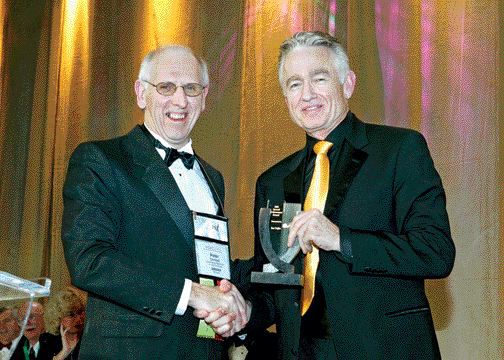
Callinex Mines Inc. (TSX-V: CNX; OTCQX: CLLXF) has made headlines in the exploration world by bringing on board one of the industry’s most respected figures, Peter Dimmell, as the new lead director on its technical committee. Dimmell’s name rings out in the tight-knit mining community: he has not only been pivotal in the discovery and delineation of rich volcanogenic massive sulphide deposits, like Callinex’s own Point Leamington asset, but has also helped develop prolific mines across Newfoundland during his five-decade career.
It is no exaggeration to say Peter Dimmell’s fingerprints are all over the major mineral successes on the island. While working with Noranda, he was part of the original team that discovered what is now Callinex’s flagship deposit. His track record doesn’t pause there, he played a role at the Rambler Mine, now owned by Firefly Metals, and contributed to finding the Duck Pond mine as well. Plugging his expertise into the Callinex board isn’t just about celebrating the past, it is a calculated step in carving out the future of base and precious metals mining in one of Canada’s most prospective regions.
Ask anyone who’s ever laced up boots for fieldwork in Newfoundland and they’ll tell you: experience counts. Dimmell is a registered P.Geo in both Newfoundland and Ontario, a Fellow of Geoscientists Canada, and has held some of the most prestigious leadership posts in Canadian geology, from past president of the Prospectors and Developers Association of Canada to being a current board member with the Canadian Mining Hall of Fame. Bringing that level of institutional and practical knowledge to Callinex, as the company pushes exploration at Pt. Leamington, could give the technical team crucial insights at pivotal moments.
Point Leamington isn’t just another spot on the map. Located about 37 kilometers from Grand Falls-Windsor and 20 kilometers off the provincial power grid, the deposit is a robust, felsic-hosted VMS resource. The numbers tell the story: Callinex reports a pit-constrained indicated mineral resource of 5 million tonnes at 2.5 grams per tonne gold equivalent, yielding 402,000 ounces of gold equivalent, with large contributions from gold, copper, zinc, silver, and lead. The project also boasts a pit-constrained inferred resource of 13.7 million tonnes at 2.24 grams, and a further out-of-pit inferred resource weighing in at 1.7 million tonnes at 3.06 grams per tonne.
For those outside the mining space, it means there’s a lot of rock with a lot of value underground. What’s more, government-led mapping and geochemical studies suggest the host volcanic rocks stretch well beyond the existing deposit, opening up hope for further discoveries.
Not content to rest on its laurels, Callinex also recently secured a deal to purchase an adjacent mineral license consisting of five claims, a move that further bolsters the company’s grip on Newfoundland’s most promising mining district.
Max Porterfield, CEO of Callinex Mines, has underscored that working alongside Dimmell brings strength not just to the exploration campaign set to kick off shortly, but to the broader culture and technical confidence of the team. Dimmell himself points out that limited exploration has taken place on-point since he first worked the rocks decades ago and sees realistic opportunity to deliver meaningful resource expansion with the current technology and geological understanding.
Add to that a fresh exploration permit extension and grant funding recently awarded to support the next phase of drilling, Callinex has the resource, the fiscal backing, and now, a legendary figure leading its technical strategy.
As Peter Dimmell reconnects with a resource he first helped bring to light, the next chapter for Callinex and Central Newfoundland mining is set to be both a return and a new beginning, with decades of wisdom guiding the drill bit.
