
Investment Highlights
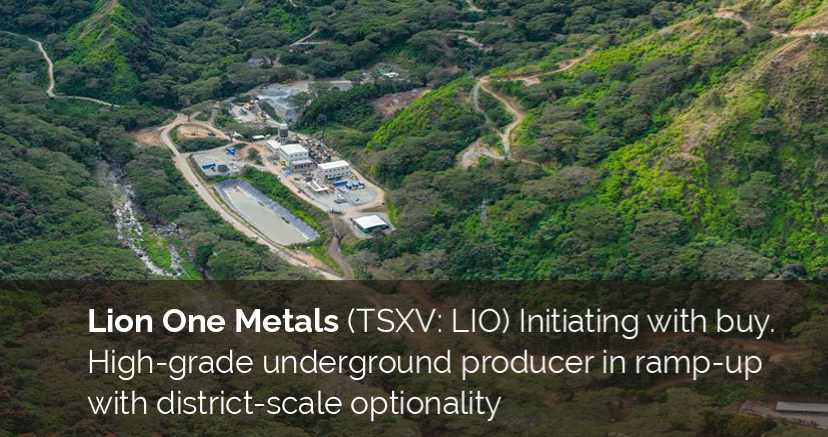
- Built, operating underground gold mine; re-rating is now execution-driven: Lion One Metals Limited (TSXV: “LIO”, OTCQX: LOMLF) or (the “Company”) owns 100% of the Tuvatu Gold Mine in Fiji, with underground access, a processing plant, and filtered tailings infrastructure constructed and operating. Recent operating results demonstrate production of ~14.7 koz over FY25, an average throughput of 336 tpd, and recoveries of ~81%. With construction and commissioning complete, the investment debate has shifted from development risk to operational consistency across development metres, stoping, throughput, recoveries, and unit costs.
- High-grade, multi-lode resource with evidence of near-mine growth beyond the current model: The June 24, 2024, NI 43-101 Mineral Resource at a 3.0 g/t Au cut-off reports 175koz Indicated at 8.48g/t and 339koz Inferred at 7.62g/t across 69 modeled lodes/domains. Management has indicated that ~40% of mined high-grade material to date has been sourced from areas outside the current resource model, consistent with a resource lag relative to underground access and drilling density in narrow-vein systems and supportive of near-mine resource growth potential as drilling and modeling catch up.
- Valuation and recommendation – We initiate coverage of LIO with a Buy rating and a $0.55 price target. Our target is based on a blended 0.6x multiple applied to our estimate of ~$0.88/share NAV at a long-term gold price of US$3,500/oz. Our NAV is driven primarily by Tuvatu ($379M, after-tax NPV5%) plus a conceptual $60M value for regional exploration and the broader Navilawa land package, net of corporate G&A and estimated net debt. At the current share price, LIO trades at a material discount to peers on both EV/oz and P/NAV metrics, trading at US$222/oz and 0.4x, compared to peers at US$292/oz and 0.6x, respectively.
- Alkaline gold system with credible analogues and district-scale optionality around an operating hub: Tuvatu sits within the Navilawa caldera, an alkaline gold system comparable in style to Vatukoula, Porgera, and Lihir. More than 69 lodes have been modeled at Tuvatu, with reported high-grade drill intercepts both within and below the current resource shell. Regionally, LIO controls multiple under- drilled prospects (including Banana Creek, Jomaki, Mouta, and Batiri), supporting a hub-and-spoke upside case in which satellite discoveries could be evaluated at a lower capital hurdle by leveraging the existing mill.
- Staged, funded recovery and throughput upside; near-term focus on flotation/regrind: The company is advancing a flotation and regrind circuit, targeting a recovery uplift of 6% – 8%, with commissioning expected in Q1/26. A subsequent expansion to 600 – 700 tpd is described at approximately $13M, providing a clear pathway to higher payable ounces and unit-cost dilution without assuming step-change mining rates.
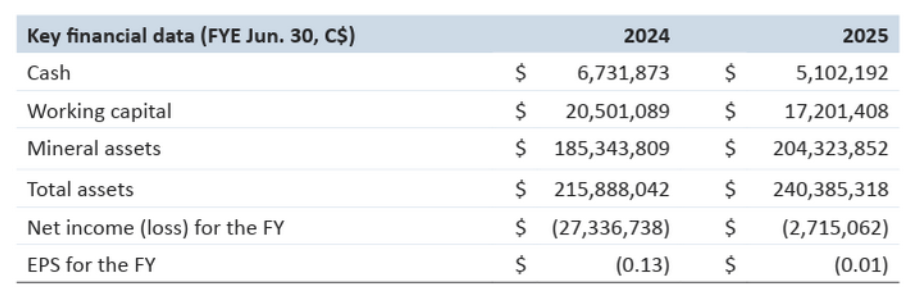
- Balance sheet remains the key risk, but runway and execution capacity are improving: Recent financings totaling ~$34M (LIFE and Sidecar) were directed to underground development, mobile equipment, working capital, and debt service. The principal balance sheet overhang remains the Nebari facility of ~$44M maturing in H2/26. The strategic investment and Master Services Agreement with Arete are intended to strengthen operating execution and support financing and debt restructuring discussions as cash-flow visibility improves.
- Key upcoming catalysts (2026-2027): We see several events that could drive a re-rating: (1) Demonstrated ability to sustain 350 tpd mill throughput with >5 g/t feed grade, with stable recoveries and costs; (2) Updated mine plan and/or technical study incorporating the 2024 resource model and operating data, potentially extending mine life and tightening cost assumptions; (3) Incremental high- grade discoveries within the existing mining lease (e.g., at depth or along strike) and in the wider Navilawa tenements; and (4) balance sheet optimization with clarity on restructuring of Nebari debt coming due in H2/26, expected once the transaction with Arete closes.
INVESTMENT THESIS
We are initiating coverage of Lion One Metals with a BUY recommendation. Our thesis is based on a built, operating, high-grade underground gold asset that remains in ramp-up, where the market continues to discount execution and balance-sheet risk despite a growing operating dataset, a staged and funded recovery/ throughput upgrade path, and credible avenues to convert near-mine and district-scale geological upside into mineable inventory. In our view, the re-rating path is primarily operational: consistent delivery on development metres, stope readiness, mill throughput, recovery, and unit costs. Each quarter of stable performance reduces the probability-weighted impact of dilution, grade reconciliation variability, and liquidity risk.
This report has been prepared by an analyst on contract with or employed by Couloir Capital Ltd. The analyst certifies that the views expressed in this report, which include the rating assigned to the issuer’s shares as well as the analytical substance and tone of the report, accurately reflect his or her personal views about the subject securities and the issuer. No part of his / her compensation was, is, or will be directly or indirectly related to the specific recommendations.
Couloir Capital, its affiliates, and their respective officers, directors, representatives, researchers, and members of their families may hold positions in the companies mentioned in this document and may buy and/or sell their securities. Additionally, Couloir Capital may have provided, in the past and may provide, in the future, certain advisory or corporate finance services and receive financial and other incentives from issuers as consideration for the provision of such services.
Couloir Capital has prepared this document for general information purposes only. This document should not be considered a solicitation to purchase or sell securities or a recommendation to buy or sell securities. The information provided has been derived from sources believed to be accurate, but cannot be guaranteed. This document does not consider the particular investment objectives, financial situations, or needs of individual recipients and other issues (e.g., prohibitions to investments due to law, jurisdiction issues, etc.) that may exist for certain persons. Recipients should rely on their own investigations and take their own professional advice before making an investment. Couloir Capital will not treat recipients of this document as clients by virtue of having viewed this document.
Company-specific disclosures, if any, are below:
1. In the last 24 months, Couloir Capital Ltd. has been retained by the subject issuer under a service agreement that includes analyst research coverage.
2. The views of the Analyst are personal.
3. No part of the Analyst’s compensation was directly or indirectly related to the specific ratings as used by the research Analyst in the Reports.
4. The Analyst does not maintain a financial interest in the securities or options of the Company.
5. The principal of Couloir Capital maintains a financial interest in the securities or options of the Company through an affiliated hedge fund entity.
6. The information contained in the Reports is based upon publicly available information that the Analyst believes to be correct but has not independently verified with respect to truth or correctness.
Investment Ratings -Recommendations
Each company within an analyst’s universe, or group of companies covered, is assigned:
1. A recommendation or rating, usually BUY, HOLD, or SELL;
2. A 12-month target price, which represents an analyst’s current assessment of a company’s
potential stock price over the next year; and
3. An overall risk rating which represents an analyst’s assessment of the company’s overall investment risk.
These ratings are more fully explained below. Before acting on a recommendation, we caution you to confer with your investment advisor to determine the suitability of our recommendation for your specific investment objectives, risk tolerance, and investment time horizon.
Couloir Capital’s recommendation categories include the following:
Buy
The analyst believes that the security will outperform other companies in their sector on a risk-adjusted basis or for the reasons stated in the research report the analyst believes that the security is deserving of a (continued) BUY rating.
Hold
The analyst believes that the security is expected to perform in line with other companies in their sector on a risk-adjusted basis or for the reasons stated in the research report the analyst believes that the security is deserving of a (continued) HOLD rating.
Sell
Investors are advised to sell the security or hold alternative securities within the sector. Stocks in this category are expected to under-perform other companies on a risk-adjusted basis or for the reasons stated in the research report the analyst believes that the security is deserving of a (continued) SELL rating.
Tender
The analyst is recommending that investors tender to a specific offering for the company’s stock.
Research Comment
An analyst comment about an issuer event that does not include a rating.
Coverage Dropped
Couloir Capital will no longer cover the issuer. Couloir Capital will provide notice to clients whenever coverage of an issuer is discontinued. Following termination of coverage, we recommend clients seek advice from their respective Investment Advisor.
Under Review
Placing a stock Under Review does not revise the current rating or recommendation of the analyst. A stock will be placed Under Review when the relevant company has a significant material event with further information pending or to be announced. An analyst will place a stock Under Review while he/she awaits enough information to re-evaluate the company’s financial situation.
The above ratings are determined by the analyst at the time of publication. On occasion, total returns
may fall outside of the ranges due to market price movements and/or short-term volatility.
Overall Risk Rating
Very High Risk: Venture-type companies or more established micro, small, mid or large-cap companies whose risk profile parameters and/or lack of liquidity warrant such a designation. These companies are only appropriate for investors who have a very high tolerance for risk and volatility and who can incur a temporary or permanent loss of a very significant portion of their investment capital.
High Risk: Typically, micro or small-cap companies which have an above-average investment risk relative to more established or mid to large-cap companies. These companies will generally not form part of the broad senior stock market indices and often will have less liquidity than more established mid and large-cap companies. These companies are only appropriate for investors who have a high tolerance for risk and volatility and who can incur a temporary or permanent loss of a significant portion of their investment capital.
Medium-High Risk: Typically, mid to large-cap companies have a medium to high investment risk. These companies will often form part of the broader senior stock market indices or sector-specific indices. These companies are only appropriate for investors who have a medium to high tolerance for risk and volatility and who are prepared to accept general stock market risk including the risk of a temporary or permanent loss of some of their investment capital
Moderate Risk: Large to very large cap companies with established earnings who have a track record of lower volatility when compared against the broad senior stock market indices. These companies are only appropriate for investors who have a medium tolerance for risk and volatility and who are prepared to accept general stock market risk including the risk of a temporary or permanent loss of some of their investment capital.
