
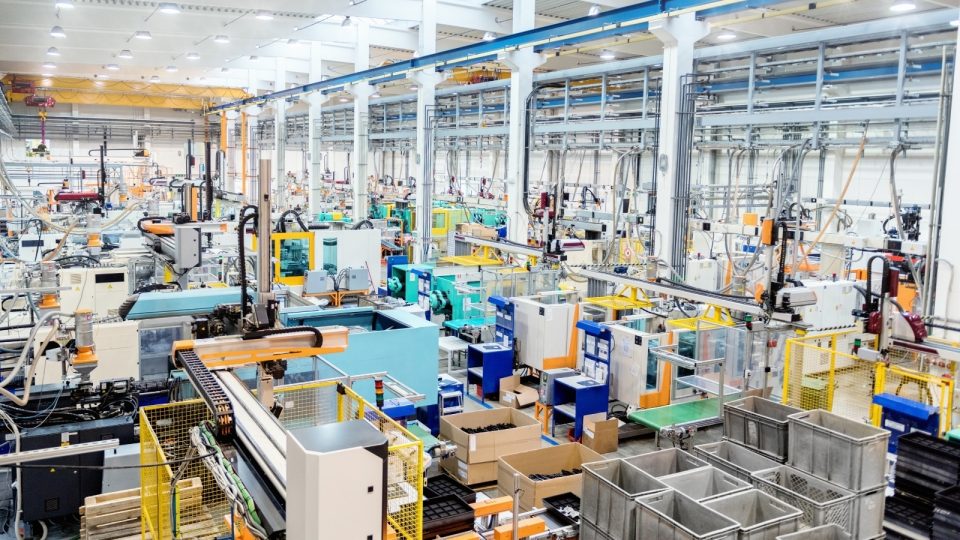
The manufacturing sector in the United States has experienced an ongoing contraction that recently hit its eighth consecutive month. This sustained downturn reflects a variety of economic pressures, including sluggish demand from customers and ongoing policy uncertainty that has clouded business decisions. The American manufacturing industry, which historically has played a crucial role in the economy, today faces challenges that extend beyond just production numbers and job losses.
The Institute for Supply Management’s (ISM) manufacturing Purchasing Managers Index (PMI) fell to 48.7 in October 2025, according to the latest data. A reading below 50 signals a contraction in activity, and while this figure improved slightly from earlier months, it confirmed that manufacturing continues to retreat. Production indexes declined as companies pulled back on output, even as indicators like new orders and customer inventories showed tentative signs of improvement. Nevertheless, these demand indicators remain within contraction territory, underscoring that the industry has not yet found stable ground.
Employment within the sector also reflects the difficulties faced. Manufacturing jobs have dropped steadily throughout 2025, with a net loss of more than 33,000 positions so far this year and over 87,000 job cuts reported in 2024. This decline is mainly seen in firms producing durable goods like automobiles and electronics. Moreover, increased automation and advances in productivity have allowed companies to maintain output levels even as workforce numbers shrink. This shift means fewer workers are needed per unit of production, accentuating the employment reductions but not necessarily indicating a proportional drop in goods produced.
Beyond operational challenges, policy uncertainty has emerged as a significant obstacle for manufacturers. Trade policies and tariffs have been points of contention, with many manufacturers citing concerns over ongoing tariff litigation and unpredictable regulatory environments. This uncertainty tends to discourage investment and expansion, as firms struggle to forecast costs and demand accurately. A considerable portion of manufacturers surveyed by industry groups consistently identify trade policy ambiguity as a top barrier to growth and hiring.
Economic conditions have also tightened cost pressures. Although input prices have recently eased somewhat, they remain elevated. Rising costs for raw materials and energy contribute to the squeeze manufacturers face between maintaining margins and navigating weak consumer demand. These factors compel companies to reassess spending, often postponing capital projects or streamlining operations to cope. This environment has led to caution in the sector, reinforcing the cycle of slowing activity.
Nevertheless, even with these headwinds, manufacturing remains a vital component of the U.S. economy. Manufacturers contributed nearly $2.9 trillion to the economy annually as of early 2025 and support a broad web of related industries. While employment levels have declined from historic peaks, manufacturing jobs still number nearly 13 million. The sector’s productivity growth, bolstered by technology and automation, remains solid and suggests potential for recovery if demand and policy clarity improve. Moreover, manufacturing’s global trade footprint continues to be substantial, supporting a significant share of U.S. exports.
Looking ahead, the path for manufacturing depends heavily on the stabilization of demand and more predictable policy frameworks. Improvements in global supply chains, easing of tariffs, or concerted investment in innovation could help reverse the current trend. At the same time, manufacturers are adapting to a new industrial landscape where operational efficiency and technology adoption play critical roles.
For now, the industry remains in a state of adjustment, facing a combination of external pressures and internal adaptation efforts. The ongoing contraction is a reflection not just of cyclical weakness but of deeper structural changes that will shape manufacturing’s future. Understanding these layered challenges provides clearer insight into the sector’s current trajectory and the cautious optimism many analysts hold for the months ahead.
