
A new agreement between the United States and the European Union has redefined global trade headlines this week, calming nerves in financial markets and strengthening the U.S. dollar. For investors, the timing of this news could not be better as it sets the tone for a pivotal stretch marked by major earnings reports and central bank policy decisions.
The deal, announced Sunday after meetings in Scotland, brings a sense of relief for both sides. The United States and the European Union have agreed to establish a 15 percent tariff on most EU goods entering the U.S., a rate markedly lower than the 30 percent or more that had been threatened just days earlier. This compromise, while far from seamless, at least steps back from the brink of a heavy-handed trade war that many feared could upend the fragile global economic recovery.
Financial markets responded quickly and with optimism. U.S. stock futures notched higher, with the S&P Futures inching up by nearly 0.3 percent and Nasdaq Futures rising half a percent before the market open. European benchmarks followed suit, as the pan-European STOXX index gained 0.9 percent and both France’s CAC 40 and Germany’s DAX moved higher as well. The message from investors is clear: avoiding a trade war, even by way of uncomfortable compromise, is cause for at least cautious celebration.
On the currency front, the U.S. dollar caught a bid against most major currencies. The dollar index jumped by 0.6 percent Monday, while the euro dropped nearly 0.7 percent against the dollar to rest around $1.16. This move comes amid a global backdrop where investors are closely watching U.S. Federal Reserve and Bank of Japan meetings for hints at interest rate direction. But with trade peace, however temporary, secured, the dollar has recaptured some of its lost ground.
Dig into the agreement, and you’ll find both big numbers and subtle shifts in transatlantic ties. Beyond the headline tariff, the EU has committed to investing $600 billion in U.S. projects and agreed to purchase $750 billion in energy commodities and military equipment from the United States. In turn, U.S. goods will see improved access to EU markets, including some “zero for zero tariffs” for aircraft, select chemicals, semiconductors, and certain agricultural products. Despite these moves, some specter of tension lingers, as tariffs on European steel and aluminum will stay high for now at 50 percent, pending further negotiation to a quota system.
While many European leaders welcomed the deal for the stability it brings, there has been vocal dissent. French Prime Minister François Bayrou called this agreement an act of submission and a “dark day” for Europe, echoing frustrations across the continent that the deal fell short of the zero-tariff dreams many had harbored. For Germany’s powerful automotive sector, the mood is mixed; though the new 15 percent tariff is a reduction from the 27.5 percent previously in place, it still means billions in new costs annually for carmakers like Volkswagen and Mercedes-Benz.
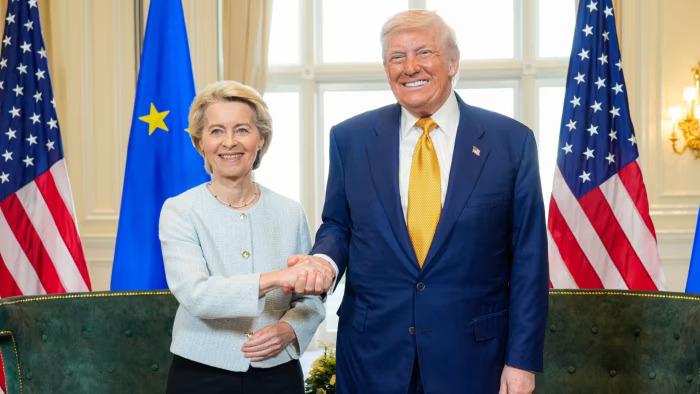
From the U.S. perspective, this is a concrete step toward narrowing the stubborn trade deficit with Europe and a high-profile moment for President Trump’s tough approach to trade. European Commission President Ursula von der Leyen, for her part, emphasized that the deal brings predictability to what had become a very uncertain environment for multinational businesses. Both leaders were quick to present the outcome as a major win for their respective policy objectives, even if the reality is more nuanced.
For anyone following the markets this week, this deal sets the stage for what could be a lively few days. Investors are now turning to a packed calendar: central bank decisions, significant corporate earnings, and ongoing negotiations with other trading partners, including China. While the current agreement avoids immediate escalation, it also establishes a baseline for future negotiations, especially since the U.S. administration is signaling that the 15 percent tariff could become a new model for other trade relationships.
In the end, this story is less about who “won” or “lost” and more about having a path forward in a global trade environment often marked by unpredictability. For companies, investors, and policymakers alike, avoiding the worst-case scenario brings enough relief to bid stocks higher and give the dollar some fresh strength, at least to kick off what promises to be an eventful week.
