
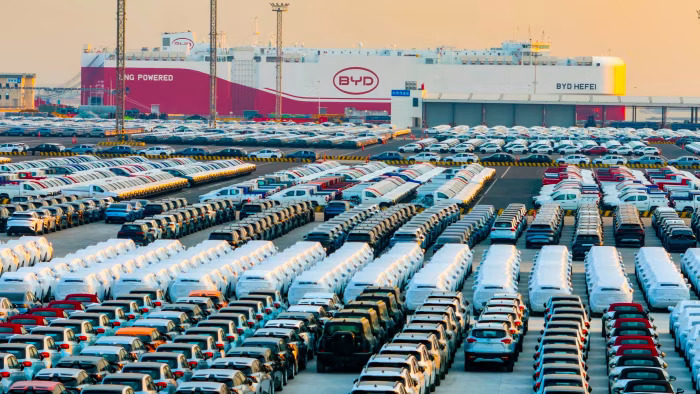
Mexico is preparing to increase tariffs on vehicles imported from China and several other Asian countries to 50%, the highest rate allowed under World Trade Organization (WTO) rules. This shift, announced by Mexico’s Economy Minister Marcelo Ebrard, targets imports worth $52 billion and aims to protect domestic jobs and manufacturing in industries under pressure from cheaper foreign products. The new tariff represents more than a doubling of current rates, which range between 15% and 20% on Chinese autos, and will apply to countries without free trade agreements with Mexico, including South Korea, India, Indonesia, Russia, Thailand, and Turkey.
This move comes amid increasing pressure from the United States, Mexico’s largest trade partner, to restrict economic ties that enable Chinese goods to enter the U.S. market via Mexico. By raising tariffs, Mexican authorities seek to address concerns over Chinese cars flooding the market at prices below what they call “reference prices.” The government estimates this action will help secure approximately 325,000 industrial and manufacturing jobs at risk due to competitive disadvantages caused by these imports.
Minister Ebrard emphasized that the tariffs are not arbitrary protectionism but a necessary response to maintain a fair playing field for Mexican producers. “Without a certain level of protection, you almost can’t compete,” he said, highlighting the challenge of competing against prices that fail to reflect true market costs. The tariffs on vehicles will be part of a broader legislative proposal impacting over 1,400 categories across multiple sectors, including steel, toys, motorcycles, and textiles, with levies ranging from 10% to 50%.
Mexico’s evolving stance on tariffs follows a significant development in its trade relationship with the U.S. Over the past decade, trade between Mexico and China has grown substantially, culminating in Mexico becoming the United States’ largest trading partner in 2023. Yet, this surge has created geopolitical tension. The U.S. administration has been vocal about concerns that Mexico is being used as a back door by Chinese producers seeking to circumvent tariffs imposed in the ongoing U.S.-China trade conflict. Mexico’s tariff hike is seen by many analysts as partially designed to appease Washington while also reinforcing domestic industry.
China’s government has criticized the planned tariff increase, framing it as coercion to serve another country’s agenda. In a statement, Foreign Ministry spokesperson Lin Jian expressed that China firmly opposes restrictions imposed under “various pretexts” and hopes Mexico will cooperate in pursuing global economic recovery and smoother trade relations. Still, Mexico’s tariff proposal is likely to proceed, given its parliamentary advantages.
The proposed tariff hike follows evidence that Mexico has become the world’s largest importer of Chinese-made cars in the first half of 2025, surpassing countries like the United Arab Emirates and Russia. Industry analysts note that despite these tariffs, Chinese car manufacturers may retain some competitive edge due to inherent efficiencies in production and cost structures. However, the tariffs mark a clear intent by Mexico to defend its manufacturing base and respond to both domestic and international political pressures.
In addition to automotive imports, Mexico will impose increased duties on steel, toys, motorcycles, and textiles, broadening the scope of tariff protection across sectors where foreign competition threatens local jobs. The government’s approach seeks to balance obligations under WTO rules with urgent economic protection measures to stave off further job losses and industrial decline.
This development signals that Mexico is recalibrating its trade policy with a sharper focus on safeguarding national industries, even as it navigates complex diplomatic relations with China and the United States. As the tariff proposal moves through Mexico’s Congress, close attention will be paid globally to the implications for trade flows, manufacturing jobs, and regional economic dynamics.
