
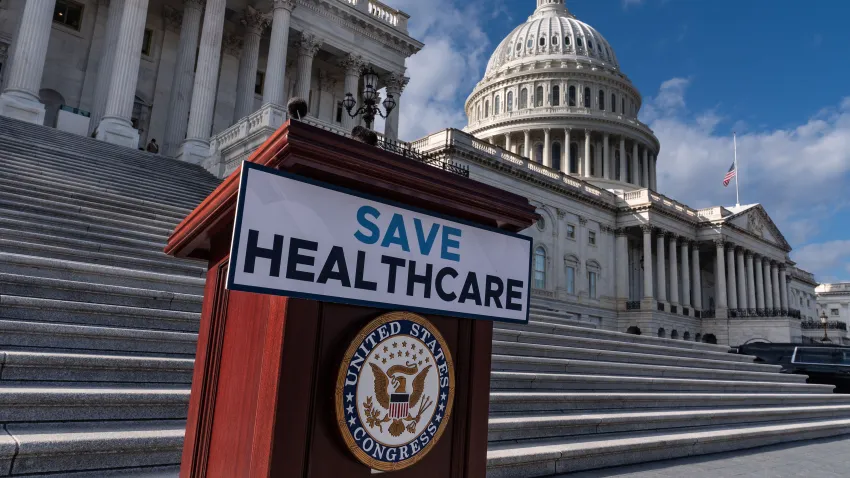
After years of expanded federal support that helped millions of Americans pay for healthcare, the government’s enhanced tax credits under the Affordable Care Act (ACA) officially expired at the start of 2026. The credits, which were introduced during the pandemic to keep coverage affordable, had quietly become a key factor in keeping enrollment rates high. Their sudden lapse leaves many families facing a stark new reality: higher premiums and fewer affordable options.
The enhanced subsidies, initially approved under the American Rescue Plan Act and later extended through the Inflation Reduction Act, lowered insurance costs for roughly 21 million people across the U.S. who bought plans through the ACA marketplace. Now, as the new year begins, insurers are proposing a median premium increase of 18% nationally across 312 plans, with 26% average increases for benchmark silver plans per KFF (Kaiser Family Foundation) and CMS (Centers for Medicare & Medicaid Services) data, and up to 30% on Healthcare.gov in federal states, depending on income and location. For many, this represents hundreds of dollars more each month for the same level of coverage.
Those most affected are middle-income families who had previously benefited from temporary caps that limited how much of their income could be spent on health insurance. Without those caps, families earning slightly above the federal poverty threshold may no longer qualify for full subsidies, even though their budgets have not grown significantly. According to the KFF, roughly 17 million people live in households that will lose at least part of their ACA premium assistance in 2026, making them particularly vulnerable to cost-related lapses in coverage.
The effect is uneven across the country. States that operate their own insurance marketplaces, like California and Massachusetts, have some flexibility to offer supplemental support or state-funded aid. However, most states rely entirely on federal subsidies, and consumers there will feel the full weight of the expiration immediately. A family of four in Texas earning $80,000 a year, for example, could see their premiums jump from an average of $320 to around $480 per month. In higher-cost states such as New York or Maryland, the increase could be even steeper.
Health policy experts warn that the consequences of this shift will likely ripple through 2026. Larry Levitt, executive vice president for health policy at the KFF, said, “When subsidies rise and fall, it influences whether people can afford to stay insured.” If large numbers of Americans exit the insurance market due to affordability, regional risk pools could shrink, driving up future rates for those who remain, further compounding the problem.
The federal government faces political pressure to act, but as of early January, lawmakers remain divided on whether to renew or redesign the subsidy program. Some officials have floated targeted relief proposals that would focus on middle-income families and rural areas, where options are already limited. However, no clear legislative path exists yet. The Department of Health and Human Services has acknowledged concerns over affordability but has not confirmed whether renewed credits are planned.
For consumers, choices are narrowing. Many will attempt to adjust their coverage levels, opt for higher deductibles, or switch to less expensive insurers with smaller provider networks. Analysts expect a moderate decline in total ACA enrollments by midyear, particularly among self-employed and part-time workers who are priced out of the market. Employers may also face indirect effects if more people turn to company-sponsored plans, potentially increasing payroll costs and reshaping health benefits strategies in 2026.
The transition period will be especially hard on those who had reached a brief sense of stability. Families who once relied on predictable costs are now recalculating their budgets just to maintain essential care. Unless Congress revisits these subsidies or introduces new affordability measures, 2026 could mark the most significant shift in access to health insurance since the ACA first took effect more than a decade ago.
