
Americans are keeping their cars longer and leaning on them every day, which keeps repair bays busy. The Auto Care Association and MEMA expect the U.S. light-duty aftermarket, the parts and services that keep vehicles running after the sale, to grow 5.2% in 2026 and to pass $500 billion by 2029. They point to an aging fleet, more complex vehicles with advanced driver assistance systems, and drivers’ continued reliance on their cars. The same forecast flagged a meaningful headwind from the Iran conflict. The average U.S. light vehicle reached a record age of 12.8 years in 2025, according to S&P Global Mobility.
Steady demand has drawn steady interest from investors. Auto service has long been a business of independent shops and regional chains, and private equity firms see value in combining them into larger networks that can buy tires and parts in volume, share technology and spread marketing costs across many locations. KPMG said in its mid-2026 aftermarket update that private equity interest “continues to support consolidation across the aftermarket, particularly in tire dealerships and auto repair platforms.”
Many of these deals are small. KPMG highlighted CenterOak Partners’ purchase of Grismer Tire & Auto Service and Bauer Built’s acquisition of Jack’s Tire Sales and Service. It also noted that independent tire dealers increasingly view private-equity-backed transactions as an attractive way to exit.
A much larger deal came on July 21st. Private-equity-backed Mavis Tire Express Services agreed to buy Pep Boys, which has more than 750 locations, for $700 million in cash. The combination would expand Mavis to more than 4,400 service locations.
Scale changes the competitive picture. Large networks can negotiate better supply terms, invest in training for increasingly complex vehicles and absorb overhead more easily. That raises the bar for smaller chains and for publicly traded operators, which must show steady results every quarter while trying to grow sales and control costs.
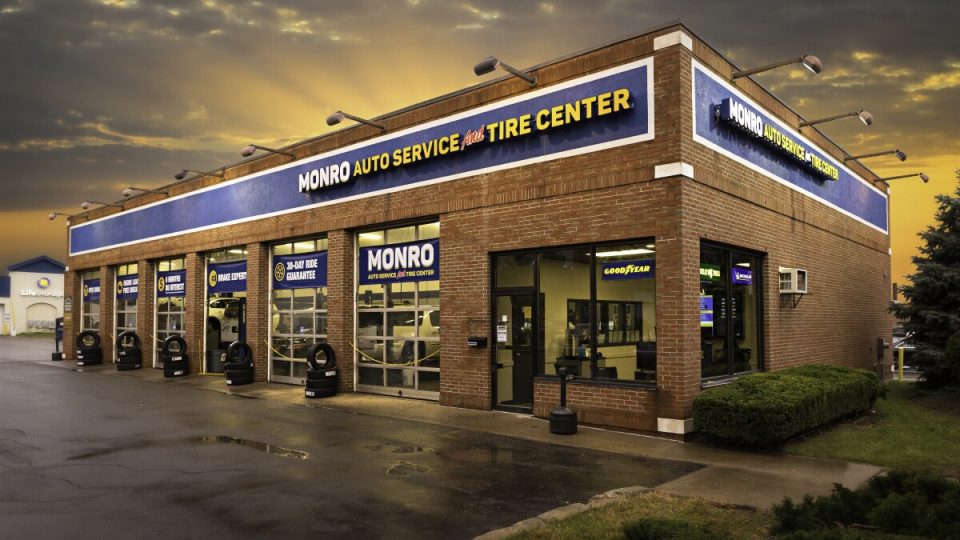
Monro, Inc. (NASDAQ: MNRO), which runs 1,114 company-operated auto service and tire stores and 47 franchised locations, said today that its board will not declare a cash dividend for the third quarter. The board is also suspending future dividends until it takes further action.
The company tied the decision to its ongoing performance improvement plan and “ongoing challenges in the macro-environment.” It said it continues to have adequate liquidity to fund its operations and invest in its initiatives. Monro’s last quarterly dividend was $0.28 a share, paid on September 8th.
Recent results show why the company is focused on cash. In its fiscal second quarter, which ended September 26th, sales fell 1.8% to $283.6 million, comparable store sales also fell 1.8%, and Monro posted a net loss of $1.6 million. In October, it replaced its previous bank facility with $375 million of senior secured credit from Ares Capital Corporation (NASDAQ: ARCC), made up of a $250 million term loan and a $125 million revolving line, both maturing in 2030. As of October 24th, Monro had $27.3 million in cash and $60.0 million available under the new facilities. The new agreement also restricts dividend payments unless the company meets certain financial metric requirements.
The board said it continues to evaluate a broad range of strategic alternatives, a review first announced in May. The options listed at the time included asset sales, refinancing, strategic acquisitions, operational improvements or a sale of the company. In today’s release, Monro said no decisions on any specific alternative have been made. For now, the company is keeping its cash inside the business while it works through its improvement plan and its review, and the board has not said when dividends might resume.
