
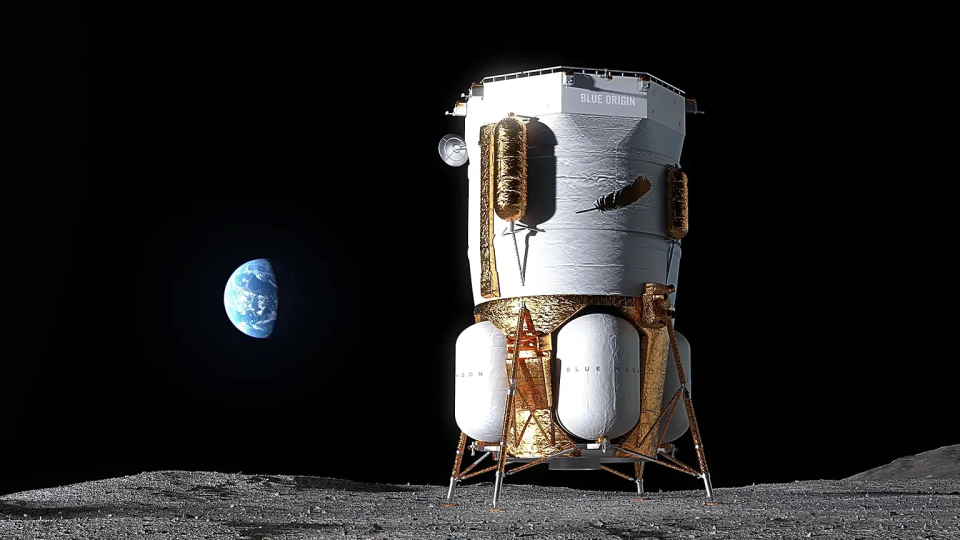
NASA is gearing up to return astronauts to the moon through its Artemis program, aiming for landings in the coming years. NASA Administrator Jared Isaacman recently shared this outlook, noting it as a step toward what he calls an orbital economy. This vision blends science, policy decisions, and fresh business prospects in space. Companies like SpaceX, Blue Origin, and Boeing work alongside NASA to make these goals real.
NASA launched the Artemis program to establish a steady human presence on the moon. The effort builds on lessons from past missions while aiming for new achievements, such as landing the first woman on the lunar surface. Artemis I flew without crew in late 2022, testing the Space Launch System rocket and Orion spacecraft over a 25-day journey that looped around the moon and returned safely to Earth. Artemis II follows in early 2026, carrying four astronauts, including three from NASA and one from the Canadian Space Agency, on a 10-day trip around the moon without landing. This flight tests human systems in deep space for the first time.
Artemis III targets a crewed landing by mid-2027 near the moons south pole, a spot rich in water ice that could support future operations. SpaceX provides the human landing system, adapting its Starship vehicle for lunar descent and ascent. Later missions like Artemis IV in 2028 and V in 2030 will assemble the Lunar Gateway, a station in lunar orbit that serves as a hub for science and travel. These steps align with policy under the Trump administration, which prioritizes rapid progress in space exploration.
NASA partners with private firms to share costs and spur innovation. SpaceX handles lunar landings, leveraging reusable rocket technology to cut expenses over time. Blue Origin develops the Blue Moon lander for later missions, focusing on cargo and crew transport to the surface. Boeing builds the core stage of the Space Launch System, the massive rocket that lifts Orion into space. These collaborations mark a shift from government-led efforts to models where businesses take larger roles. The approach encourages competition and could lower the price of space access for everyone involved.
Isaacman, speaking at a recent event, tied the moon return to an orbital economy fueled by lunar resources. Helium-3, abundant on the moon but rare on Earth, holds promise as fuel for future fusion reactors, potentially powering clean energy grids back home. Extracting it could create a new industry, with estimates suggesting trillions in value over decades. Space data centers offer another angle, orbiting servers that avoid Earths heat and weather limits while tapping solar power nonstop. Firms eye these for secure computing, from AI training to financial modeling, all outside terrestrial constraints.
Policy supports this by opening contracts to private bidders, fostering jobs and investment. The U.S. government commits billions through NASA budgets, but commercial revenue from mining or services could sustain growth. Investors watch closely as space stocks reflect these trends.
Humans first touched the moon on July 20, 1969, during Apollo 11. Neil Armstrong and Buzz Aldrin stepped onto the surface from their lunar module, Eagle, after a journey from Earth aboard the Saturn V rocket. Michael Collins orbited above in the command module. Twelve astronauts walked the moon across six missions from 1969 to 1972, collecting rocks, setting up experiments, and driving the lunar rover. Apollo 17 in December 1972 marked the last visit, with Gene Cernan and Harrison Schmitt exploring the Taurus-Littrow valley. These feats, driven by Cold War rivalry, proved human spaceflight possible but ended due to budget cuts and shifting priorities.
Moon missions now promise more than flags and footprints. They lay groundwork for Mars trips, using the moon as a testing ground for habitats and resource use. Science teams will study lunar geology, while policy ensures U.S. leadership amid competition from China and others. Business stands to gain most, with orbital activities turning science fiction into revenue streams. As Artemis advances, watch how these threads weave a new era in space.
