
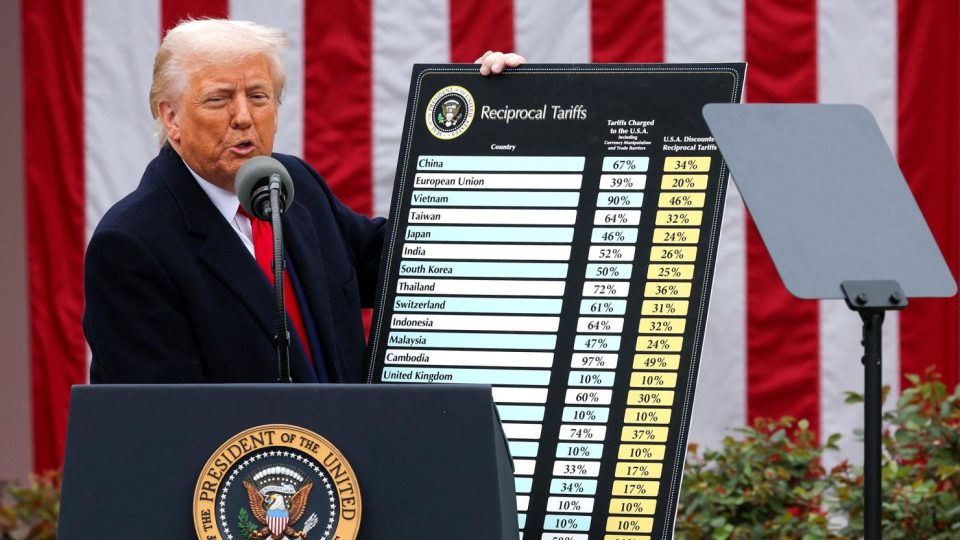
The U.S. government has collected more than $200 billion in tariffs this year, a surge driven by new duties introduced under President Trump’s 2025 trade measures, according to U.S. Customs and Border Protection. Most of that total comes from the latest wave of tariffs on imported goods from China, Mexico, and several European nations. The policy has refilled federal coffers and emboldened the administration’s tough-on-trade narrative, but it has also created a legal and economic minefield.
What makes this round of tariffs different is not their scale, but where they now stand, before the nine justices of the U.S. Supreme Court. The Court is weighing whether the president exceeded constitutional authority by imposing the new tariffs without congressional approval. A ruling against the administration could upend not only the duties themselves but the broader framework that allows presidents to act unilaterally on trade emergencies.
For decades, the White House has relied on statutes such as the Trade Expansion Act of 1962 and the International Emergency Economic Powers Act to justify tariff decisions. Supporters argue that those laws grant the executive branch leeway to defend national interests. Critics, including several import-focused trade associations and business coalitions, claim that the scope of these statutes has ballooned far beyond what Congress intended. In their view, the current tariffs stretch the definition of a national emergency to cover economic competition, rather than legitimate security threats.
If the Supreme Court sides with the challengers, the economic ripple could be immediate. Tariffs currently feed into supply chains across industries, influencing the cost of everything from steel and electronics to everyday retail goods. A sudden suspension or repeal would instantly reshape pricing structures, potentially lowering input costs for manufacturers and retailers but also cutting government revenue that has helped offset rising fiscal deficits. Companies that adjusted operations to navigate higher import costs could see months of planning erased overnight.
Yet unwinding tariffs is not as simple as lifting them. Importers who paid those duties this year would likely seek refunds, an administrative burden that would echo through the Treasury and customs systems. There is also the question of timing. If the Court issues a decision striking down the tariffs midyear, how quickly the government acts to implement the ruling could become its own policy flashpoint.
From an international perspective, other nations would be watching closely. Beijing, Brussels, and Mexico City have all lodged complaints about the new trade barriers and hinted at retaliation through the World Trade Organization. A Supreme Court decision that weakens the presidential authority behind these tariffs could invite negotiations to recalibrate trade relations. It might also change the global perception of how the United States handles trade disputes internally, reasserting the role of law over executive discretion.
Domestically, the political outcome could be even more tangled. While many businesses would welcome relief from higher import costs, some U.S. producers that benefited from the tariffs’ protective buffer might object. Lawmakers in heavily industrial states could push for new legislation to restore some of those duties through congressional approval, turning trade policy into a defining 2026 election issue. Economists warn that uncertainty, not the tariffs themselves, may end up doing the most economic damage.
For now, the $200 billion figure represents both a fiscal windfall and a legal gamble. If the Court rules against the administration, it will mark a profound moment in the balance of power between Congress and the presidency on trade matters. It would also remind global markets that even in an era of executive dominance, U.S. policy remains ultimately subject to judicial review.
