
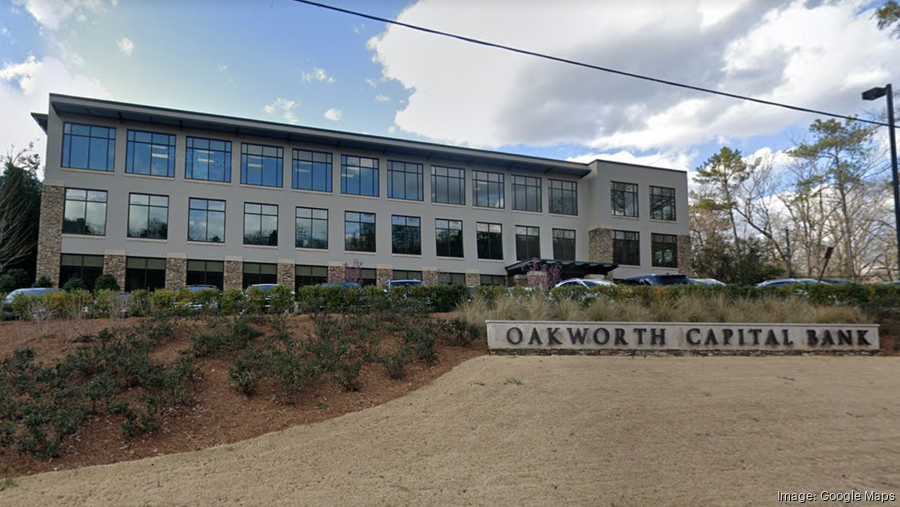
Oakworth Capital Inc. (OTCQX: OAKC) has quietly notched a series of financial and operational gains that might prompt some of its bigger bank peers to take notice. The Birmingham-based bank holding company just reported diluted earnings per share of $1.89 for the first half of 2025, representing a 24% jump over last year’s $1.53. Taken together with steady growth across the balance sheet, these results suggest that Oakworth’s approach to client service, risk, and team culture continues to pay off.
A deeper look into the numbers reveals that Oakworth’s net income reached $9.4 million by June 30, 2025, which is up 25% from $7.5 million in the same period last year. The company’s pre-tax, pre-provision income, essentially its operating profit before potential loan losses, climbed even more sharply. That figure hit $14.5 million, up 31% from the first half of 2024.
Revenues also showed a solid increase, hitting $39.8 million, 18% above last year’s level. On the expense side, non-interest expenses were up 11%, coming to $25.3 million for the first half of this year. While growth in expenses is never welcome news, in this case, the company’s overall profitability more than makes up for it, as measured by returns on both equity and assets.
Oakworth reported a return on average equity of 14.5% and a return on average assets of 1.0%. Both these measures, though just numbers on a page for many, actually tell a story of a bank making good use of its capital and resources. In particular, the 14.5% equity return is a benchmark many regional banks would be happy to match.
Behind those headline numbers is a balance sheet moving in the same direction. The company ended June with $2.4 billion in wealth assets under management, a jump of 10% from a year before. Loans, the core business for most banks, rose 15% on an average basis and stood at $1.5 billion at the end of the period, a 10% increase from the prior year. Deposits climbed 16% on an average basis and stood at $1.6 billion as of period end, reflecting what seems to be continued business growth and customer trust.
Credit quality remains solid, an all-important anchor for any lender. Oakworth reported only $0.5 million in non-performing loans and zero loans past due by more than 90 days. The bank’s allowance for credit losses stood at 1.2% of loans, which appears prudent and conservative. Its capital ratios, including a total risk-based capital number of 12.1%, a CET1 ratio of 10.9%, and a tier 1 leverage ratio of 9.7%, suggest the company is not taking any shortcuts in its safety net.
Leadership at Oakworth continues to highlight the importance of culture and client relationships in driving these results. Chairman and CEO Scott Reed attributes the company’s momentum to focused investments in people, systems, and technology across both emerging and established markets. He recently said, “We continue to see positive momentum from our investments in people, processes and technology in new and existing markets. We look forward to serving our clients and accelerating revenue in the back half of the year”.
Longtime observers of the company might not be surprised. Since its founding in 2008, Oakworth has emphasized a distinctive service-focused approach. The company now operates four offices across the Southeast, and its reputation appears to be growing along with its footprint. Notably, Oakworth has consistently been labeled as one of American Banker’s “Best Banks to Work For,” taking first place six out of the last eight years and claiming the number two spot most recently. The company also boasts a 2024 Net Promoter Score of 94 and an extremely high client retention rate of 95%.
With nearly $1.8 billion in total assets, $1.5 billion in gross loans, $1.6 billion in deposits, and $2.4 billion in wealth and trust assets under management as of June 2025, Oakworth’s performance confirms that there is still plenty of room for banks focused on both strong finances and relationships in a competitive Southeast and national landscape. For those looking for signals in the world of regional banking, Oakworth’s first half of 2025 offers ample evidence that investing in both clients and employees is not just a management slogan, here it looks like a working business model.
