
Most people never see the pipes that move money between banks. A payment leaves one account, passes through a chain of messages and settlement systems, and lands somewhere else, often a day or more later if it crosses a border or arrives on a weekend. Today one of the biggest names in business software announced a plan to connect some of those pipes to a newer kind of money.
That newer money is the tokenized deposit. It is an ordinary bank deposit, the same dollars sitting in a checking account, recorded as a digital token on a blockchain the bank controls. Unlike a stablecoin issued by a crypto company, a tokenized deposit stays inside the regulated banking system. Swift is the member-owned cooperative whose messaging network serves more than 11,500 banking and securities organizations, market infrastructures and corporate customers in over 200 countries and territories. In July 2026 it launched a shared ledger that lets participating banks move funds for customers around the clock, including overnight and on weekends, with final settlement completed through existing systems. Seventeen banks, among them Citi, HSBC, UBS and Wells Fargo, joined the initial pilot.
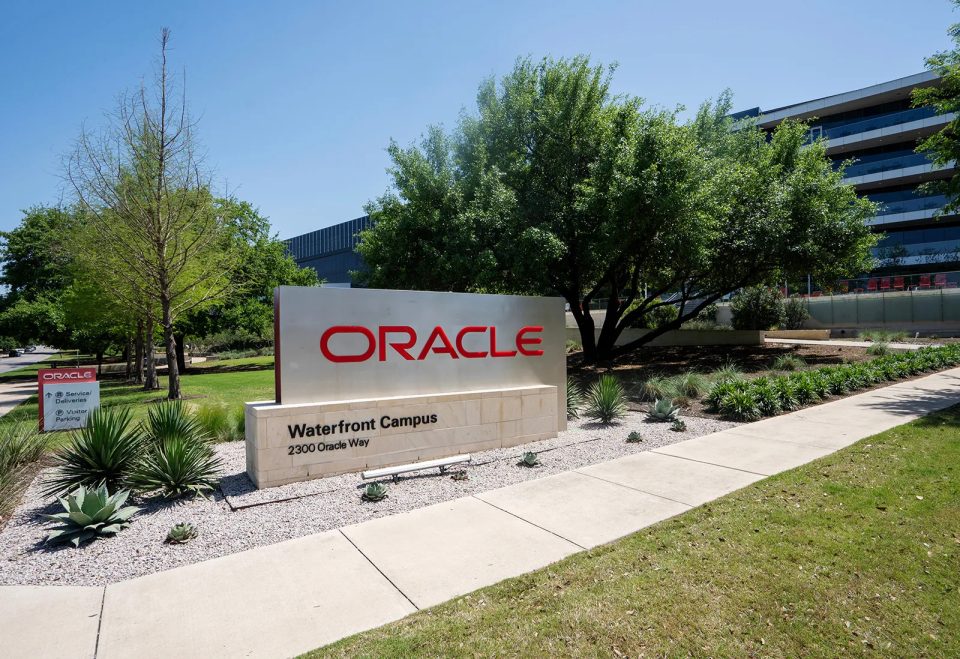
At Sibos, the annual banking conference being held this year in Miami, Oracle Corporation (NYSE: ORCL) said it is integrating its software with that ledger. A bank running Oracle products could keep tokenized deposits on its own books while still taking part in cross-bank payments that Swift coordinates. Jamie Bullard, a vice president at Oracle Financial Services, described the aim as giving institutions a practical and trusted way to link digital assets with the payment systems they already depend on.
This matters because banks face two problems at the same time. They need tokenized deposits to work between different institutions, and they need to wire those deposits into payment systems that were built long before blockchains existed. Swift’s ledger addresses the first problem by acting as a shared coordination layer. Oracle is going after the second.
The company is combining three products to do it. Oracle Blockchain Platform and Oracle Digital Assets Data Nexus supply the digital asset foundation: a blockchain that runs Ethereum-style smart contracts, custodial wallets that hold tokens on a bank’s behalf, transaction signing, and hosting for the Swift commitment contracts that the ledger relies on. Oracle Banking Payments then connects that activity to ISO 20022, the global messaging standard banks use to describe payments. In plain terms, a bank could process a traditional wire and a tokenized transfer inside the same payment workflow, rather than running two separate operations.
This was Oracle’s second digital money announcement in less than a week. On September 23, the company expanded Digital Assets Data Nexus and previewed both Swift ledger coordination and ISO 20022 integration. The new integration also builds on a long working relationship with Swift, including a Swift Compatible Application certification for payments that Oracle earned earlier in 2026.
Oracle is known mainly for its databases, enterprise applications and, more recently, cloud infrastructure for artificial intelligence. Banking software is a much smaller part of that picture. This announcement also left out the details investors usually look for first: it named no customers and gave no pricing or revenue figures.
The real test comes after the pilot. Swift plans to expand the ledger once its controlled first phase ends, and every bank that joins will need software to plug its own systems into it. Oracle is not the only vendor offering that link; Swiss firm Taurus, for one, already sells tools to connect banks to the ledger. Each bank that picks Oracle would tie the company more deeply into how it moves money, and that kind of dependence is hard to undo. Tokenized deposits are leaving the lab, and the contest to build their connections has begun.
