
Nvidia is making a major move in the world of artificial intelligence by investing a total of $4 billion in two specialized companies, Coherent Corp. (NYSE: COHR) and Lumentum Holdings Inc. (NASDAQ: LITE). That’s $2 billion for each firm. These companies focus on photonics, the technology that uses light to handle data and drive various systems. Their work underpins high speed networks and precision tools in manufacturing. This investment targets the growing needs of AI setups that crunch through vast amounts of data.
To understand this better, consider what each company brings to the table. Coherent Corp. designs and produces lasers along with optical systems that convert electricity into light or vice versa. You see their technology in telecom networks transmitting data across continents via fiber optics, in factories for cutting materials with pinpoint accuracy, and even in medical devices for delicate procedures. Lumentum Holdings Inc. operates in a parallel space. It develops lasers, optical components, and photonic integrated circuits tailored for data centers, cloud computing, and sensing applications like facial recognition. Together, they excel at manipulating photons, those tiny light particles, to transmit information faster and more efficiently than traditional methods.
Nvidia relies on this technology to connect its graphics processing units, or GPUs. These chips power AI training in huge data centers. Traditional copper wires link GPUs but hit limits as clusters grow. Signals weaken over distance, and power use climbs fast. Photonics changes that equation. Light based connections move data farther with less energy loss. They pack more information into smaller spaces. For Nvidia, this means linking thousands of GPUs into what they call AI factories.
Picture a data center filled with racks of Nvidia GPUs crunching through AI models. Each GPU generates heat and needs constant data flow. Copper cables struggle here. They consume power just to push electrons along short paths. Photonic links use lasers to send data as light pulses through thin fibers. This cuts power needs by up to 3.5 times in some setups. The result shows up in faster training times for large AI models. Nvidia already works with these firms on silicon photonics switches. These devices integrate lasers directly onto chips.
Coherent brings expertise in high power lasers and optical engines. Their tech supports Nvidia’s Spectrum X line of networking gear. This partnership grew from earlier deals in 2025. Now, the $2 billion commitment includes purchase orders for optics over three years. Lumentum adds strength in tunable lasers and high-density photonic chips. They help scale connections for Nvidia’s NVLink systems. Together, the duo tackles bandwidth bottlenecks. AI workloads double every few months. Photonics keeps pace by enabling terabit per second speeds.
The benefits stack up clearly for Nvidia. First, energy savings matter most. Data centers guzzle electricity worldwide. Governments push for green tech mandates. Photonic networking drops power per bit transmitted. Nvidia gains an edge in sustainable AI hardware. Second, speed improves. Light travels faster than electrical signals in cables. This shaves latency in GPU clusters. Models like those for chatbots or image generation train quicker. Third, scalability opens doors. Nvidia envisions factories with millions of GPUs. Photonics makes that feasible without melting wiring.
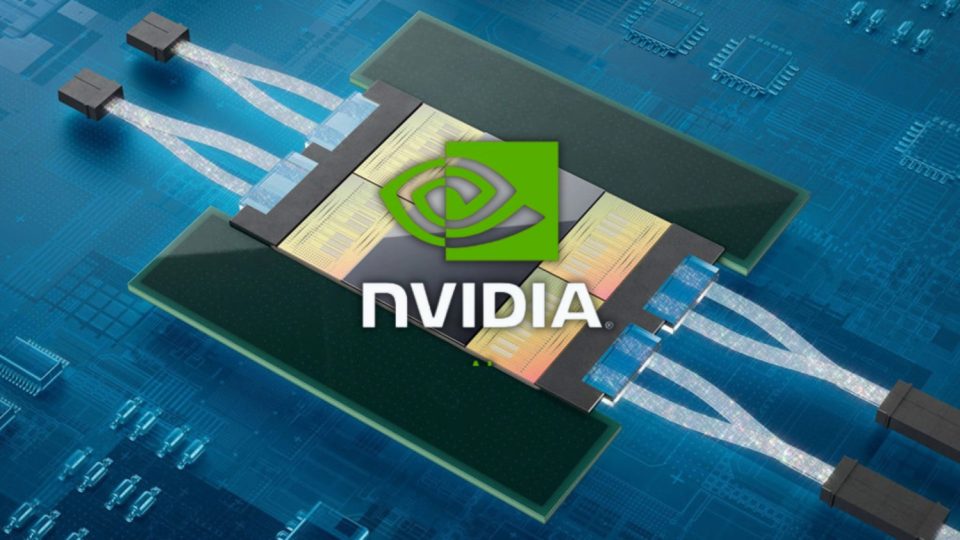
Take a real world example. Nvidia’s GTC conference highlighted silicon photonics prototypes. Partners like Coherent showed co packaged optics. These mount lasers right next to switches on the same board. No long fibers needed. Power efficiency jumps 10 times over pluggable modules. Lumentum contributed 1.6T optical engines. Such tech lets Nvidia customers pack more compute into less space. Costs drop over time as volumes rise.
This investment fits Nvidia’s broader strategy. The firm dominates AI chips with over 80% market share. Rivals like AMD and custom silicon from hyperscalers loom large. Strong networking keeps Nvidia central. Photonics secures that role. It turns data centers into optical fabrics. Engineers route light signals dynamically, much like Ethernet today but vastly quicker.
Coherent and Lumentum gain too, of course. The cash funds U.S. based factories. This hedges against supply chain risks. Yet Nvidia reaps the core rewards. Their GPUs stay interconnected at scales others cannot match. AI developers flock to platforms that run fastest.
As AI demand surges, these moves position Nvidia ahead. Photonics evolves from niche to necessity. Light carries the future of computing, and Nvidia invests early.
