
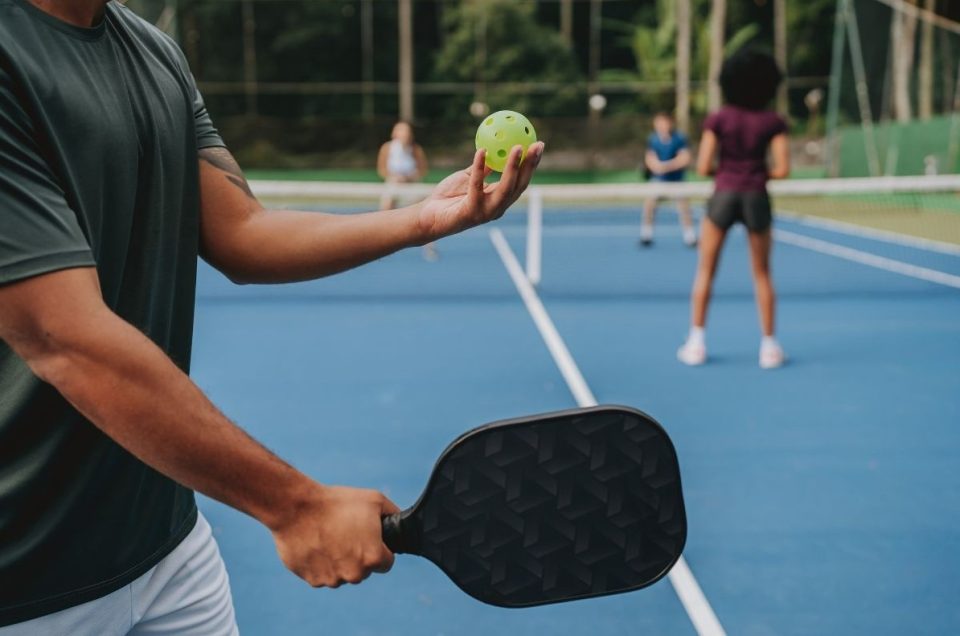
For a game that has been around since the 1960s, pickleball took a long time to get noticed. It is a racquet sport played with a paddle and a plastic ball, and it is easier to learn and less strenuous than tennis or squash. That low barrier helps explain what happened next. According to the Sports & Fitness Industry Association (SFIA), a trade group that tracks participation in sports and fitness activities, pickleball has been the fastest-growing sport in the U.S. for five consecutive years.
The numbers are large. SFIA estimates that 24.3 million Americans played in 2025, compared with 4.2 million in 2020, which is more than a fivefold increase in five years. Participation rose 22.8% in 2025 alone and 171.8% over three years, and the sport added nearly 4.5 million players in a single year.
The people playing have changed as well. Pickleball was once viewed mainly as a sport for older adults, yet SFIA now finds the highest participation rate among teens and young adults aged 13 to 24. Women account for 42.9% of players, up from 38.6% in 2020. SFIA’s head of research described the story as one of a broadening and more varied player base, not only one of rising totals.
It helps to know what “fastest-growing” measures. It refers to the rate of increase, not to overall size. Tennis remains larger, with 27.3 million players in 2025. Most pickleball players are also occasional ones: 16.8 million played between one and seven times during the year, while 7.48 million played eight times or more. That second group, which SFIA calls core players, is the one that fills leagues and buys equipment, and it has grown from 1.4 million in 2020. In the middle of 2025, SFIA suggested the growth might be slowing. The full-year figures did not support that.
More players have also meant more injuries, and here the picture is less cheerful. One study of U.S. emergency department records estimated that pickleball injuries rose 91% between 2020 and 2022, from 8,894 to 16,997 a year, while hospital admissions rose 257%, from 992 to 3,541. About 73% of the injured were aged 60 to 79. A second study covering 2004 to 2023 found that fractures made up 28.7% of injuries and that about half of all injuries involved impact with the floor.
Eye injuries have drawn attention too. Research published in JAMA Ophthalmology in October 2025 estimated 1,262 pickleball-related eye injuries treated in emergency departments in 2024, up from fewer than 200 in 2021. Harvard Health, summarizing the findings, noted that the overall incidence is likely low and suggested protective eyewear for players at higher risk.
The costs caught the notice of Wall Street in 2023. Analysts at UBS Group AG (NYSE: UBS) looked into the sport after UnitedHealth Group Incorporated (NYSE: UNH), a health insurer the bank covers, reported a jump in health care use among Medicare members. UBS projected $377 million in pickleball-related medical costs for that year, within a range of $250 million to $500 million, with roughly 80% tied to outpatient care. That was a forecast, and it assumed more than 22 million players in 2023, a level SFIA’s count did not reach until 2025.
Put the two sets of numbers together and the picture is fairly plain. Between 2020 and 2022, the number of players roughly doubled, from 4.2 million to 8.9 million, and emergency visits rose 91%. More people played, so more people got hurt, and there is little sign the game itself became riskier. The serious injuries are a different matter. Hospital admissions more than tripled over the same two years, and most of the injured were between 60 and 79. That leaves the sport pulling in two directions. Its newest players are teenagers and young adults. Its emergency room visits belong mostly to their grandparents’ generation. Pickleball is easy to pick up. The falls are what cost money.
