
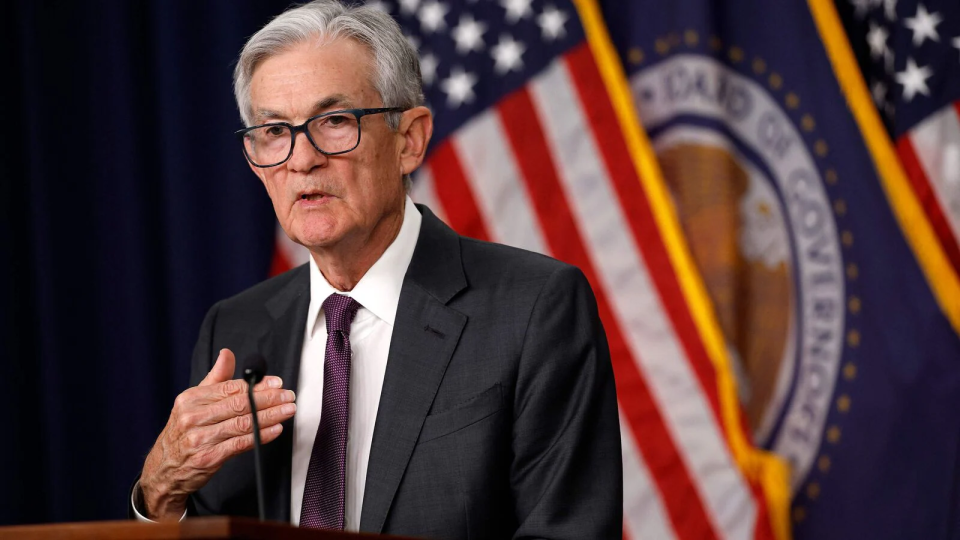
Federal Reserve Chair Jerome Powell gave a cautious nod to the possibility of interest rate cuts ahead in his final annual address at the Jackson Hole Economic Policy Symposium today. Speaking before the nation’s top central bankers, economists, and financial leaders in Wyoming, Powell acknowledged the uncertain economic landscape that is complicating decisions for monetary policymakers.
“With policy in restrictive territory, the baseline outlook and the shifting balance of risks may warrant adjusting our policy stance,” Powell remarked. While he stopped short of promising imminent interest rate reductions, his comments indicated the Fed is open to adjustments as the economic picture evolves.
Powell’s remarks come amid widespread market expectations for a quarter-point rate cut at the Federal Reserve’s September meeting. The federal funds rate currently stands between 4.25% and 4.5%, a level held steady for five consecutive meetings since late 2024. Inflation remains somewhat elevated but has moderated, and the economy has shown signs of slowing, particularly in consumer spending. Payroll job gains have softened recently, averaging about 150,000 per month over the past quarter, with the unemployment rate steady at 4.1%. This moderation in the labor market and economic activity is prompting some Fed officials and investors to anticipate easing monetary policy as a precaution against downside risks.
Despite acknowledging these signs, Powell emphasized the high degree of uncertainty surrounding the outlook. He noted the effects of tariffs and other factors on inflation remain unclear, making it harder to predict precisely how inflation will behave in the months ahead. His tone was deliberately measured, reflecting the data-driven caution he has maintained throughout his tenure as Fed chair.
Importantly, Powell also underscored the importance of the Federal Reserve’s independence amid political pressures. Over recent months, the White House has increased demands for rate cuts, including direct criticism of the Fed’s policies and Powell himself. In his speech, Powell made clear that while the Fed will adapt its approach based on economic developments, it will operate free from political influence. This assertion signals his intent to uphold the credibility of the central bank as he approaches the end of his term, which expires in May 2026.
Analysts have noted that Powell’s speech balanced signaling openness to easing with a steady reminder of ongoing economic risks. Deutsche Bank analysts suggested his remarks would “introduce uncertainty” about the timing of any cuts, while Evercore ISI’s Julian Emanuel predicted that Powell would hint at a modest reduction next month but maintain a cautious overall stance.
The Fed’s approach in recent months has been characterized by a “wait and see” attitude. Officials continue to monitor incoming data, weighing the persistence of inflation against the health of the labor market and broader economic growth. GDP growth has slowed to around 1.2% in the first half of 2025, down from 2.5% the previous year. Business investment has picked up, but housing sector activity remains weak. Wage growth, though still outpacing inflation, has also moderated.
For the Federal Reserve, the stakes are high. The potential for rate cuts must be weighed against the risks of reigniting inflation or undermining economic gains. Powell’s remarks at Jackson Hole reaffirmed the delicate balancing act confronting the central bank.
As Powell’s final Jackson Hole address, the speech also served as a moment of reflection on his legacy. Observers expect that he sought to cement the principle that monetary policy decisions must remain insulated from political pressures to sustain long-term economic stability.
Looking ahead, markets will be closely watching Fed communications and economic data for clearer signs on the timing and scale of future interest rate adjustments. Powell’s cautiously optimistic yet carefully measured tone leaves the door open for easing but signals the Fed will proceed with deliberate care in navigating the uncertainties ahead.
The central bank’s next policy meeting in September is expected to weigh heavily on these considerations, with a rate cut seen as increasingly likely but not guaranteed. Powell’s speech ultimately highlighted the complex economic landscape facing the Fed and the ongoing commitment to making data-informed decisions in an unpredictable environment.youtube.
