
Every message that travels through a satellite today relies on encryption methods that assume no computer will ever be powerful enough to break them quickly. That assumption is starting to look shaky. Researchers and government agencies increasingly warn that a sufficiently powerful quantum computer could eventually crack the mathematical problems protecting most of today’s digital communications, a scenario often called Q Day. Even though such a machine does not yet exist, the concern is not only about the future. Adversaries can already collect and store encrypted data now, then decrypt it later once quantum computing catches up, a tactic security researchers refer to as harvest now, decrypt later.
That risk has pushed governments to act ahead of schedule. The U.S. has directed federal agencies to inventory their cryptographic systems and begin migrating to quantum resistant algorithms under national security guidance, while the European Union has set a roadmap requiring high risk sectors such as finance, healthcare and critical infrastructure to begin the transition by the end of 2026, with full migration expected between 2030 and 2035. The United Kingdom’s National Cyber Security Centre has published similar guidance urging organizations to build cryptographic inventories and phase in quantum safe protections. Market researchers have started putting numbers on that shift. The research firm SNS Insider estimates the post quantum cryptography market at $1.35 billion in 2025, growing at a compound annual rate above 42% through 2033 as defense, banking and telecom firms accelerate quantum resistant upgrades. Separately, the research firm MarketsandMarkets projects that global spending on post quantum cryptography solutions and services will keep climbing through the decade as enterprises move from pilot projects into full scale migration.
Satellites sit near the center of this shift. Much of the infrastructure carrying government, maritime, energy and defense communications through orbit was built long before quantum resistant standards existed and replacing that hardware outright is expensive and slow. That has made a different question increasingly urgent for satellite operators, whether quantum safe protection can be added to systems already flying and already in use, without taking them offline.
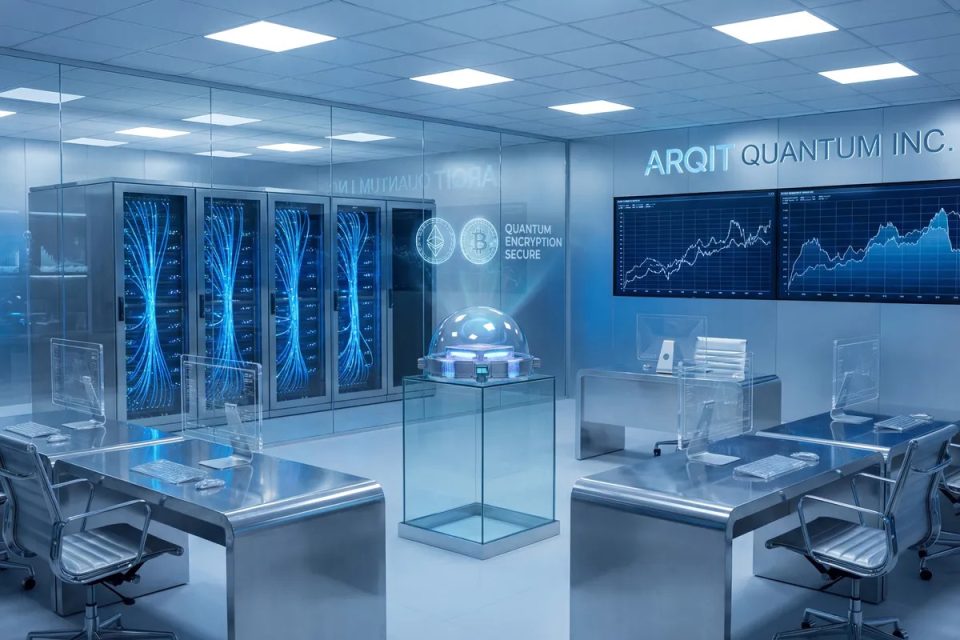
Arqit Quantum Inc. (NASDAQ: ARQQ), a company that builds quantum safe encryption technology meant to protect data and communications networks from future quantum decryption threats, offered an answer today. Working with Es’hailSat, the Qatar based satellite operator, and Advanced International Electronic Equipment Company (AIEE), a systems integrator focused on secure communications infrastructure, Arqit announced a joint demonstration that integrated its post quantum cryptography into Es’hailSat’s live satellite environment at its Tier4 certified teleport in Doha.
The demonstration used Es’hailSat’s Es’hail1 satellite and its existing ground infrastructure rather than a simulated or laboratory setup. AIEE handled the systems integration and interoperability testing across the ground and network layers, while Es’hailSat provided the live operational environment. According to the companies, the quantum safe protection was layered onto the running network without disrupting existing services, a detail that matters because most satellite operators cannot afford downtime on infrastructure that broadcasters, telecom providers and government clients depend on continuously.
What makes this test notable is less the technology itself and more where it happened. A lab demonstration shows that an idea works. A demonstration on infrastructure that is already carrying live traffic shows that it can be adopted without the cost and disruption of building new systems from scratch. That distinction matters for satellite operators, telecom companies and government agencies now facing deadlines to modernize their cryptography, because it suggests a retrofit path exists rather than a forced rebuild.
For Arqit, the announcement extends its track record of partnering with satellite operators, telecom companies and government agencies, and it adds a concrete example to the case that quantum safe encryption can be layered onto legacy infrastructure across sectors including maritime and energy, where operators face the same quantum readiness mandates. Es’hailSat and AIEE, for their part, gain a public reference point for offering quantum resistant services across the Middle East and North Africa region, an area where secure broadcasting and government communications already run through Es’hailSat’s network. Whether other operators follow this same retrofit approach may say as much about the cost of rebuilding satellite infrastructure from the ground up as it does about the appeal of any single company’s technology.
