
This is Part II of a multipart series on carbon sequestration. Part I of the series – The Core Ideas Behind Carbon Capture.
Nature-based carbon sequestration builds directly upon the living systems introduced in Part I. In the United States, the approach is evolving quickly as federal and state carbon pricing frameworks give emissions a tangible cost, and a potential market value once captured or offset. Businesses, especially in agriculture, forestry, and technology, now recognize dual incentives: verified carbon credits can bring in new revenue streams, while soil regeneration, yield improvement, and ecological resilience reinforce their supply chains against climate volatility. What begins as familiar land stewardship, tree planting, wetland restoration, regenerative farming, is becoming a measurable and tradable carbon-removal industry.
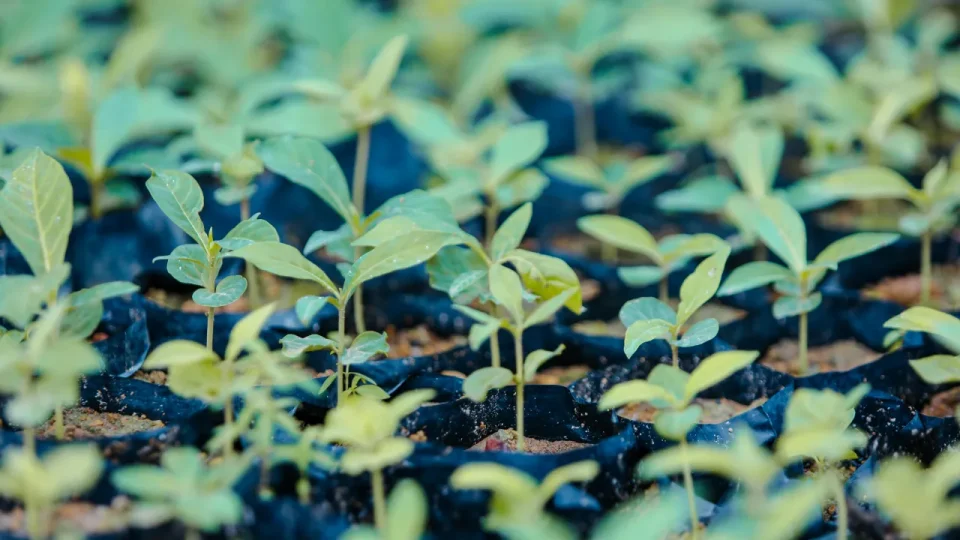
Trees act as natural carbon engines, pulling CO₂ from the atmosphere through photosynthesis and storing it in wood, roots, and soil. Across the U.S. Pacific Northwest, Southeast, and Appalachia, companies and conservation groups are restoring cutover lands and degraded pastures by replanting diverse forests designed for long-term growth. Mature woodlands in these regions can store 4 to 8 tons of CO₂ per acre per year, depending on climate and species mix. With sound management, spaced planting, selective thinning, and fire prevention, the carbon remains locked away for decades or even centuries.
Canadian projects follow similar logic, particularly across British Columbia and the boreal forests, where landowners are extending harvest cycles on private tracts to allow trees to grow taller and accumulate greater above and below-ground biomass. However, both nations face a rising wildfire threat intensified by warmer temperatures. To safeguard these investments in nature-based climate assets, modern projects integrate firebreaks, controlled burns, and diversified species plantings to improve forest resilience and protect carbon stocks.
The United States also leads in developing “blue carbon” strategies, capturing CO₂ through coastal ecosystems such as mangroves, salt marshes, and seagrass meadows. Along the Gulf Coast, organizations are restoring marshlands previously drained for development or drowned by rising seas. These saturated soils trap carbon in oxygen-poor environments, where decomposition slows and carbon remains sequestered for centuries. On the Atlantic coast, states from Florida to Massachusetts are expanding wetland restoration zones that not only absorb carbon but also strengthen natural storm barriers and provide vital fish habitats.
On Canada’s western coastline, British Columbia’s estuarine restoration programs echo these methods, rebuilding peat-rich zones lined with sphagnum moss and sedges. Although Canada’s tidal restoration footprint is smaller, its northern geography offers significant carbon density per acre. In both nations, balancing blue carbon projects with coastal development remains a challenge, since ports, housing, and infrastructure compete for space along valuable shoreline.
In the U.S. heartland, climate action increasingly takes place below ground. Regenerative agriculture redefines how farms manage carbon through practices that rebuild soil structure and biological activity. Midwest and Great Plains farmers are planting cover crops such as rye, clover, or radishes between traditional rotations of corn and soybeans. The roots from these intermediate crops feed microbial communities, creating stable organic carbon molecules that persist for years.
No-till or low-till techniques reduce soil disturbance, locking down historical carbon that would otherwise be oxidized and released. On average, these systems can sequester 0.2 to 0.8 tons of CO₂ per acre per year, small amounts individually but transformative at landscape scale. The economic upside is clear: yields often rise 5–10% from improved soil moisture and nutrient cycling, while fertilizer use and fuel costs decrease.
Fast-growing crops such as industrial hemp also show potential. Hemp absorbs carbon rapidly, 3.2 to 9 tons per acre in a single season, and can be processed into hempcrete or biochar, each storing carbon in long-lived materials. Pilot programs across Colorado, Kentucky, and North Dakota are testing hemp’s role in both the agricultural economy and the circular carbon market. Canadian prairies provide parallel testbeds, though regulatory frameworks around hemp remain stricter in some provinces.
Once captured, carbon value becomes financial. In the United States, verified carbon credits typically trade between $10 and $50 per ton depending on certification and buyer type. Verification relies on technologies like satellite imaging, soil sampling, and machine-learning growth models that prove real, additional carbon removal. Major registries, including Verra and Gold Standard, provide international accreditation, enabling American projects to meet corporate sustainability standards worldwide.
U.S. farmer cooperatives increasingly pool their acreage to qualify for large-scale carbon credit programs, diversifying rural income far beyond traditional crop cycles. Private equity and corporate sustainability divisions are also financing reforestation and wetland leasing deals that employ local crews for planting, monitoring, and data collection. Today, roughly 75% of North American nature-based carbon sequestration projects occur within U.S. borders, a reflection of strong tax incentives, philanthropic capital, and active state-level programs such as those in California and Washington. For more detail on Carbon Credits, see VBNGtv’s recent article – A Look at the Carbon Credit Market.
Environmental benefits scale alongside economic ones: forests filter water and regulate floods, wetlands reduce coastal erosion, and soil health supports pollinator habitats. Buyers, ranging from tech giants to manufacturing firms use these offsets to advance net-zero commitments while securing dependable removal supply. For landowners and farmers, the credits create a reliable secondary income tied directly to good environmental management.
Nature-based solutions remain the most accessible and cost-effective pathway to removing carbon at scale in the United States. They use biological systems that farmers, foresters, and coastal managers already know how to manage, with modern verification and financial tools layered on top. As policy incentives align with private investment, the market for U.S. ecosystem restoration has moved from pilot stage to mainstream commerce.
The next article in this series, Part III: Engineered Carbon Capture – Scaling Technology for Industry, will examine machine-based approaches, cost structures, and the regulatory frameworks driving the growth of engineered carbon removal across North America.
