
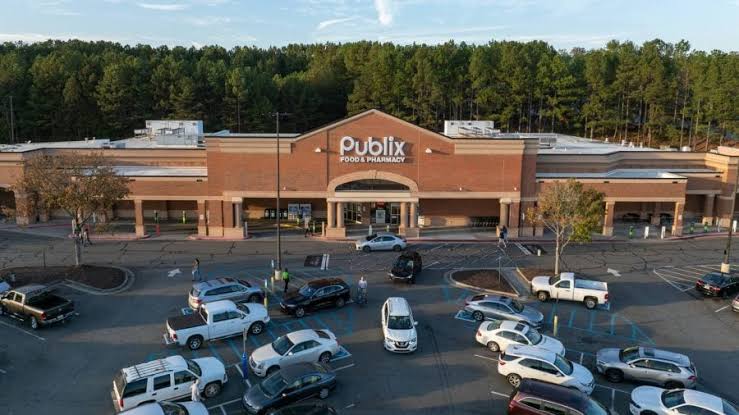
Most towns have one: a modest row of stores with a supermarket at one end, a pharmacy nearby, and a handful of smaller tenants such as a dentist, a hair salon and a pizza shop. Real estate professionals call this a grocery-anchored shopping center. The supermarket is the “anchor” because it pulls shoppers in several times a week, and that steady traffic keeps the neighboring businesses busy.
That pattern has made the format one of the steadier corners of commercial property. Online shopping hollowed out many enclosed malls, but most people still want to choose their own produce, and they tend to run other errands on the same trip. Research published earlier this year by Jones Lang LaSalle Incorporated (NYSE: JLL), the global commercial real estate services and investment firm better known as JLL, put vacancy at grocery-anchored centers at about 4%, compared with 6.3% at centers without a grocer. The same research found these properties earn rents roughly 4.4% higher, and that sales of grocery-anchored centers rose 42% over the prior year to nearly $11 billion.
Many of these centers are owned by real estate investment trusts, known as REITs. A REIT is a company that owns income-producing property and passes most of that income through to its investors. In the U.S., a REIT must pay out at least 90% of its taxable income each year as dividends, and most pay out all of it. In exchange, it generally avoids paying corporate income tax on the money it distributes.
The appeal for ordinary investors is straightforward. A REIT lets them own a slice of a large property portfolio, collect regular income, and buy or sell on a stock exchange just as they would any other share. In Canada, many REITs are set up as trusts, so investors hold “units” instead of shares and receive “distributions” instead of dividends. The idea is the same. Because grocery-anchored centers produce rent that rarely swings much from year to year, REITs that own them draw steady interest from larger landlords and private investment firms.
That backdrop explains why Slate Grocery REIT (TSX: SGR.U, TSX: SGR.UN) is close to going private. The Toronto-listed trust owns 115 grocery-anchored centers across the U.S. In September, it agreed to be acquired by a joint venture between Brixmor Property Group Inc. (NYSE: BRX) and affiliates of Everview Partners, a private investment firm. The buyers are paying $13.00 per unit in cash, in U.S. dollars, valuing the business at about $2.3 billion including debt.
Today, the trust said the two largest proxy advisory firms, Institutional Shareholder Services (ISS) and Glass Lewis, both recommend that unitholders vote in favor. Large institutions hire these firms to study ballot items and suggest how to vote, so their views carry weight. ISS pointed to a “robust market check process” and said the cash price gives unitholders certainty of value. Glass Lewis called the strategic review thorough and the deal’s reasoning sound.
The vote takes place at a virtual special meeting on November 25th, and proxies are due by November 23rd. The recommendations lower the risk of a failed vote without removing it. The deal needs two-thirds of the votes cast, plus a simple majority of votes that excludes certain insiders under Canadian minority protection rules. The offer is about 13% above the unit price on May 21st, the last trading day before the sale process became public.
Attention now shifts to the gap between the unit price and $13.00. That gap, known as the deal spread, mostly reflects two things: how long holders must wait for their cash, and the chance that something blocks closing. The buyers expect to finish in the first quarter of 2027. If closing slips past January 20, 2027, unitholders receive an extra $0.002482 per unit for each additional day.
A cash premium for more than a hundred neighborhood centers shows how far the supermarket strip has come from its unglamorous reputation. If unitholders approve the deal later this month, Slate Grocery will leave the public market, and its centers will pass to owners betting that the weekly grocery run will keep paying the rent.
