
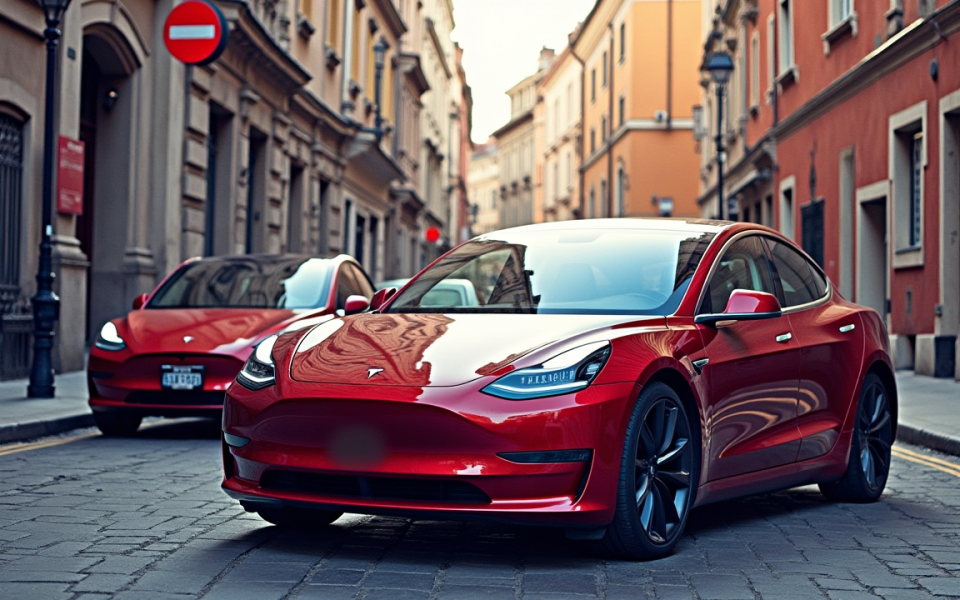
South America is witnessing a significant surge in electric vehicle (EV) adoption through the combined efforts of Chinese and regional manufacturers, even as Tesla remains notably absent from much of the market. After years of lagging behind global leaders, the region crossed key thresholds in 2024 that signal a meaningful turning point for electric transportation. Brazil, Chile, Colombia, and Uruguay have emerged as front runners, with new EV sales exceeding 5% in several countries, levels that historically mark the beginning of rapid adoption phases.
One of the most striking features of South America’s EV boom is its divergence from patterns seen elsewhere. While Tesla has become synonymous with EV innovation globally, it has yet to establish a strong foothold across most South American markets. Instead, manufacturers such as BYD and Great Wall Motors from China, along with regional producers, are filling the gap aggressively. Brazil, the region’s largest economy, has attracted billions of dollars in investments from these companies to build EV factories locally. This move not only reduces costs related to tariffs and currency fluctuations but also makes EVs more accessible to consumers in Brazil and neighboring countries.
South America’s surge is supported by a blend of favorable factors. The region enjoys access to some of the world’s cleanest electricity grids, primarily powered by hydro, wind, and solar energy, notably in Uruguay, Paraguay, and Brazil. This means adopting EVs translates immediately into carbon and pollution reductions, unlike in regions reliant on fossil fuels for electricity. Additionally, the continent’s vast lithium reserves, especially in Chile, Argentina, and Bolivia, could eventually foster a homegrown battery supply chain, reducing dependence on imports and potentially lowering costs further.
Despite this momentum, adoption is not without challenges. Economic volatility across the region and substantial income inequality creates hurdles for widespread affordability. The ongoing influx of used internal combustion engine vehicles from abroad complicates the transition by keeping cheaper fossil-fueled options in the market. Moreover, uneven government policies and incentives across countries can stall harmonized growth, even though countries like Chile and Colombia are setting ambitious targets. Chile’s policy mandates that all new light and medium vehicles sold by 2035 must be zero-emission, while Colombia requires one-third of government fleets to go electric by the end of 2025, aiming for fully electric bus fleets by 2035.
Looking ahead, projections indicate that EV sales in South America will continue to accelerate. Passenger electric vehicles are expected to grow from single digits today to between 10% and 20% of new car sales by 2028. By 2035, EVs could account for roughly half of new vehicle sales, expanding further to become the majority by 2040. The second-hand market for EVs, sourced from early adopters in Europe, China, and the U.S., will also play a critical role by making electric vehicles more affordable across income levels starting in the mid-2030s.
The electrification of public transportation is a particularly significant trend. Cities like Bogotá operate some of the largest electric bus fleets outside China, and Santiago aims for fully electric public transport by 2040. This shift is driven by both environmental goals and the practicality of carbon reduction in densely urbanized areas, where more than 80% of South Americans live. The large urban population concentrations make scaling charging infrastructure more feasible at lower costs.
Tesla’s limited presence in this rapidly evolving landscape appears strategic. The company has teased entry into some South American markets but remains cautious compared to the expansive operations of Chinese firms and local manufacturers that already dominate the scene. This gap reflects differing market dynamics, cost structures, and policy environments in South America relative to Tesla’s core North American, European, and Asian markets.
The road to a fully electrified South American vehicle market will not be perfectly smooth. Economic factors, infrastructure needs, and policy consistency remain key concerns. However, the trajectory is clear. The momentum built in recent years, combined with the region’s distinctive advantages and resource endowments, sets the stage for a transformative transition. By 2040, electric vehicles will be a common sight on South American roads, contributing to cleaner cities and a more sustainable transport system aligned with global trends.
