
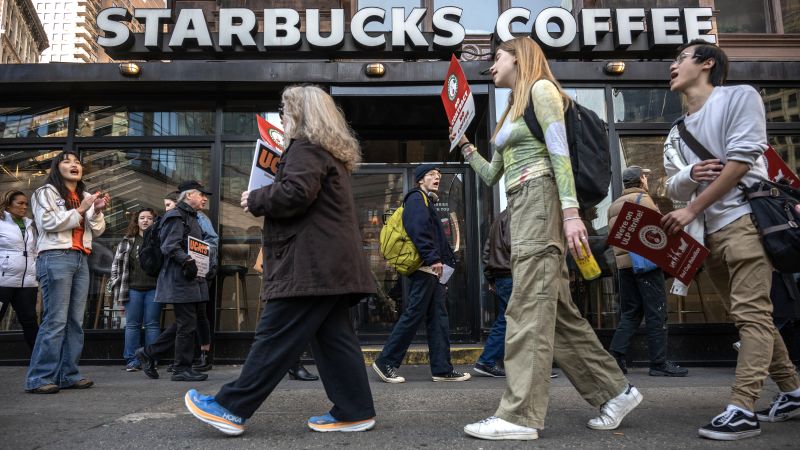
Over 1,000 Starbucks (NASDAQ: SBUX) baristas in about 40 cities across the U.S. have staged a strike that hit roughly 65 stores right when Starbucks is kicking off its big holiday sales push with Red Cup Day. This move is a big deal because it comes at such a busy and important time for Starbucks, and it shines a light on growing frustration between the company and its unionized workers.
The group behind the strike, Starbucks Workers United, says the walkout was forced by years of slow progress in contract talks. They say Starbucks hasn’t seriously addressed the issues baristas care about most, better pay, more reliable hours, and enough staff on shift to make the work manageable and fair. One striking barista from Pittsburgh pretty much summed it up saying, “We’re turning the Red Cup Season into the Red Cup Rebellion.” The union accuses the company not just of ignoring their needs but also trying to punish workers who organize union activities.
The timing couldn’t be more impactful. Red Cup Day is when Starbucks usually sees a flood of customers excited for holiday drinks and merchandise. By striking at 65 stores spread through cities like New York, Seattle, Dallas, and Minneapolis, the union has created a real challenge for Starbucks during a crucial sales period.
Starbucks responded by downplaying the strike’s scope. They noted that unionized workers make up only a small fraction, about 4%, of their entire workforce and criticized the union for choosing to strike instead of negotiating. A spokesperson said, “We’re ready to talk when they are ready to come back.” They also highlighted Starbucks’ pay rates averaging over $19 an hour, including benefits valued above $30 an hour, positioning the offer as competitive in retail.
But the union strongly disagrees. They say the company’s last contract offer, made in April, didn’t guarantee enough hours for benefits and only included a 2% yearly raise. For baristas who often juggle multiple jobs and financial pressures, those numbers aren’t enough. The union also points out that Starbucks has been slow to fix staffing shortages, making shifts more stressful and unpredictable.
This strike is part of a bigger picture. Since 2021, Starbucks has seen a growing wave of union drives across its stores, with over 12,000 baristas now members of Starbucks Workers United, although Starbucks itself estimates the number closer to 9,500. The drawn-out contract talks reflect wider tensions about how companies treat frontline workers today, especially after the pandemic reshaped workforces and expectations.
Starbucks itself is navigating some complex challenges. The company has been trying to bounce back after several quarters of dropping same-store sales. Since Brian Niccol took the CEO role in 2024, he has put in place some changes, including closing stores that weren’t performing, even some unionized flagship stores like the well-known Seattle location. Niccol talks about stabilizing business but admits they still have work to do.
Labor experts see this strike as a way to pull Starbucks back to the negotiating table and rally public support. Kate Bronfenbrenner from Cornell says these workers want more than wages, they want a voice and respect in the workplace. “Starbucks workers are striking and engaging customer support to get Starbucks back to the table,” she said. It’s likely the union will keep stepping up pressure if talks don’t improve soon.
